
Your Indoor Plants Might Be Making You Sick
Indoor plants bad for allergies is a real problem — and more common than most people realize. Here are the main culprits to avoid:
Indoor plants most likely to trigger allergies:
- Weeping Fig (Ficus benjamina) — linked to allergic rhinitis and skin reactions
- Ferns — release airborne spores that act like pollen
- Yucca — produces significant pollen indoors
- English Ivy — causes contact skin irritation and airborne allergens
- Male Palms — heavy pollen producers
- Chrysanthemums — high pollen output
- African Violets — fuzzy leaves trap dust and mold
- Scented Geraniums — strong fragrance triggers respiratory reactions
- Peace Lilies — can promote mold growth in soil
More than 100 million people in the U.S. deal with allergies every year. Many of them are also plant lovers — and that combination can quietly wreck your indoor air quality.
The problem isn’t always obvious. You might blame seasonal pollen or dust, when the real trigger is sitting on your windowsill.
Indoor plants can release pollen, mold spores, and airborne particles from their leaves and soil. Some even secrete irritating sap. In a sealed apartment or office, those allergens have nowhere to go — and they build up fast.
If your nose runs more at home than outside, your plants may be part of the problem.
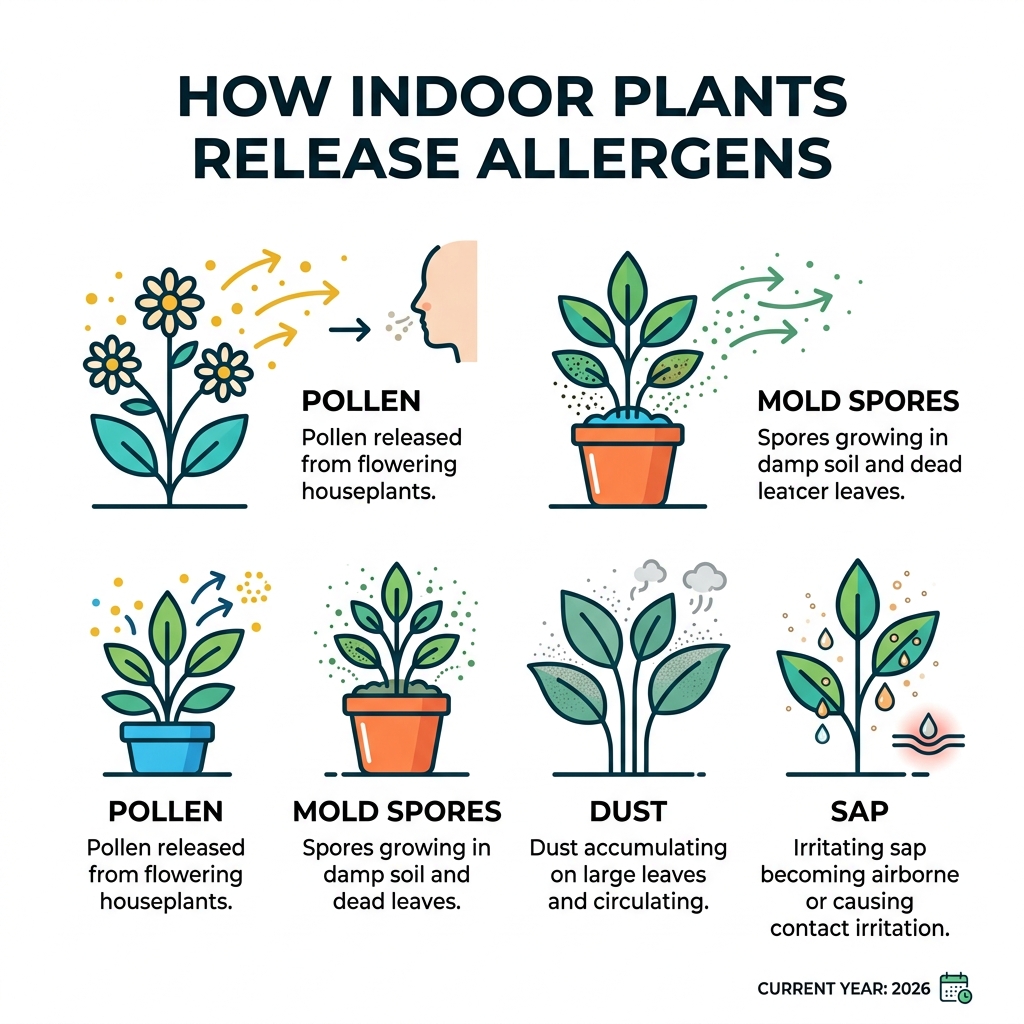
Why Some Indoor Plants Are Bad for Allergies
When we think of allergies, we usually picture hay fever in the spring or ragweed in the fall. We rarely suspect the beautiful Fiddle Leaf Fig in the corner of our living room. However, at Mount Pilchuck, we’ve found that many people are living with “hidden” allergens right in their bedrooms and offices.
There are five main ways that indoor plants bad for allergies can trigger your symptoms:
- Pollen Grains: While we usually associate pollen with outdoor trees and grasses, many indoor plants bloom. Flowering plants like chrysanthemums or even certain palms release fine pollen grains that stay suspended in the still air of your home.
- Mold Spores: This is perhaps the most common culprit. Mold loves damp, humid conditions. When we overwater our plants or use soil that doesn’t drain well, we create a breeding ground for fungi. Statistics show that molds thrive once humidity levels hit 65% or higher. These spores can lead to sneezing, coughing, and even asthma attacks.
- Dust Accumulation: This is an often-overlooked trigger. Large, broad leaves or fuzzy, textured leaves (like those on African Violets) act as “dust magnets.” If you aren’t cleaning your plants regularly, you’re essentially keeping a dust reservoir in your breathing zone.
- Irritant Sap: Some plants, particularly those in the Ficus or Euphorbia families, contain milky sap or latex. If you touch this while pruning or if a leaf breaks, it can cause contact dermatitis (skin rashes) or even hives.
- Fragrance Sensitivity: Highly scented flowers release volatile organic compounds (VOCs). While they might smell lovely to some, for an allergy sufferer or someone with asthma, these strong scents can cause immediate congestion or headaches.
According to the Asthma and Allergy Foundation of America, any plant has the potential to worsen symptoms, but non-flowering varieties are generally safer. To help mitigate these airborne risks, many homeowners find success by improving their indoor air filtration.
The Worst Indoor Plants Bad for Allergies
If you’re prone to itchy eyes and a scratchy throat, it might be time to audit your greenery. Some of the most popular houseplant trends are actually the worst offenders for sensitive immune systems.
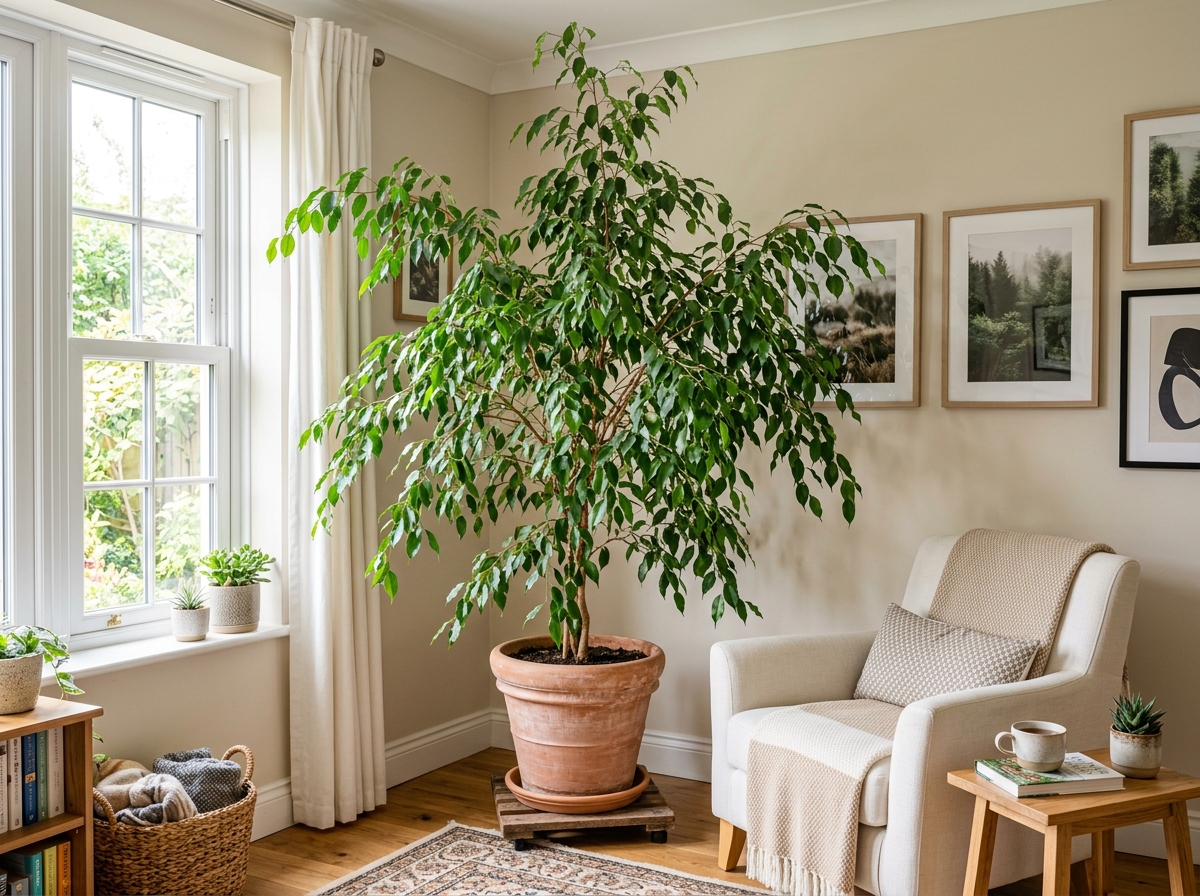
Weeping Fig (Ficus benjamina)
The Weeping Fig is a staple in interior design, but it’s one of the most notorious indoor plants bad for allergies. Its leaves can collect a massive amount of dust, but the real danger is its sap. The sap contains latex-like proteins that can become airborne as the plant “breathes” or when it is pruned. Research suggests that prolonged exposure to a Weeping Fig can actually sensitize people who weren’t previously allergic, leading to chronic rhinitis or even hives.
Yucca Plants
Yucca plants are striking and can grow up to 15 feet tall, but they are heavy pollen producers. If a Yucca decides to bloom indoors, the pollen can quickly overwhelm a room. Furthermore, their skin can be a contact irritant for many people.
English Ivy
While English Ivy is often praised for its ability to filter certain toxins from the air, it is a double-edged sword. It contains a chemical called falcarinol, which is known to cause skin blisters and allergic contact dermatitis. If you have sensitive skin, handling this plant without gloves is a recipe for disaster.
Male Palms
Not all palms are created equal. In botany, some plants are “dioecious,” meaning they are either male or female. Male palms are the ones to watch out for because they produce pollen. If you’re looking for a palm, try to find a female variety or stick to species like the Lady Palm, which are generally considered better choices for allergy sufferers.
Flowering Varieties and Indoor Plants Bad for Allergies
We all love a splash of color, but if you’re trying to “stop the sneeze,” you might want to rethink your flowering collection. Flowering plants are designed to spread pollen, and in an enclosed space, that pollen has nowhere to go but into your lungs.
- Chrysanthemums: These are basically “pollen bombs.” They are closely related to ragweed, which is one of the most common outdoor allergens. If you react to ragweed in the fall, keep mums out of your house.
- African Violets: These are cute and nostalgic, but their fuzzy leaves are the ultimate dust traps. Because the leaves shouldn’t get wet (it causes spotting), they are very difficult to clean, meaning they hold onto dust and mold spores indefinitely.
- Lilies and Hyacinths: These are famous for their heavy, cloying scents. These fragrances can trigger “vasomotor rhinitis,” which isn’t a true allergy but causes the same miserable congestion and runny nose by irritating the lining of the nose.
- Scented Geraniums: These plants are bred specifically for their strong oils. Touching the leaves releases a burst of fragrance that can cause skin irritation or respiratory distress in sensitive individuals.
If you find that your floral arrangements are making life difficult, you might consider investing in a HEPA air purifier to capture those fine pollen particles before they reach your nose.
Spore-Producing Species and Indoor Plants Bad for Allergies
Ferns and mosses don’t produce pollen, so you might think they’re safe. Unfortunately, they reproduce via spores.
- Boston Ferns and Rabbit’s Foot Ferns: On the underside of fern fronds, you’ll find small brown spots. These are spore cases. When they ripen, they burst, releasing thousands of microscopic particles into the air. These spores act very similarly to pollen and can cause significant respiratory irritation.
- Mosses: Often used in terrariums or as soil toppers, moss requires high humidity to stay green. This dampness frequently leads to mold growth in the surrounding soil, which is a major trigger for many people.
Managing the humidity in your home is key when dealing with these species. If your humidity is too high, you aren’t just feeding your ferns; you’re feeding dust mites and mold. You can learn more about combating these microscopic triggers here.
How to Manage Allergens in Your Indoor Garden
You don’t necessarily have to throw all your plants in the compost bin. With a little bit of strategy, you can keep your green thumb without the red eyes.
1. The Damp Cloth Method
Dust is one of the biggest contributors to indoor plants bad for allergies. We recommend wiping down large-leafed plants (like Monstera or Rubber Trees) once a week with a damp cloth. This prevents dust from accumulating and also helps the plant photosynthesize more efficiently. For plants with smaller leaves, a quick “shower” in the sink with tepid water can wash away allergens.
2. Switch to Peat-Free Soil
Traditional potting soil often contains peat moss, which can harbor mold spores. Using a high-quality, well-draining, peat-free mix can reduce the chances of mold taking hold. Additionally, some plant parents use a layer of decorative gravel or pebbles over the soil. This “mulch” prevents mold spores from the soil from becoming airborne.
3. Control Your Humidity
Molds and dust mites love moisture. We suggest keeping your home’s humidity below 50%. If you have a lot of plants, they naturally release moisture through a process called transpiration. Use a hygrometer to monitor the levels, and if things get too steamy, a dehumidifier can be a lifesaver.
4. Proper Watering Techniques
Overwatering is the number one cause of mold in houseplant soil. Always check the soil moisture before adding more water. If you see a white, fuzzy film on the surface of your soil, that’s mold. Scrape it off immediately and let the soil dry out.
Comparison of Plant Traits for Allergy Sufferers
| Feature | High-Allergen Risk (Avoid) | Low-Allergen Risk (Choose) |
|---|---|---|
| Leaves | Fuzzy, textured, or “dust-trapping” | Smooth, waxy, and easy to wipe |
| Reproduction | Pollen-heavy flowers or spores | Foliage-focused or non-blooming |
| Soil Needs | Constantly soggy/high moisture | Prefers to dry out between waterings |
| Sap | Milky or latex-based | Water-based or non-irritating |
By choosing plants that naturally help reduce dust in the environment, you can actually improve your home’s overall feel.
Allergy-Friendly Alternatives for a Greener Home
If you’ve realized some of your current plants are indoor plants bad for allergies, don’t worry! There are plenty of beautiful, “hypoallergenic” options that won’t leave you reaching for the tissues.
Snake Plant (Mother-in-Law’s Tongue)
The Snake Plant is an absolute champion for allergy sufferers. It has smooth, upright leaves that are incredibly easy to dust. Even better, it’s one of the few plants that converts CO2 into oxygen at night, making it a great addition to the bedroom. It also tolerates dry soil, which significantly reduces the risk of mold growth.
Dracaena (Dragon Tree)
Most Dracaena varieties, like the ‘Janet Craig’, are excellent choices. They have thin, waxy leaves that don’t hold much dust and rarely flower indoors. They are often cited as some of the top houseplants for people with allergies.
Golden Pothos
While Pothos can collect dust if left to grow in long, unmanaged vines, its leaves are waxy and very easy to clean. It’s also known for its ability to filter formaldehyde from the air, which can be an irritant for people with respiratory sensitivities. Just be sure to keep it trimmed so it doesn’t become a “dust curtain.”
Peace Lily (Spathiphyllum)
Wait, didn’t we mention this earlier? Peace Lilies are a bit of a “gray area.” They do bloom, but unlike many other flowers, their pollen is heavy and “sticky.” This means it doesn’t easily become airborne; it usually just falls straight down onto the leaves or the floor. However, because they love water, you must be very careful about mold in the soil. If you can manage the moisture, they are generally considered safer than many other flowering plants.
Frequently Asked Questions about Plant Allergies
Can indoor plants improve air quality for allergy sufferers?
This is a bit of a myth! While the famous NASA study showed that plants can remove VOCs in a sealed laboratory environment, a typical home is very different. You would need hundreds of plants in a single room to see a measurable difference in air quality. For most of us, the risk of mold or dust on the plants outweighs the “purifying” benefits. It’s much more effective to use a high-quality air filter and ensure good air circulation.
What is the OPALS scale for plants?
OPALS stands for the Ogren Plant Allergy Scale System. It’s a 1-10 scale created by horticulturalist Thomas Ogren to rank the allergy potential of plants. A “1” is considered very safe (hypoallergenic), while a “10” is a major allergy trigger. When shopping for new greenery, we always recommend looking for plants with an OPALS rating of 3 or lower.
How do I know if my plant is causing my symptoms?
If you suspect a plant is the culprit, try the “vacation test.” If your symptoms (sneezing, itchy eyes, congestion) improve significantly when you are away from home for a few days, the trigger is likely inside your house. You can also try moving the suspected plant to a room you rarely use and see if your symptoms in the rest of the house subside. If you have a reaction immediately after watering or pruning a specific plant, that’s a smoking gun!
Conclusion
At Mount Pilchuck, we believe that everyone should be able to enjoy the beauty of nature indoors without sacrificing their health. While there are certainly indoor plants bad for allergies, there is also a vast world of “safe” greenery waiting for you.
If you are struggling with persistent symptoms, it may be worth consulting an allergist for a skin prick test. This can help you identify exactly what you’re reacting to — whether it’s specific pollens, molds, or even latex.
In the meantime, don’t be afraid to rehome a plant that is making you miserable. Your home should be a sanctuary, not a source of stress. By focusing on low-pollen, easy-to-clean varieties and maintaining good indoor air circulation, you can create a lush, vibrant space that lets you breathe easy.
Start breathing easier today by auditing your indoor garden and choosing health-boosting greenery that works for your body, not against it.
