
Your Indoor Air Is More Polluted Than You Think — Here’s What Dracaena Can Do About It
Dracaena plant toxin removal is real, and it’s backed by science. If you want the short answer first:
Key toxins Dracaena plants remove from indoor air:
| Toxin | Common Source |
|---|---|
| Formaldehyde | Furniture, flooring, paint |
| Benzene | Plastics, cleaning products, tobacco smoke |
| Trichloroethylene | Adhesives, paint removers |
| Xylene | Printers, varnishes, vehicle exhaust |
| Toluene | Nail polish, glue, synthetic fragrances |
NASA’s Clean Air Study confirmed Dracaena as one of the top air-purifying plants for removing these volatile organic compounds (VOCs). Some varieties — like Dracaena compacta — can remove up to 96% of formaldehyde within 24 hours.
Most people don’t realize how bad indoor air quality actually is. We spend up to 90% of our time indoors, where VOC concentrations often exceed outdoor levels. That new furniture smell, the fresh coat of paint, the cleaning spray you used this morning — they all silently release chemicals into the air you breathe every day.
The result? Fatigue, headaches, irritated eyes, and reduced focus. It’s sometimes called “sick building syndrome,” and it’s more common than most urban dwellers suspect.
Dracaenas are one of the most practical solutions you can add to a living room right now. They’re low-maintenance, visually striking, and — unlike a mechanical air purifier — they don’t need a power outlet or a filter replacement.
This guide breaks down exactly which Dracaena species work best, how they remove toxins, and how to care for them so they keep working at full capacity.
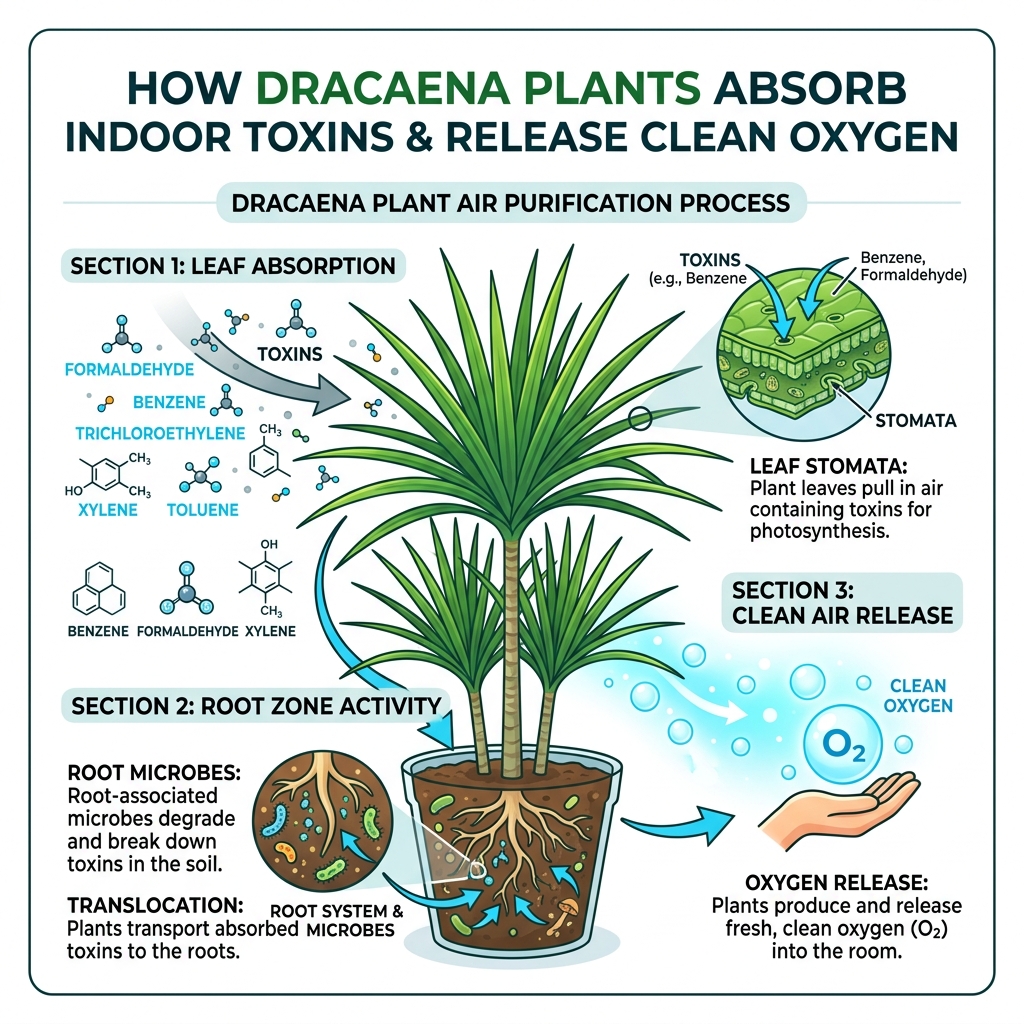
The Science of Dracaena Plant Toxin Removal
To understand why we are so obsessed with these plants at Mount Pilchuck, we have to look at the science of “phytoremediation.” This is a fancy term for using living plants to clean up soil, air, and water. While some plants are just pretty faces, Dracaenas are high-performance biological filters.
The process isn’t magic; it’s a combination of leaf absorption and root-zone activity. When a Dracaena “breathes,” it pulls in air through tiny pores on its leaves called stomata. Along with the carbon dioxide it needs for photosynthesis, it accidentally (and fortunately for us) pulls in airborne toxins.
Recent research published in Environmental modulation enhances benzene phytoremediation by Aglaonema and Dracaena in indoor settings | Scientific Reports highlights how environmental factors like humidity and temperature can actually supercharge this process. For instance, Dracaena deremensis shows an improved uptake of benzene when the relative humidity is around 50%, as this keeps the plant’s stomata open and active.
But the leaves don’t do all the heavy lifting. A significant portion of dracaena plant toxin removal happens below the soil line. The plant transports some of these absorbed chemicals down to its roots, where a thriving community of specialized microorganisms breaks the toxins down into harmless organic compounds that the plant can actually use for food. It’s a perfect, zero-waste recycling system happening right in your decorative pot.
How Dracaena Plant Toxin Removal Works at a Molecular Level
At the molecular level, the Dracaena is essentially a chemical processing plant. During the day, as the plant engages in photosynthesis, it moves gases through its tissues. This gas exchange is the primary vehicle for toxin entry. Once inside the leaf, the plant uses enzymatic pathways to neutralize chemicals.
Think of it as a metabolic “digestion” of pollutants. For example, formaldehyde can be converted into organic acids and sugars. This isn’t just a passive storage system; the plant actively metabolizes these harmful substances. Furthermore, the process of transpiration—where the plant releases water vapor—creates a subtle “pull” that draws more air (and more toxins) toward the leaf surface and down into the soil.
If you are interested in maximizing this natural phenomenon, you can even turn your houseplants into air purifiers by optimizing their environment to keep those metabolic rates high.
Targeted Pollutants: Formaldehyde, Benzene, and Beyond
While we often group “pollution” into one category, indoor air is actually a cocktail of specific chemicals. Dracaenas are particularly adept at targeting the “Big Five” of indoor pollutants.
- Formaldehyde: Found in almost every home via particleboard, carpets, and upholstery. It’s a known respiratory irritant.
- Benzene: A solvent found in oils, paints, plastics, and rubber. Long-term exposure is linked to more serious health risks.
- Trichloroethylene: Commonly found in printing inks, varnishes, and adhesives.
- Xylene and Toluene: These are often found in “new” smells—think new car interiors, nail polish, or leather treatments.
- Carbon Monoxide: Dracaenas are among the few plants noted for their ability to help reduce levels of this odorless, dangerous gas.
A study by the University of Georgia found that Dracaena plants can remove up to 90% of benzene and formaldehyde from the air within just 24 hours. That is an incredible turnaround for a living organism that just sits there looking beautiful! You can learn more about plants that filter toxins from the air to see how the Dracaena family stacks up against other green competitors.
Top Dracaena Species for Maximum Air Purification
Not all Dracaenas are created equal when it comes to their cleaning power. With over 120 species in the genus, choosing the right one for your space is key. Generally, we find that the larger the leaf surface area, the more “breathing” the plant can do, which typically leads to better air purification.
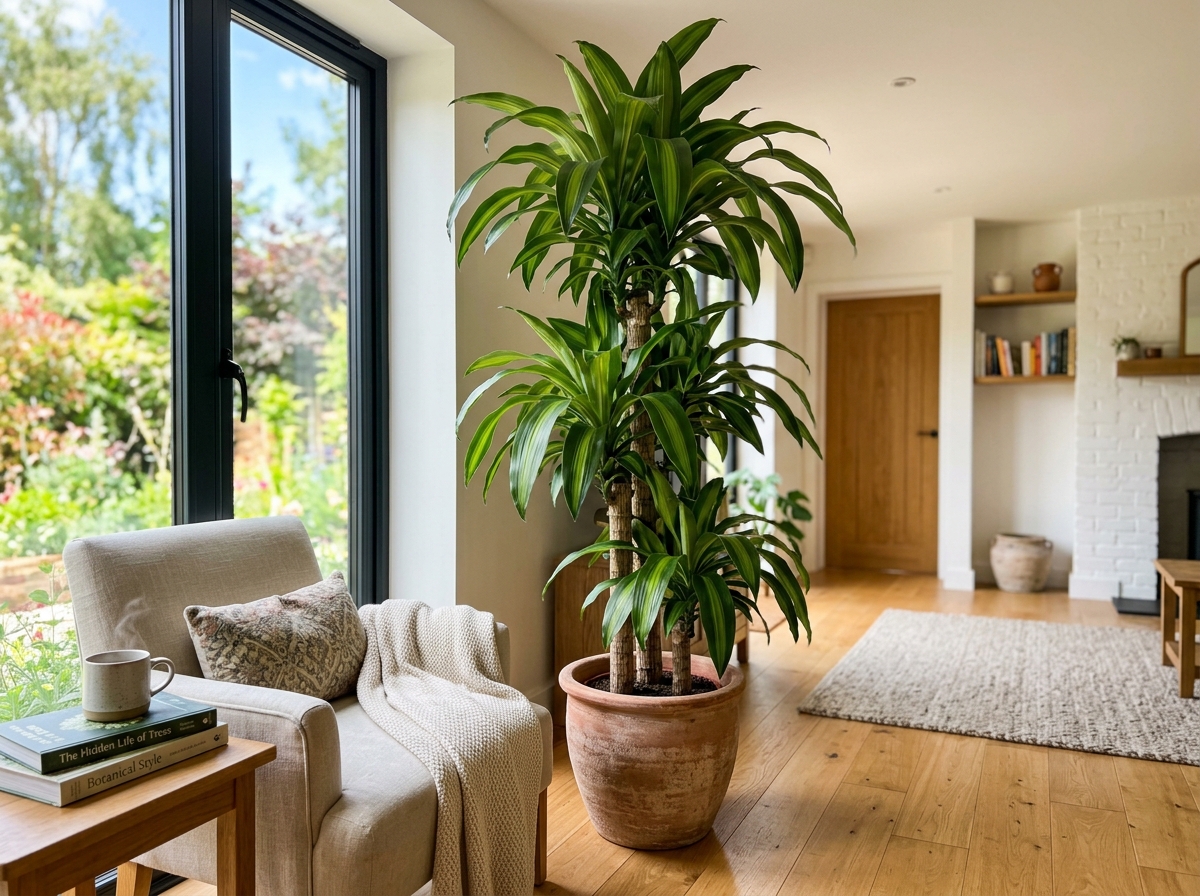
The Dracaena fragrans, commonly known as the Corn Plant, is a classic choice for a reason. Its wide, arching leaves provide a massive surface area for gas exchange. It’s also incredibly resilient, making it a perfect partner for those of us who might occasionally forget a watering session. If you are looking for aesthetic impact, these plants can grow quite tall, acting as “architectural” pieces in a room. You can discover the best leafy plants for air purification in our expanded guide.
Dracaena Compacta: The Powerhouse of Dracaena Plant Toxin Removal
If you have a smaller apartment or a crowded office desk, the Dracaena compacta is your secret weapon. Don’t let its small stature fool you; this plant is a concentrated air-cleaning machine.
In lab tests, Dracaena compacta stood out with its impressive ability to remove 96% of formaldehyde within 24 hours. Because its leaves are so densely packed, it offers a high density of stomata in a very small footprint. It’s essentially the “HEPA filter” of the plant world. It grows slowly and maintains its tight, sculptural shape, making it one of the best budget-friendly air-purifying plants because you won’t need to repot it or prune it nearly as often as its cousins.
Dracaena Marginata and Reflexa: The NASA Favorites
The Dracaena marginata (Dragon Tree) and Dracaena reflexa (Song of India) were both superstars in the original NASA Clean Air Study.
- Dracaena Marginata: Known for its thin, red-edged leaves and spindly trunks, this plant is a specialist in removing benzene and trichloroethylene. It’s also incredibly tolerant of low light, which is why you see it in so many office lobbies.
- Dracaena Reflexa: This species is particularly effective at clearing xylene and toluene. Its slightly spiraled, variegated leaves make it a visual standout.
Both of these are excellent choices if you want to explore low-maintenance air-purifying plants that can survive in those corners of your home that don’t get much direct sun.
Optimizing Your Indoor Air Detox Project
Simply buying a plant isn’t enough; you need a strategy. To truly harness dracaena plant toxin removal, we recommend “clustering.” Placing three or more plants in a high-traffic area (like your living room or bedroom) creates a localized “microclimate.”
Research shows that grouping Dracaenas can raise the local relative humidity by 5–8 percentage points. This doesn’t just help the plants breathe better; it also helps reduce static electricity and keeps your own skin and throat from drying out during the winter months.
| Dracaena Species | Best For | Light Needs | Toxin Efficiency |
|---|---|---|---|
| D. compacta | Formaldehyde | Low to Moderate | Very High |
| D. marginata | Benzene | Moderate/Indirect | High |
| D. fragrans | Xylene/CO2 | Moderate | High |
| D. reflexa | Toluene | Bright/Indirect | Moderate |
For more hands-on advice, check out our guide on indoor air detox projects you can do yourself.
Care Practices to Maintain Purifying Power
A dusty plant is a “clogged” plant. If the leaves are covered in a layer of household dust, the stomata can’t interact with the air effectively. We recommend wiping the leaves of your Dracaena with a damp cloth once a month. This simple act of “cleaning the filter” ensures the dracaena plant toxin removal process remains efficient.
Other best practices include:
- Watering: Wait until the top inch of soil is dry. Overwatering leads to root rot, which kills the beneficial microbes that help break down toxins.
- Water Quality: Dracaenas are sensitive to fluoride and chlorine often found in tap water. If you see brown tips on the leaves, try using distilled water or let your tap water sit out for 24 hours before using it.
- Soil: Use a well-draining mix. A healthy root system equals a healthy air-purification system.
For more DIY ideas on how to use your greenery, take a look at plants as air purifiers DIY home project ideas.
Safety and Limitations: What Every Owner Should Know
While we love Dracaenas, we have to be honest about their limitations. They are not a 1:1 replacement for a HEPA filter when it comes to particulate matter like dust, pet dander, or mold spores. Plants are chemical filters, not mechanical ones. For a truly healthy home, we suggest a combined approach: use plants for chemical (VOC) removal and a mechanical filter for dust and allergens.
You should also be aware of “Sick Plant Syndrome.” If your plant is struggling—dropping leaves or suffering from pests—its metabolic rate drops, and its ability to purify the air drops with it. A healthy plant is a working plant. You can read more about top houseplants for allergies to see which plants might be better if your primary concern is pollen or mold.
Protecting Pets and Children
This is the most important “fine print” regarding Dracaenas: All 40+ versions of Dracaena plants are toxic to cats and dogs.
The plants contain compounds called saponins. If ingested, they can cause vomiting (sometimes with blood), drooling, and dilated pupils in cats. While they aren’t usually fatal unless eaten in large quantities, they will certainly make your furry friends very miserable.
To keep your pets safe while still enjoying the benefits of dracaena plant toxin removal, we recommend:
- Elevation: Place your Dracaenas on high shelves or plant stands that are at least 48 inches off the ground.
- Deterrents: Use a bitter apple spray on the lower leaves or stems to discourage curious nibblers.
- Observation: If you have a particularly “chewy” pet, you might want to stick to the bedroom where you can close the door when you aren’t around.
If you’re looking for greenery for the sleeping quarters, check out our list of top air-purifying plants for bedrooms.
Frequently Asked Questions about Dracaena Air Purification
How many Dracaena plants are needed to make a noticeable difference in a room?
While one plant is better than none, the general rule of thumb for VOC reduction is one 6-8 inch plant per 100 square feet of living space. For a standard 300-square-foot living room, three well-placed Dracaenas will provide a measurable improvement in air quality over a 48-hour period.
Are Dracaena plants effective against mold spores and dust?
No. Dracaenas are excellent at removing gaseous toxins (VOCs), but they do not “eat” dust or mold. In fact, if you overwater your plant and the soil stays soggy, you might actually encourage mold growth in the pot. Keep the soil surface clean and don’t overwater!
Why are the tips of my Dracaena leaves turning brown, and does it affect purification?
Brown tips are usually caused by three things: low humidity, inconsistent watering, or fluoride sensitivity. While a few brown tips won’t stop the plant from purifying the air, a plant that is significantly stressed will have closed stomata, which does reduce its effectiveness. Trim the brown tips with clean scissors to keep the plant looking its best and keep that air flowing.
Conclusion
The evidence is clear: dracaena plant toxin removal is one of the most cost-effective and aesthetically pleasing ways to improve your home environment. Beyond the chemical benefits, these plants are proven to reduce stress. A study from the University of Hyogo found that even just looking at a small plant on your desk for three minutes can significantly lower your pulse rate and anxiety levels.
By bringing a Dracaena into your living room, you aren’t just buying a decoration. You are hiring a 24/7, solar-powered air filtration crew that also happens to make your home feel like a tropical sanctuary. Whether you choose the towering Corn Plant or the dense, powerful Compacta, you are taking a proactive step toward sustainable living and better health.
At Mount Pilchuck, we believe that every home deserves the breath of fresh air that only nature can provide. Start your indoor garden today and see (and breathe) the difference for yourself!
