
Why Air Quality is Critical for Your Workout Performance
When we step into our home gyms, we focus on heart rate, muscle tension, and PRs. However, the most vital “fuel” we consume during a workout isn’t a pre-workout shake—it’s oxygen. The quality of that oxygen directly dictates how well our bodies perform and recover. During a standard workout, your body is working overtime to deliver oxygen to your muscles, and any impurity in the air acts as a literal drag on your cardiovascular efficiency.
Research shows that during intense exercise, our breathing rate increases dramatically, often reaching 10 times the normal resting rate. This physiological shift means that if your gym air is filled with dust, mold spores, or chemical vapors, you are inhaling ten times the volume of those pollutants compared to when you are sitting on the couch. In fact, studies have measured PM10 levels (large particles) in gyms as high as 1080 μg/m³, far exceeding the healthy limit of 50 μg/m³. This is particularly concerning for those training in enclosed spaces without professional-grade ventilation.
When we breathe in clean air, our lungs can transfer oxygen to the bloodstream more efficiently. This leads to better stamina and reduced fatigue. Conversely, poor air quality—common in garage gyms where VOCs (Volatile Organic Compounds) from car exhaust, stored gasoline, or old paint cans linger—can cause wheezing, coughing, and impaired lung function. For those of us training for a marathon or hitting a heavy HIIT session, clean air for fitness is a genuine performance enhancer that is often overlooked in favor of expensive supplements.
Furthermore, scientific research on gym air quality indicates that air cleaning and proper ventilation can reduce aerosol particle concentrations by 80% to 90%. This is crucial because PM2.5 (fine particulate matter) is small enough to enter the deep tissue of the lungs and even the bloodstream. These microscopic invaders can trigger systemic inflammation, potentially causing long-term respiratory issues and even cardiovascular strain if ignored over years of consistent training.
Key Features to Look for in Home Gym Air Purifiers
Not all air purifiers are created equal, especially when it comes to the unique demands of a fitness space. You aren’t just filtering “house dust”; you’re dealing with rubber floor off-gassing, sweat odors, and perhaps even lifting chalk. A standard bedroom unit might struggle to keep up with the rapid air displacement caused by movement and heavy breathing.

The Three Pillars of Gym Filtration:
- True HEPA Filters: This is the gold standard. A True HEPA filter captures 99.97% of particles as small as 0.3 microns. This includes the fine dust that gets kicked up when you drop a barbell or the pollen that drifts into a garage gym when the door is open. Be wary of “HEPA-type” filters, which do not meet the same rigorous efficiency standards.
- Activated Carbon: While HEPA handles the “stuff,” Activated Carbon handles the “smell.” These filters are essential for neutralizing sweat odors and the “new gym” smell caused by rubber mats and equipment off-gassing. The more carbon the filter contains, the more chemical vapors it can absorb before becoming saturated.
- Ozone-Free Technology: We always recommend avoiding ionizers or ozone generators in a gym setting. Ozone can be a lung irritant, which is the last thing you want when you are gasping for air during a finisher. Look for mechanical filtration or technologies like plasma wave that neutralize viruses without harmful byproducts.
If you are working with a smaller spare-room gym, you might not need a massive industrial unit. There is plenty of more info about budget-friendly options that can still provide high-quality HEPA filtration without breaking the bank, provided they are rated for the correct square footage.
Understanding CADR Ratings for Home Gym Air Purifiers
CADR stands for Clean Air Delivery Rate. It tells you how quickly the unit can clean the air of smoke, dust, and pollen. For a home gym, we recommend a unit that can provide at least 4 to 5 Air Changes per Hour (ACH). This means the entire volume of air in the room is scrubbed clean every 12 to 15 minutes.
To calculate what you need, determine the volume of your gym (Square Footage x Ceiling Height). For example, a 200-square-foot room with 8-foot ceilings has a volume of 1,600 cubic feet. To achieve 5 ACH, you would need a purifier with a CADR of at least 133. This ensures that even during a high-intensity session where you’re producing significant CO2 and heat, the air remains crisp. This is similar to the standards used in professional settings; you can find more info about workplace air quality to see how these ratings scale for different environments.
Managing Sweat Odors and Chalk Dust with Home Gym Air Purifiers
If you’ve ever walked into your gym the morning after a heavy leg day and been hit by a “locker room” scent, you know the struggle. Standard air fresheners just mask the smell with synthetic chemicals. Home gym air purifiers with heavy-duty charcoal filters actually absorb the organic compounds that cause those odors, removing them from the environment entirely.
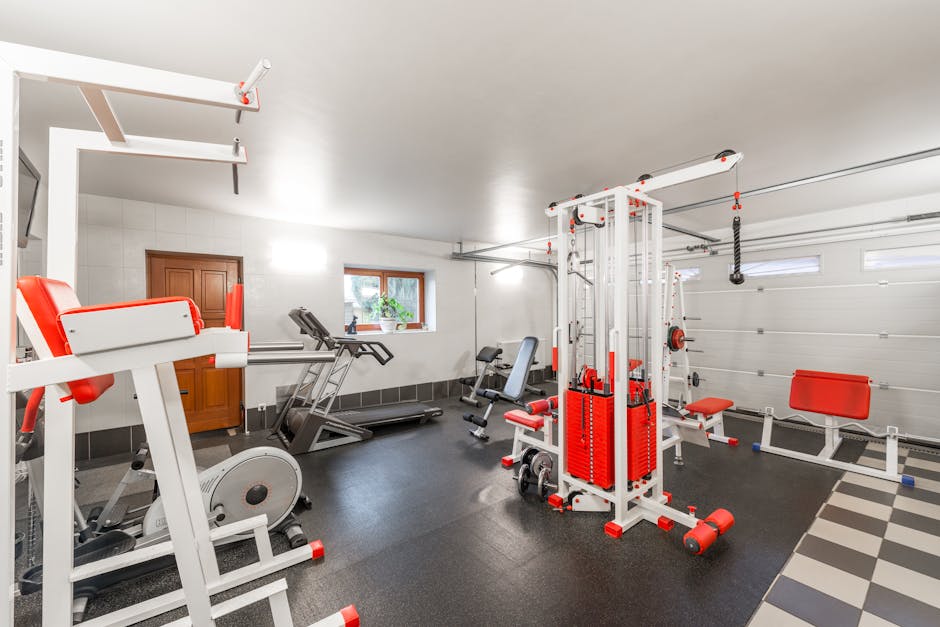
For those who use lifting chalk, the air can quickly become thick with white powder. This particulate matter settles on everything and irritates the throat. A high-CADR purifier positioned near your lifting platform can pull that dust out of the air before it has a chance to settle in your lungs. Additionally, many gym owners don’t realize that new rubber flooring can emit formaldehyde for up to two years. A robust carbon filter is your best defense against these invisible chemical “ghosts” that can cause headaches and nausea during long training sessions.
Choosing the Right Size and Placement for Optimal Airflow
Placement is just as important as the model you choose. If you tuck your air purifier in a corner behind a squat rack or under a bench, its efficiency drops significantly because the intake and exhaust are blocked. Air purifiers rely on creating a “vortex” of air movement to pull pollutants from across the room.

Placement Best Practices:
- Central Positioning: Place the unit where it has at least 1-2 feet of clearance on all sides. This allows the fan to draw in air from 360 degrees if the model supports it.
- Elevation: Elevating the unit off the ground (on a sturdy shelf or bench) can help it capture more airborne particles. Floor-level units often just stir up settled dust rather than filtering it, whereas elevated units catch the particles that are floating at “breathing height.”
- Avoid Corners: Corners create “dead zones” where air doesn’t circulate. If the purifier is in a corner, it will likely just clean the same pocket of air over and over again while the rest of the gym remains stagnant.
Room Size vs. Performance Table
| Gym Size | Recommended CADR | Ideal Air Changes (ACH) |
|---|---|---|
| Small Bedroom (150 sq ft) | 100-150 | 5 |
| Standard Garage (300-400 sq ft) | 250-300 | 4-5 |
| Large Basement (600+ sq ft) | 400+ | 4 |
| Multi-Car Garage (800+ sq ft) | 550+ | 4 |
By matching the unit to your square footage, you ensure the motor isn’t overworked and the air stays consistently fresh. An undersized unit will run on its highest, loudest setting constantly, which can be a major distraction during your workout.
Maintenance and Long-Term Care for Your Gym’s Air Quality
A “set it and forget it” mentality will eventually lead to a clogged, noisy machine that consumes more electricity while providing less filtration. Because gyms are high-dust environments due to movement, towels, and equipment, maintenance is key to protecting your investment.
- Filter Replacement: Most True HEPA filters need replacing every 6 to 12 months. However, if you train daily in a dusty garage or use chalk, check them every 3 months. A gray or black filter is a sign that it is no longer effective.
- Pre-Filter Cleaning: Many home gym air purifiers have a washable pre-filter. This catches the big stuff—pet hair, large dust clumps, and gym towel lint. Washing this once a month prevents the main HEPA filter from clogging prematurely, saving you money in the long run.
- Sensor Calibration: If your unit has a “Smart Mode,” wipe down the dust sensor with a Q-tip occasionally. If the sensor is dirty, it might think the air is clean when it isn’t, or vice versa.
- Energy Efficiency: Look for Energy Star-rated units. Since you’ll likely be running the unit frequently, choosing a model with a high-efficiency motor can save you significant money on your annual utility bills.
Maintenance also keeps the unit running quietly. We know how annoying a rattling fan can be during a yoga session or a focused meditation. For more tips on keeping your environment serene, check out more info about quiet operation to ensure your gym remains a sanctuary for both your body and mind.
Frequently Asked Questions about Home Gym Air Purifiers
Should I run my air purifier all day in my home gym?
Yes, we generally recommend running it 24/7 on a low or “Auto” setting. Home gyms, especially in basements or garages, can develop musty smells or accumulate VOCs from stored items even when you aren’t there. Running it continuously ensures the air is already clean the moment you start your warm-up, rather than having to wait 30 minutes for the machine to catch up.
Are smart features and air quality sensors worth it for workouts?
Absolutely. Features like app control allow you to “boost” the fan speed from your phone while you’re already on the treadmill or mid-set. Air quality sensors are particularly helpful because they will automatically ramp up the fan speed the moment they detect a spike in particles—like when you start using chalk or when the humidity rises during a sweaty HIIT session, ensuring you never have to stop your workout to adjust the settings.
Can air purifiers reduce the risk of viruses and bacteria in a gym?
Yes. HEPA filters are incredibly effective at capturing biological aerosols, including those that carry viruses and bacteria. While they aren’t a substitute for wiping down your equipment with disinfectant, they significantly reduce the concentration of airborne pathogens. This is vital if you share your home gym with family members, have a training partner, or host clients in a professional home-studio setting.
Conclusion: Creating a Healthier Training Environment
Investing in one of the best home gym air purifiers is an investment in your long-term health and athletic performance. By removing the dust, odors, and chemicals that plague indoor workout spaces, you allow your body to focus entirely on the work at hand—building strength, speed, and endurance without the burden of poor air quality.
At Mount Pilchuck, we believe in a holistic approach to air quality. While a high-tech purifier does the heavy lifting of removing fine particulates, you can further enhance your space by introducing nature. Certain indoor plants are powerhouses for air circulation and natural filtration, helping to keep your gym feeling fresh, vibrant, and oxygen-rich.
Ready to breathe even easier? Explore our guide to health-boosting indoor plants to find the perfect green companions for your training sanctuary. By combining mechanical filtration with natural air-purifying plants, you create the ultimate environment for peak performance. Clean air, better reps, better life!
