
Why a 24 Hour Oxygen Indoor Plant Could Change the Way You Sleep and Breathe
A 24 hour oxygen indoor plant is exactly what it sounds like — a plant that keeps releasing oxygen even after the sun goes down, unlike most houseplants that stop when light disappears.
Here are the top plants known to produce oxygen around the clock:
- Snake Plant (Sansevieria trifasciata) — releases oxygen at night via CAM photosynthesis
- Aloe Vera — continuous oxygen production, low maintenance
- Areca Palm — purifies air and boosts humidity day and night
- Orchids — release oxygen at night, ideal for bedrooms
- Christmas Cactus — nighttime oxygen producer, easy to care for
- Tulsi (Holy Basil) — emits oxygen for up to 20 hours a day
- Money Plant (Pothos) — adaptable and filters toxins continuously
- Spider Plant — removes formaldehyde and carbon monoxide around the clock
Most of us spend 80 to 90 percent of our time indoors. And the air inside is often worse than outside — full of VOCs, allergens, and stale air that drains your energy and disrupts sleep.
The problem? Most plants are “daytime only” oxygen producers. When light fades, they switch to respiration — consuming oxygen instead of releasing it.
But a small group of plants breaks that rule entirely.
These plants use a special biological process called CAM photosynthesis, which allows them to absorb carbon dioxide at night and release oxygen while you sleep. For anyone dealing with stuffy rooms, low energy, or restless nights, adding even one of these plants to your bedroom can make a real difference.
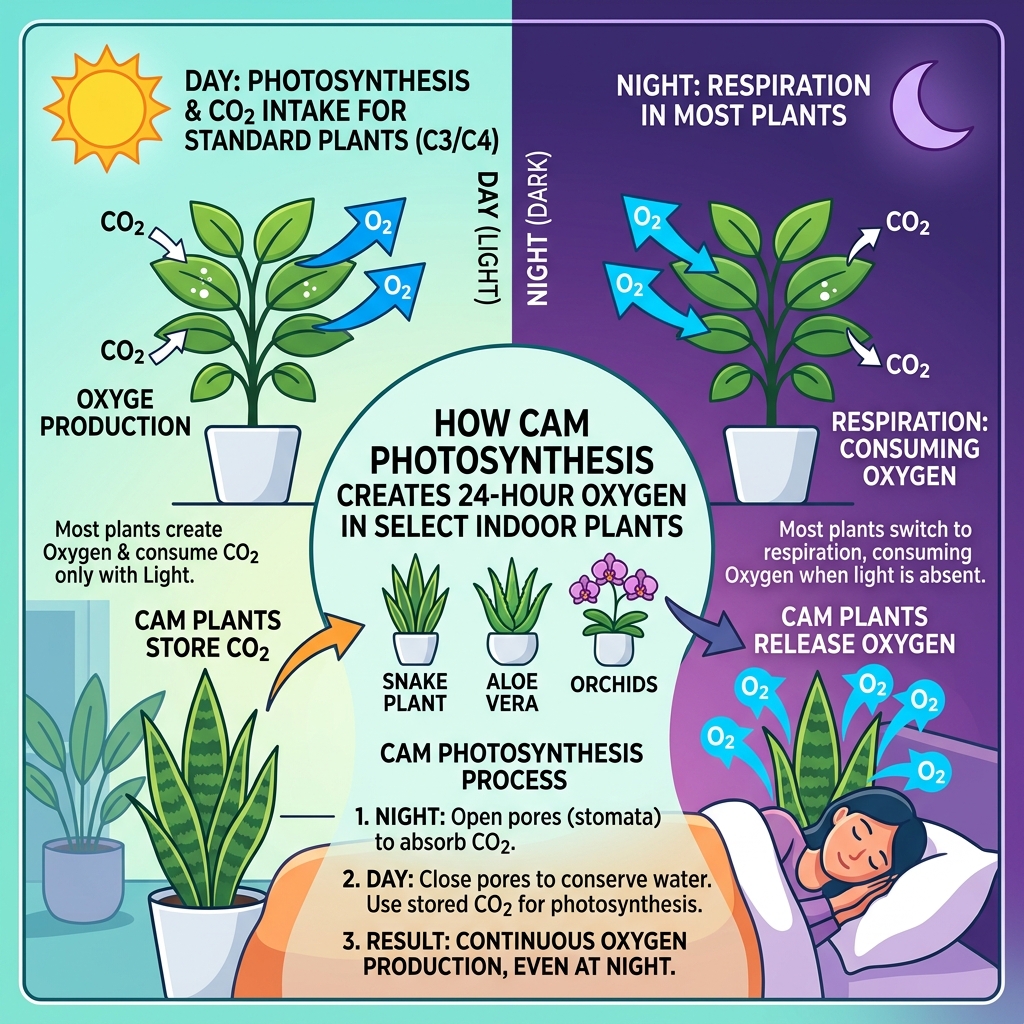
The Science of the 24 Hour Oxygen Indoor Plant
To understand why a 24 hour oxygen indoor plant is such a biological marvel, we have to look at how most plants “breathe.” Most greenery follows the C3 or C4 photosynthetic pathways. During the day, they use sunlight to turn CO2 and water into energy, releasing oxygen as a byproduct. At night, they flip the switch to respiration—taking in oxygen and releasing carbon dioxide, just like we do.
However, certain plants evolved in arid, harsh environments. To survive the scorching heat, they couldn’t afford to open their pores (stomata) during the day, as they would lose too much precious water through evaporation. Instead, they developed Crassulacean Acid Metabolism (CAM).
| Feature | C3/C4 Photosynthesis | CAM Metabolism |
|---|---|---|
| Stomata Opening | During the day | During the night |
| CO2 Absorption | Daytime | Nighttime |
| Oxygen Release | Daytime | 24-hour cycle (predominantly night) |
| Water Efficiency | Moderate | High (Desert adapted) |
| Examples | Peace Lily, Most Trees | Snake Plant, Aloe Vera, Cacti |
In CAM plants, the stomata open at night to collect carbon dioxide. This CO2 is converted into an organic acid called malate and stored in the plant’s vacuoles. When the sun comes up, the plant uses that stored malate to complete photosynthesis without needing to open its pores to the dry air. Because of this unique “night shift” for gas exchange, these plants continue to provide us with fresh oxygen long after we’ve turned out the lights.
For a deeper dive into this fascinating survival strategy, you can explore this University of California resource on CAM plants. Understanding this helps us realize that these aren’t just pretty decorations; they are sophisticated air-filtration systems working on a different clock than the rest of the world.
Top 8 Plants for Continuous Oxygen and Air Purification
If you are looking to recruit some “botanical superheroes” for your home, these eight species are the gold standard for a 24 hour oxygen indoor plant collection.

1. Snake Plant (Sansevieria)
Affectionately known as “Mother-in-Law’s Tongue,” the Snake Plant is the undisputed heavyweight champion of the bedroom. It is incredibly hardy—some might even call it the “Terminator” of houseplants because it is so difficult to kill. More importantly, it is one of the most efficient CAM plants available. According to the NASA Clean Air Study, the Snake Plant is exceptional at removing toxins like benzene and formaldehyde from the air while pumping out oxygen all night long.
2. Aloe Vera
Aloe Vera is like a green Swiss Army knife. Not only does it provide a soothing gel for burns and skin irritations, but it is also a powerhouse for indoor air quality. It continuously monitors your environment; if you notice brown spots appearing on its fleshy leaves, it might be telling you that the chemical levels in your room are too high. It releases oxygen 24/7 and is remarkably low-maintenance.
3. Areca Palm
If you want to bring a tropical holiday vibe to your living room, the Areca Palm is your best bet. Beyond its beauty, it acts as a natural air humidifier and oxygen booster. It can grow up to 8 feet tall and is particularly effective at filtering out toluene and xylene, which are often found in paints and chemical cleaners.
4. Orchids
Many people think orchids are just for show, but they are secret nighttime oxygen producers. Because they often grow as epiphytes (on trees) in the wild, they have adapted to unique gas exchange cycles. Placing an orchid on your nightstand provides both aesthetic beauty and a steady stream of fresh air while you sleep.
5. Christmas Cactus
Unlike the prickly desert cacti, the Christmas Cactus thrives in cooler temperatures and indirect light. It follows the CAM pathway, making it an excellent 24 hour oxygen indoor plant. It’s a great way to add a splash of color to your home during the winter months while keeping your oxygen levels topped up.
6. Tulsi (Holy Basil)
In many cultures, Tulsi is revered as a “Queen of Herbs” for its spiritual and medicinal properties. Scientifically, it is a marvel—emitting oxygen for up to 20 hours a day and absorbing harmful gases like carbon monoxide and sulphur dioxide. It also has natural mosquito-repellent qualities, making it a functional addition to any window ledge.
7. Money Plant (Pothos)
The Money Plant is a favorite for beginners because it is so adaptable. It can grow in soil or water and thrives in various light conditions. It is a tireless worker, filtering out volatile organic compounds (VOCs) and contributing to a healthier breathing environment around the clock.
8. Spider Plant
The Spider Plant is famous for its “spiderettes”—tiny baby plants that dangle from the mother plant. It is one of the most effective plants that filter toxins from the air, specifically targeting formaldehyde and carbon monoxide. It’s a fast grower and very easy to propagate, allowing you to fill your home with fresh oxygen producers in no time.
Maximizing Health Benefits in Your Home
Having a 24 hour oxygen indoor plant isn’t just about the air—it’s about a holistic approach to wellness. When we bring these plants into our living spaces, we are essentially installing biological air purifiers that never need a filter change.
One of the primary benefits is humidity regulation. Plants like the Areca Palm and Boston Fern release moisture through a process called transpiration. In the winter, when indoor heating can make the air dry and irritate your throat or skin, these plants act as natural humidifiers.
Furthermore, the presence of greenery has a profound impact on our mental state. Studies have shown that interacting with indoor plants can lower blood pressure and reduce cortisol levels. For more on this, check out our guide on the mental wellness benefits of indoor plants. By reducing stress and improving air quality, these plants create an environment where your body can truly recover.
Best 24 Hour Oxygen Indoor Plant Varieties for Your Bedroom
When it comes to the bedroom, we have to be strategic. Not all plants enjoy the low-light conditions often found in sleeping quarters. The best bedroom companions are those that don’t mind a bit of shade but still work hard on the “night shift.”
The Snake Plant and Aloe Vera are the top choices here because they thrive on neglect and don’t need direct sun to produce oxygen at night. Another honorable mention is the Peace Lily. While not a “true” CAM plant in the strictest sense, it is an incredible air purifier. You can find more specific recommendations in our list of top air-purifying plants for bedrooms.
Creating a Sleep Sanctuary with a 24 Hour Oxygen Indoor Plant
To get the most out of your plants, we recommend grouping them together. This creates a “mini-ecosystem” that maximizes both oxygen output and humidity. Placing a cluster of three to five plants in the corner of your bedroom can significantly reduce nighttime CO2 levels.
These “wellness warriors” do more than just sit there; they actively improve your breathing by clearing the air of dust and spores. We’ve seen many people find relief from nighttime allergies simply by introducing indoor plants that improve breathing into their sleep sanctuary.
Essential Care Tips for Nighttime Oxygen Producers
To keep your 24 hour oxygen indoor plant pumping out fresh air, you need to treat it right. Fortunately, many of these plants are quite hardy, but they do have a few “non-negotiables.”
- Light Requirements: Most oxygen-producing plants prefer bright, indirect sunlight. Direct sun can scorch the leaves of an Aloe Vera or a Money Plant, while too little light might slow down their oxygen production.
- Watering Wisdom: The number one killer of houseplants is overwatering. For succulents like the Snake Plant and Aloe Vera, always wait until the soil is completely dry before watering again. As we like to say, “When in doubt, leave it out!”
- Soil and Drainage: Ensure your pots have drainage holes. Using a well-draining potting mix (like a cactus or succulent mix) prevents root rot, which is essential for easy-care plants for home air quality.
- Temperature Stability: These plants are generally tropical or desert-based, so they don’t like cold drafts. Keep them away from air conditioning vents or drafty windows during the winter. If you have a room that doesn’t get much sun, look into indoor plants for low light rooms to ensure you pick the right species.
- Clean the Leaves: Dust can clog the stomata (pores) of your plants, making it harder for them to exchange gases. Every few weeks, take a damp cloth and gently wipe the leaves of your Snake Plant or Rubber Tree to keep them working at peak efficiency.
Frequently Asked Questions about 24-Hour Oxygen Plants
Do all plants produce oxygen 24 hours a day?
This is a common misconception! In fact, the vast majority of plants consume oxygen at night through respiration. Only specific plants, primarily those using the CAM pathway, have the ability to release oxygen during the night. Most of your standard garden plants and common leafy houseplants are “daytime only” workers.
How many plants do I need for a noticeable difference in air quality?
While having one plant is better than none, studies suggest that for a significant impact on air quality in a standard-sized room, you might need between 15 and 20 medium-sized plants. However, even 2 or 3 well-placed 24 hour oxygen indoor plant varieties in a bedroom can help lower CO2 levels and improve the “feel” of the air. To learn more about air movement, see our article on plants to improve indoor air circulation.
Are these oxygen-producing plants safe for pets and children?
Safety is a top priority for us. While the Snake Plant and Aloe Vera are incredible for air quality, they can be mildly toxic if ingested by curious cats or dogs. If you have pets, you might want to consider the Spider Plant or Areca Palm, which are generally considered non-toxic. We always recommend checking our guide on indoor plants safe for pets before bringing a new green friend home.
Conclusion
At Mount Pilchuck, we believe that your home should be a sanctuary that supports your health and vitality. Integrating a 24 hour oxygen indoor plant into your living space is one of the simplest and most effective ways to boost your well-being, improve your sleep, and clean the air you breathe.
Whether you start with a single, indestructible Snake Plant or build a lush, tropical bedroom oasis with Areca Palms and Orchids, you are taking a proactive step toward a healthier indoor environment. Our mission is to provide you with the expert advice you need to grow fresh air right in your living room.
Ready to transform your home into a breathable paradise? Explore our full guide to indoor plants for more tips on choosing the perfect greenery for your space. Sleep tight and breathe easy!
