
Why Hanging Plants Are the Smartest Way to Green Up Any Apartment
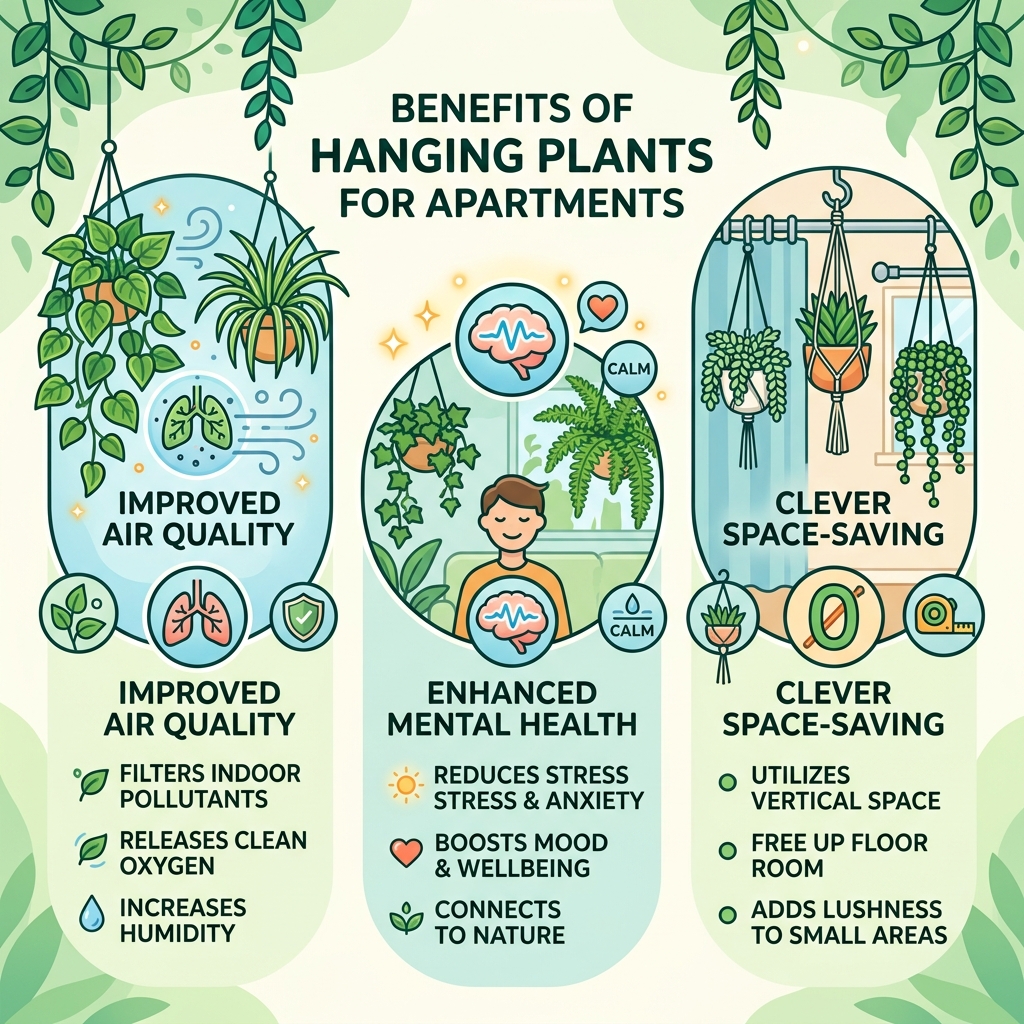
Apartment hanging plants are one of the most effective ways to add life, color, and cleaner air to a small urban space – without sacrificing precious floor room. According to the NASA Clean Air Study, certain indoor plants can significantly improve indoor air quality by removing common toxins.
Here’s a quick overview of the best ways to display hanging plants in your apartment:
- Ceiling hooks – Drill a pilot hole, install a J-hook or toggle bolt, and hang any trailing plant in a macrame or ceramic planter
- Curtain rods – Use S-hooks to hang lightweight planters from existing rods – no drilling required
- Tension rods – A completely damage-free option perfect for renters; best for smaller, lighter plants
- Mantels and shelves – Drape trailing plants like Pothos over floating shelves or fireplace mantels
- Pulleys – A DIY cord-and-hook system lets you lower plants easily for watering
The best hanging plants for apartments include Pothos, Spider Plants, English Ivy, Burro’s Tail, and Boston Fern – all low-maintenance and well-suited to typical indoor light conditions.
If you live in a city apartment, you know the feeling. Stagnant air. Limited natural light. Not enough room for a sprawling floor garden. And yet, you still want greenery.
That’s exactly where hanging plants shine. They use vertical space – the one thing most apartments have plenty of – to bring in plants that actively improve air circulation, reduce stress, and make a room feel alive.
Whether you own your home or rent and need zero-damage solutions, this guide covers every surface and method you need to know.
Best Low-Maintenance Varieties for Your Indoor Jungle
When we start our journey with apartment hanging plants, the goal is usually high impact with low effort. We want plants that look like a lush jungle but don’t require a degree in botany to keep alive.
The “Big Three” of the hanging plant world are Pothos, Spider Plants, and Heartleaf Philodendrons. These are the workhorses of indoor greenery. Pothos, often called “Devil’s Ivy” because it’s nearly impossible to kill, features heart-shaped leaves that can trail several feet down from a high shelf. Spider Plants are equally resilient and produce “babies” (spiderettes) that dangle like living ornaments. For those living in cozy quarters, indoor plants for small apartments like these provide maximum foliage without taking up a single square inch of floor space.
| Plant Variety | Light Requirement | Growth Habit | Water Needs |
|---|---|---|---|
| Pothos | Low to Bright Indirect | Fast Trailing | Low (Dry between waterings) |
| Spider Plant | Bright Indirect | Arching/Dangling | Moderate |
| English Ivy | Bright Indirect/Direct | Dense Trailing | Consistent Moisture |
Choosing Plants for Specific Light Conditions
One of the most common mistakes we see is placing a sun-loving succulent in a dark corner. To keep your air fresh and your plants happy, you must match the species to the light. If you are struggling with a windowless hallway or a moody bedroom, look into indoor plants for low-light rooms.
- Low Light: Jade Pothos and Tradescantia Zebrina (Inch Plant) are champions of the shadows. They maintain their deep colors even when the sun is shy.
- Bright Indirect Light: This is the “sweet spot” for most low-maintenance air-purifying plants. String of Hearts offers delicate, purple-backed leaves that look stunning against a white wall.
- Full Sun: If you have a south-facing window, go for the Burro’s Tail. This succulent features thick, braided-looking stems that can become quite heavy, so ensure your hook is secure!
Dramatic Oversized Options for Visual Impact
If you want to create a “chandelier effect,” you need plants with serious volume. Large Boston Ferns are the gold standard for bohemian aesthetics. They are bushy, feathery, and command attention. For something more sculptural, the Staghorn Fern is a showstopper. Unlike most plants, these can actually be mounted on wooden boards and hung like living taxidermy.
Other “architectural” options include the Bears-Paw Fern, which has a beautiful cascading effect that can follow the curve of a staircase, and Spider Plants hung at varying heights to fill a large vertical void in a loft or high-ceilinged room.
How to Securely Hang Plants from the Ceiling
Gravity is the one thing we can’t ignore. Before you hang that heavy ceramic pot, you need to know what’s behind your ceiling.
If you have exposed wooden beams, you’re in luck—a simple J-hook screwed directly into the wood will hold almost anything. However, most of us deal with drywall or plaster. For these, you must use toggle bolts (also known as butterfly anchors). These have spring-loaded “wings” that expand once they are pushed through the pilot hole, distributing the weight so the hook doesn’t just pull right back out. This is especially important if you have indoor plants safe for pets; you don’t want a heavy pot falling anywhere near a curious cat or dog.
Step-by-Step Ceiling Installation
- Safety First: Wear eye protection (drilling upward sends dust into your eyes) and have a friend spot you on the ladder.
- Find the Support: Use a stud finder to see if there is a joist available. If yes, screw a hook directly in. If not, use a toggle bolt.
- Drill the Pilot Hole: Use a drill bit slightly smaller than the diameter of your hook screw.
- Insert Hardware: If using a toggle bolt, squeeze the wings, push it through the hole until you hear them “snap” open, and then tighten the hook.
- Space It Out: Give your plants room to breathe. We recommend hanging them at least 10 inches away from the wall so the leaves aren’t cramped.
Selecting the Right Planter Styles and Materials
The material of your pot dictates the hardware you need. Ceramic and terracotta are gorgeous but heavy—especially after you water the soil. If you are worried about weight, opt for lightweight plastic liners hidden inside decorative macrame hangers or woven rattan baskets.
One expert tip we love for apartment hanging plants is the “chain swap.” Most store-bought hanging baskets come with cheap, short plastic clips. Replacing these with a simple black metal chain from a hardware store (usually costing less than a dollar per foot) can instantly make a $15 plant look like a high-end designer piece. Plus, a longer chain makes the plant easier to reach for watering!
Renter-Friendly Hanging Plant Hacks for Apartments
We know the struggle: you want a jungle, but your landlord wants their security deposit back. Drilling holes in the ceiling is often a big no-no in rental agreements.
Fortunately, there are plenty of ways to display small potted plants for apartments without touching a power drill. S-hooks are your best friend here. They can be looped over the tops of bookshelves, kitchen pot racks, or even sturdy floor lamps. By utilizing existing fixtures, you create vertical interest and keep your walls pristine.
Using Curtain Rods for Apartment Hanging Plants
This is perhaps the most brilliant “hack” in the apartment hanging plants playbook. Your window is already the best place for light—why not use the curtain rod as a plant bar?
- Tension Rods: If you aren’t allowed to install permanent rods, a heavy-duty tension rod wedged into a window frame can support several small plants.
- Double Rods: Install a double curtain rod. Use the outer rod for your actual curtains and the inner rod (closest to the glass) for a “living curtain” of trailing vines.
- Weight Check: Just be sure your rod is securely bracketed. Distribute the weight evenly rather than clustering all the pots in the center. This setup is perfect for budget-friendly air-purifying plants like Pothos, which will grow to frame your window beautifully.
Creative DIY Hanging Plant Projects for Apartments
If you’re feeling crafty, you can move away from the “boho macrame” look and try something more modern. DIY enthusiasts suggest looking beyond standard online galleries for inspiration.
One popular project involves using metal embroidery hoops and wooden beads to create a minimalist, geometric hanger. You can even repurpose leather straps or old belts to hold pots against a wooden trellis shelf. For those who love propagation, a propagation tube wall allows you to see the roots growing in water—it’s like living jewelry for your walls. These projects are great for people looking for the top houseplants for allergies, as many of these easy-to-grow plants (like the Spider Plant) are excellent at filtering indoor toxins.
Essential Care and Maintenance for Vertical Greenery
Hanging plants have slightly different needs than their floor-dwelling cousins. Because heat rises, the air near your ceiling is often warmer and drier than the air at floor level. This means your hanging plants might dry out faster.
When selecting easy-care plants for home air quality, remember to check the soil moisture regularly. A long-necked watering can is a must-have tool, but be careful not to overwater. Since many hanging pots don’t have drainage holes (to avoid dripping on your rug), it’s easy for water to pool at the bottom and cause root rot. We recommend keeping the plant in its plastic “nursery pot” and placing that inside the decorative hanging planter. This makes it easy to take the plant to the sink for a good soak. This is also a great tip for indoor plants for office spaces where you want to avoid making a mess during the workday.
The Pulley System and Watering Hacks
If you have high ceilings, “Water Wednesday” can feel like a workout. To solve this, some clever plant parents use a DIY pulley system. By using an 11-foot cord and a couple of hooks, you can create a mechanism that lets you lower the plant to chest height, water it, and then zip it back up to the ceiling.
If a pulley feels too complicated, stick to self-watering pots. These have a reservoir at the bottom that allows the plant to drink as needed. Just remember to empty the drainage bin every once in a while so the water doesn’t go stagnant.
Outdoor Hanging Plants for Porches and Balconies
Don’t forget your outdoor spaces! Even a tiny balcony can benefit from some “curb appeal.” For sunny spots, African Daisies and Lantana provide vibrant colors and are quite drought-tolerant. If you want something edible, Cherry Tomatoes and Oregano thrive in hanging baskets, keeping them away from ground pests like slugs.
A viral hack for instant curb appeal is to buy pre-filled hanging baskets from a nursery, snip off the plastic hangers, and “plop” the entire basket into a larger, more decorative porch planter. It gives you an instant, professional-looking display with zero digging required.
Frequently Asked Questions about Hanging Plants
How do I water hanging plants without making a mess?
The best method is the “double pot” technique. Keep your plant in its original plastic pot with drainage holes, and place it inside a decorative “cachepot” that has no holes. When it’s time to water, take the plastic pot to the sink, let it drain completely, and then put it back. If the plant is too high to move, use a pulley system or a self-watering insert with a built-in reservoir.
Can I hang plants without drilling holes?
Absolutely! Renters can use tension rods in window frames or S-hooks over existing architectural features like door frames, picture rails, or sturdy shelving. For very lightweight plants, such as Air Plants (Tillandsia), you can even use high-quality adhesive hooks.
Which hanging plants are best for low-light apartments?
Jade Pothos and Tradescantia Zebrina are your best bets. They are incredibly hardy and can tolerate the lower light levels common in many city apartments. Heartleaf Philodendrons are also excellent candidates for those dimmer corners.
Conclusion
At Mount Pilchuck, we believe that everyone deserves a home that breathes. By embracing apartment hanging plants, you aren’t just decorating; you are improving your air circulation and creating a health-boosting environment. Whether you are installing a dramatic Staghorn Fern or a simple Pothos on a curtain rod, every bit of greenery helps.
Ready to start your vertical garden? Explore more indoor plant guides or dive deeper into our category/indoor-plants/ for expert advice on choosing the perfect species for your unique space. Happy planting!
