
Your Dark Room Doesn’t Have to Be a Plant Graveyard
The best indoor plants for dark rooms are ones that evolved to thrive in low light — and there are more of them than you’d think.
Quick answer — here are the top picks:
- Snake Plant — nearly indestructible, tolerates deep shade, purifies air
- ZZ Plant — stores water in its roots, thrives on neglect
- Pothos — fast-growing trailer, forgives almost anything
- Peace Lily — one of the only shade plants that actually flowers
- Cast Iron Plant — the toughest plant you can own
- Heartleaf Philodendron — lush, fast, and easy to propagate
- Aglaonema (Chinese Evergreen) — colorful foliage in dim spaces
- Spider Plant — non-toxic, beginner-friendly, air-purifying
- Parlor Palm — adds tropical height without needing sun
- Boston Fern — loves humidity and low light (great for bathrooms)
- Dragon Tree — striking, architectural, and low-maintenance
- Lucky Bamboo — grows in water alone, no soil needed
Most people assume that a dark room means no plants. That’s simply not true.
Many popular houseplants actually come from the shaded floors of tropical forests — places where thick canopies block up to 95% of sunlight. Your north-facing living room? That’s practically a luxury spa compared to where these plants came from.
There’s a simple rule of thumb worth remembering: if there’s enough natural light in a room to read a book comfortably, there’s enough light to grow a houseplant.
The bigger risk in dark rooms isn’t too little light — it’s too much water. Plants in low light drink far more slowly, so overwatering is the number one way people accidentally kill them. We’ll cover exactly how to avoid that.
Below, you’ll find the 12 best options, care tips, and solutions for even the darkest windowless spaces.
Top 12 Best Indoor Plants for Dark Rooms
When we talk about the best indoor plants for dark rooms, we are looking for “biological champions” of the shade. These aren’t just plants that survive; they are species that have adapted over millions of years to make the most of every stray photon of light.
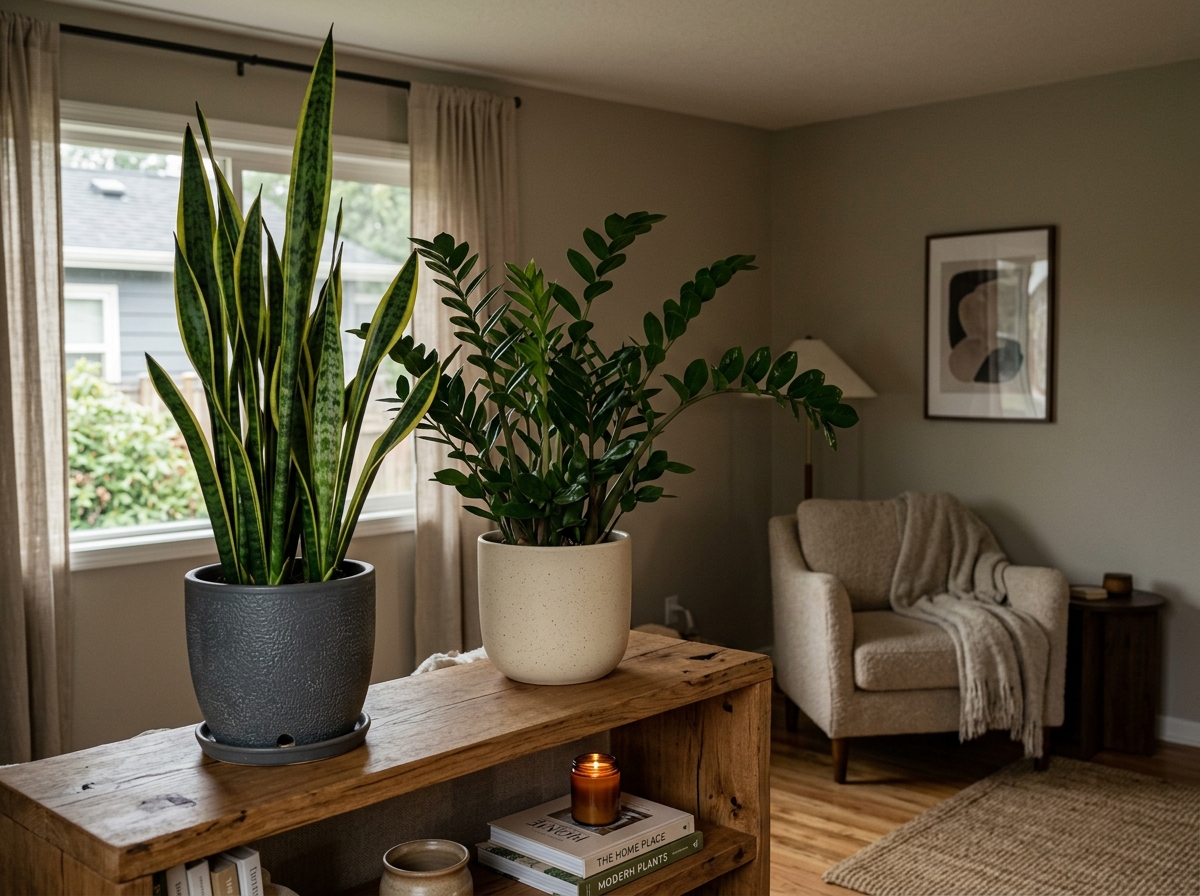
Many of these plants are also heavy hitters when it comes to your health. According to NASA research on air-filtering plants, certain low-light species are incredibly efficient at removing indoor toxins like benzene and formaldehyde. At Mount Pilchuck, we believe that even the dimmest corner of your home should contribute to better air circulation and a healthier living environment.
Why Snake Plants are the Best Indoor Plants for Dark Rooms
The Snake Plant (Sansevieria) is often called the “Mother-in-Law’s Tongue,” and for good reason—it’s tough, sharp, and nearly impossible to get rid of. It is widely considered the gold standard for indoor-plants-for-low-light-rooms.
What makes it unique is its metabolism. Unlike most plants, the Snake Plant releases oxygen at night, making it an ideal companion for a dark bedroom. It is also extremely drought-tolerant. Because it stores water in its thick, leathery leaves, it can go 2 to 6 weeks without a drink. If you are a self-proclaimed “black thumb,” this is the plant that will finally break your losing streak.
ZZ Plant: The King of Shady Corners
If the Snake Plant is the gold standard, the ZZ Plant (Zamioculcas zamiifolia) is the diamond. With its waxy, emerald-green leaves that look almost artificial, the ZZ plant is a master of light conservation.
It grows from thick, potato-like structures called rhizomes hidden beneath the soil. These rhizomes act as underground water tanks, allowing the plant to survive for months without a drop of water in a dim office or hallway. It grows slowly, which is actually a benefit in dark rooms—it won’t outgrow its pot or its space for years. It is truly the king of neglect-friendly greenery.
Pothos and Heartleaf Philodendron
These two are often confused, but both are stellar candidates for the best indoor plants for dark rooms. Pothos (Epipremnum aureum) is famous for its “devil’s ivy” reputation because it is so hard to kill. Heartleaf Philodendron offers a softer, more romantic look with its distinct heart-shaped leaves.
Both are trailing vines that look stunning cascading off a bookshelf or hanging in a dark corner. They are also incredibly easy to propagate; simply snip a stem, put it in a glass of water, and watch new roots grow. For those looking to create a “living wall” effect in a basement or north-facing room, these fast-growing trailers are your best bet.
Cast Iron Plant: The Victorian Survivor
The Cast Iron Plant (Aspidistra elatior) earned its name during the Victorian era. Back then, homes were dark, drafty, and filled with toxic fumes from coal fires and gas lamps. The Cast Iron Plant was one of the few things that could survive those conditions.
Today, it remains one of the most durable, pet-safe options for modern dark rooms. It doesn’t mind low humidity or fluctuating temperatures. While it grows slowly, its deep green, sword-like foliage provides a classic, elegant look that never goes out of style.
Peace Lily for Flowering in Shade
Most flowering plants need hours of direct sun to produce blooms, but the Peace Lily (Spathiphyllum) is the exception. It is one of the only plants that will produce its iconic white “flowers” (which are actually specialized leaves called spathes) in low-light conditions.
Be warned: the Peace Lily is a bit of a “drama queen.” If you forget to water it, the entire plant will collapse and wilt as if it’s dying. However, a quick drink usually sees it perk back up within hours. It’s also a top-tier air purifier, ranked by NASA in the top 5 for removing common household pollutants.
Aglaonema and Chinese Evergreens
If you think dark-room plants are limited to plain green, meet the Aglaonema. These plants come in a variety of silver, gray, and even pink patterns. A general rule for Aglaonema is that the darker the leaf, the less light it needs.
They have a beautiful clumping habit, making them perfect for tabletops or floor displays. They are highly adapted to dim spaces and can even thrive under the fluorescent lights of a windowless office.
Spider Plant: The Air-Purifying Classic
The Spider Plant (Chlorophytum comosum) is a nostalgic favorite. It’s famous for producing “spiderettes”—tiny baby plants that dangle from the mother plant like little spiders on a web.
These are fantastic for beginners because they are non-toxic to cats and dogs and are exceptionally good at cleaning the air of toxins like carbon monoxide and xylene. They prefer a bit of indirect light but will adapt gracefully to darker bedrooms or bathrooms.
Parlor Palm and Dragon Tree
Looking for a statement piece? You don’t need a sunroom to grow a tree. The Parlor Palm (Chamaedorea elegans) was a staple in Victorian “parlors” because it could handle the lack of light. It adds a soft, feathery tropical texture to any room.
The Dragon Tree (Dracaena), on the other hand, offers a more architectural, modern look with its stiff, upright leaves. Both grow slowly in low light, meaning they won’t hit the ceiling anytime soon, but they provide that much-needed vertical height to a room’s decor.
Lucky Bamboo and Boston Ferns
For those who want to skip the soil entirely, Lucky Bamboo is a perfect choice. It can grow indefinitely in a vase of water and pebbles, making it a clean, low-maintenance option for dark desks.
If you have a dark bathroom, the Boston Fern (Nephrolepis exaltata) is your best friend. While most low-light plants prefer to dry out, ferns love the high humidity of a shower. Its soft, arching fronds add a lush, forest-floor feel to even the smallest windowless bathroom.
Essential Care Guide for the Best Indoor Plants for Dark Rooms
Caring for plants in low light requires a different mindset than caring for those on a sunny windowsill. Because there is less energy from the sun, the plant’s “metabolism” slows down. This affects everything from how much water they need to how often you should reach for the fertilizer.
Comparison of Top Low-Light Plants
| Plant Name | Watering Frequency | Light Tolerance | Pet Safe? |
|---|---|---|---|
| Snake Plant | Every 3-6 weeks | Low to Deep Shade | No |
| ZZ Plant | Every 4-8 weeks | Low to Deep Shade | No |
| Cast Iron Plant | Every 2-3 weeks | Low to Medium Shade | Yes |
| Spider Plant | Every 1-2 weeks | Low to Indirect Light | Yes |
| Peace Lily | Every 1 week | Low to Medium Shade | No |
When potting these plants, we always recommend using well-draining soil mixed with perlite or orchid bark. In dark rooms, water doesn’t evaporate quickly, so aeration is key to preventing root rot. For more specific advice on basement setups, check out our guide on the-best-plants-for-basement-low-light-that-wont-ghost-you.
Watering and Feeding in Low Light
The most common mistake people make with the best indoor plants for dark rooms is overwatering. In a dim space, the soil might stay wet for weeks. Always use the “finger test”—stick your finger two inches into the soil; if it feels even slightly damp, wait a few more days.
As for feeding, low-light plants are slow eaters. We recommend fertilizing only during the growing season (spring and summer) and using a high-quality liquid fertilizer at half the recommended strength. Over-fertilizing a plant in the dark can lead to a buildup of salts that can burn the roots.
Maintenance Tips for the Best Indoor Plants for Dark Rooms
- Leaf Cleaning: In low light, your plant needs every bit of surface area to catch light. Dust acts like a window shade, blocking photosynthesis. Wipe leaves monthly with a damp cloth.
- Plant Rotation: Plants will naturally lean toward the nearest light source. To keep your plant growing straight and balanced, give the pot a quarter-turn every time you water it.
- Pruning: If a plant becomes “leggy” (long stems with few leaves), don’t be afraid to prune it. This encourages the plant to put its energy into bushier, fuller growth.
Solutions for Windowless Rooms and Basements
Can a plant survive in a room with zero windows? The short answer is: not forever. All plants need some form of light to create food through photosynthesis. However, “light” doesn’t have to mean “sunlight.”
Many of the plants we’ve discussed, like the ZZ Plant and Pothos, can survive quite happily under standard office fluorescent lights if they are on for at least 8 to 10 hours a day. If you have a truly windowless basement, investing in an LED grow light is a game-changer.
Modern LED grow lights offer a full spectrum of light—blue light to stimulate foliage growth and red light to promote overall health. You can now find grow bulbs that fit into standard desk lamps, making it easy to keep your greenery happy without turning your home into a laboratory. We suggest setting a timer for a 12-hour light cycle to mimic the plant’s natural circadian rhythm.
Troubleshooting Common Low-Light Plant Problems
Even with the best indoor plants for dark rooms, issues can arise. Here is how to spot them and fix them:
- Yellow Leaves: Usually a sign of overwatering. Check the roots for mushiness (root rot) and let the soil dry out completely.
- Leggy Growth: This is the plant “stretching” for light. Move it closer to a light source or add a small LED grow light.
- Stunted Development: If your plant hasn’t grown a single leaf in a year, it might be at its “survival limit.” A little more light or a tiny bit of fertilizer might jumpstart it.
- Pest Management: Fungus gnats love damp soil. If you see tiny black flies, you are likely watering too often. Let the top layer of soil dry out to break their life cycle.
Beyond just looking good, having these plants around is scientifically proven to help us. A Scientific study on indoor plants and stress reduction found that interacting with indoor plants can reduce both physiological and psychological stress.
Frequently Asked Questions about Low-Light Plants
Can any plant survive in 100% total darkness?
No. While some plants like the ZZ or Snake Plant can “park” themselves and survive for several weeks in total darkness, they will eventually exhaust their energy reserves and die. All plants need at least some artificial light or filtered natural light to survive long-term.
How do I know if my room is too dark for a plant?
Try the “reading test.” If you can read a newspaper or a book in the middle of the day without turning on a lamp, you have enough light for low-light plants. If you need a light to see the text, you’ll likely need to supplement with a grow light for your plants to thrive.
Which low-light plants are safe for cats and dogs?
If you have curious pets, the best indoor plants for dark rooms are the Cast Iron Plant, Spider Plant, Parlor Palm, and Boston Fern. These are all non-toxic. Plants like the Peace Lily, ZZ Plant, and Snake Plant contain calcium oxalate crystals, which can cause irritation if chewed.
Conclusion
Transforming a gloomy corner into a lush oasis isn’t just about aesthetics—it’s about creating a healthier, more vibrant home. At Mount Pilchuck, we are passionate about the power of greenery to improve air circulation and boost your overall well-being. By choosing the right species and following a few simple care rules, you can enjoy the beauty of nature even in the darkest rooms of your home.
Ready to start your indoor jungle? Transform your home with our curated Indoor Plants collection and find the perfect low-light companion today.
