
Air Purifying Plants for Home: At a Glance
Air purifier plants in hindi — Here is a quick list of the most effective indoor plants:
| Plant Name | Hindi Name | Main Benefit |
|---|---|---|
| Snake Plant | Snake Plant / Nag Paudha | Provides oxygen at night, removes formaldehyde |
| Tulsi | Tulsi | ~20 hours of oxygen, absorbs CO2 and SO2 |
| Spider Plant | Spider Plant | Cleans the air 24 hours a day |
| Money Plant | Money Plant | Absorbs VOCs and harmful chemicals |
| Peace Lily | Peace Lily / Rajhans Lily | Removes benzene and ammonia |
| Areca Palm | Areca Palm | Increases humidity, absorbs toluene |
| Aloe Vera | Aloe Vera | Filters formaldehyde and benzene |
| English Ivy | English Ivy | Removes mold and fecal particles |
In today’s life, we often assume that the air inside our homes is cleaner than the air outside.
But the truth is different.
Kitchen gas, paint, cleaning products, and dust — all of these combine to make indoor air just as polluted as the air on the streets. In closed rooms, invisible poisons like benzene, formaldehyde, and VOCs float around.
The NASA Clean Air Study has proven that certain indoor plants can naturally absorb these harmful gases — without any electricity or expensive equipment.
This guide will tell you which plants are most effective, where to place them, and how to care for them — all explained simply for your home.

Why Indoor Air Quality Matters and How Plants Help
Have you ever noticed why your head starts feeling heavy after sitting in a closed room for a long time? The reason is ‘indoor air pollution’. The air inside our homes can often be 2 to 5 times more polluted than the air outside.
Harmful elements are released from paints, furniture polish, and even the gas burned in the kitchen. The most dangerous among these are:
- VOCs (Volatile Organic Compounds): These are chemicals that easily dissolve in the air, often released from electronics and plastics.
- Formaldehyde: This is found in new furniture and carpets.
- Benzene: This is present in detergents and glues.
When we install indoor plants, they act as a living filter. Plants absorb these pollutants through their leaves and roots. Microorganisms present in the soil break down these chemicals and convert them into food for the plants. Additionally, plants release moisture into the air through transpiration, which helps dust particles settle down, making it easier to breathe.
To learn more about this amazing natural system, you can read about the Health benefits of plant air filters. This process of air purification by plants not only increases oxygen but also reduces the risk of lung diseases. For more details, see Plants that filter toxins from the air.
Top Natural Air Purifier Plants in Hindi for Your Home
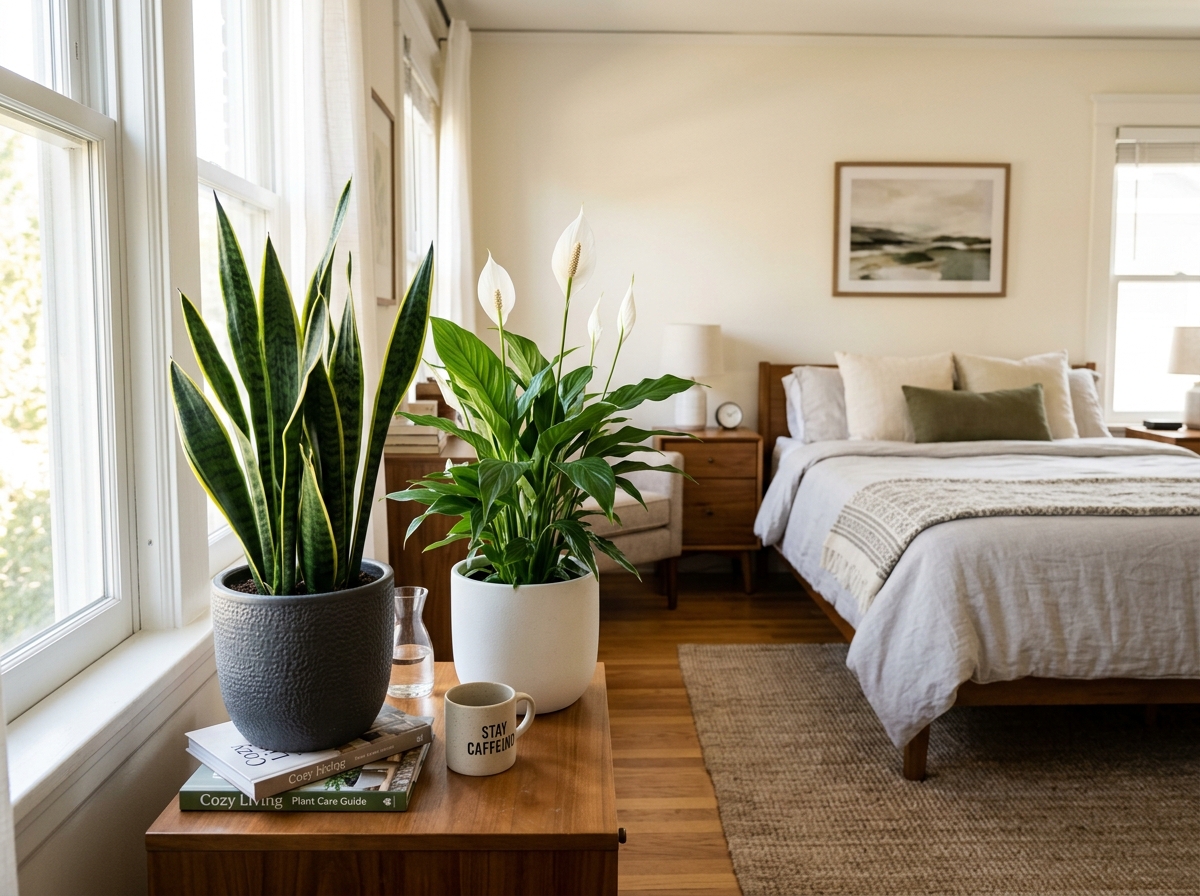
When we talk about air purifier plants in hindi, some plants stand out because of their incredible abilities. Here is a description of 4 plants that every Indian home should have:
1. Snake Plant (Nag Paudha)
Also known as ‘Mother-in-law’s tongue’, this is one of the rare plants that releases oxygen even at night by absorbing carbon dioxide. According to the NASA Clean Air Study, it has the ability to absorb more than 100 chemicals, including formaldehyde, benzene, and xylene. You can find more information about this NASA research on e-paper.
2. Tulsi
Tulsi is not just a religious plant; it is also an excellent air purifier. It releases oxygen for about 20 hours and eliminates toxic gases like carbon monoxide, carbon dioxide, and sulfur dioxide. For asthma patients, both the consumption of its leaves and its presence are beneficial.
3. Spider Plant
This plant is a natural purifier that works 24 hours a day. It can remove up to 95% of carbon monoxide and xylene from the air. It is also completely safe for pets.
4. Money Plant
In Indian homes, we plant this for good luck, but it is also lucky for our lungs. This fast-growing plant is an expert at absorbing synthetic chemicals (VOCs), especially in rooms with many electronics.
Toxin Removal Comparison Table:
| Plant | Light Requirement | Main Pollutant Removed |
|---|---|---|
| Snake Plant | Low to Medium | Formaldehyde, Benzene |
| Peace Lily | Low (Shade) | Ammonia, Trichloroethylene |
| Money Plant | Medium | Xylene, Benzene |
| Spider Plant | Medium | Carbon Monoxide |
Best Oxygen-Producing Air Purifier Plants in Hindi
If your goal is to increase the oxygen level in a room, these plants are the best options:
- Areca Palm: This plant not only removes gases like toluene from the air but also acts as a natural humidifier, providing moisture to dry air in winter.
- Rubber Plant: Its large leaves are very effective at absorbing bacteria and dust particles from the air. it can be kept in low-light corners.
- Bamboo Palm: Famous for filtering benzene and trichloroethylene, it is often placed near windows.
- Pothos: This can easily survive in any corner of the house and maintains oxygen levels.
You can see a list of the best plants for the bedroom here: Top air-purifying plants for bedrooms.
Low Maintenance Air Purifier Plants in Hindi for Beginners
If you are new to plant care or short on time, these plants are ‘zero maintenance’ options for you:
- Aloe Vera: It requires very little water. It even signals you by showing brown spots on its leaves when air quality is poor.
- English Ivy: This plant is very effective at reducing airborne mold and allergy-causing particles.
- Cardinal Plant: This plant is known for its ability to trap dust on its leaves, making the air cleaner.
More options for beginners are available here: Low-maintenance air-purifying plants.
Health and Mental Wellness Benefits of Indoor Greenery
Plants don’t just clean the air; they also calm our minds. According to a Stanford University study, if a room has 20% greenery, it is very beneficial for mental health. This means that a room of about 13 square meters should have around 17 pots.
Some key health benefits of indoor plants include:
- Stress Reduction: Spending time with plants lowers cortisol (the stress hormone) levels.
- Better Sleep: Plants like the Snake Plant provide oxygen at night, leading to deeper sleep.
- Allergy Relief: Plants like English Ivy and Peace Lily remove dust and mold from the air, reducing sneezing and runny nose problems.
- Noise Reduction: Plant leaves absorb sound waves, maintaining peace inside the house.
Read more deeply about the effects of plants on mental and physical health here: Health benefits of plant air filters-2.
Practical Guide: Placement and Care Tips
Simply bringing plants home is not enough; their proper care is also necessary so that they can clean the air effectively.
- Cleaning Leaves: Dust accumulation on plant leaves reduces their ability to clean the air. Once a week, gently wipe the leaves with a damp cloth.
- Correct Number: Remember Stanford’s ‘20% greenery’ theory. For an average room, at least 2-3 large plants or 10-12 small plants are sufficient.
- Light Considerations: Areca Palm needs good light, while Snake Plant can survive even in dark corners.
- Watering: Most indoor plants die from over-watering. Water only when the top layer of soil is dry.
- Pet Safety: Be aware that Peace Lily and some other plants can be toxic to dogs and cats. Keep them out of their reach.
Check out the DIY guide for using plants as air purifiers at home here: Turn your houseplants into air purifiers: a DIY guide. For easy plant care tips, read Easy-care plants for home air quality.
Frequently Asked Questions about Air Purifier Plants in Hindi
How many plants are needed for effective air purification in a room?
According to experts, at least 2 to 3 medium-sized plants are necessary for a 100 square foot room. According to the Stanford study, keeping 17 pots in a 13 square meter room provides maximum mental and physical benefits.
Which indoor plants produce the most oxygen?
Snake Plant, Areca Palm, Tulsi, Spider Plant, and Money Plant are considered among the highest oxygen-producing plants. Tulsi and Snake Plant are famous for providing oxygen even at night.
Does the Snake Plant give oxygen at night?
Yes, the Snake Plant (Sansevieria) is one of the few plants that converts carbon dioxide into oxygen at night. This is why it is considered the best plant for the bedroom.
Conclusion
Our home should be our safe haven, and air purifier plants in hindi are the easiest and most natural way to ensure this safety. Whether it is the purity of Tulsi or the modern efficiency of the Snake Plant, these plants help us live a healthy and stress-free life.
At Mount Pilchuck, our mission is to help you adopt a better lifestyle through plants. Instead of expensive electronic purifiers, make these small filters of nature a part of your home. This is not only good for your lungs but also essential for the beauty of your home and your mental peace.
To choose the right plants for your home, visit Explore our full range of indoor plants and start your ‘green journey’ today.
