
The Best Shade Loving Houseplants to Green Up Your Darkest Corners
The best shade loving houseplants can transform a dim, stagnant room into a fresher, more vibrant living space — no sunny windowsill required.
Here are the top picks at a glance:
| Plant | Why It Works in Shade |
|---|---|
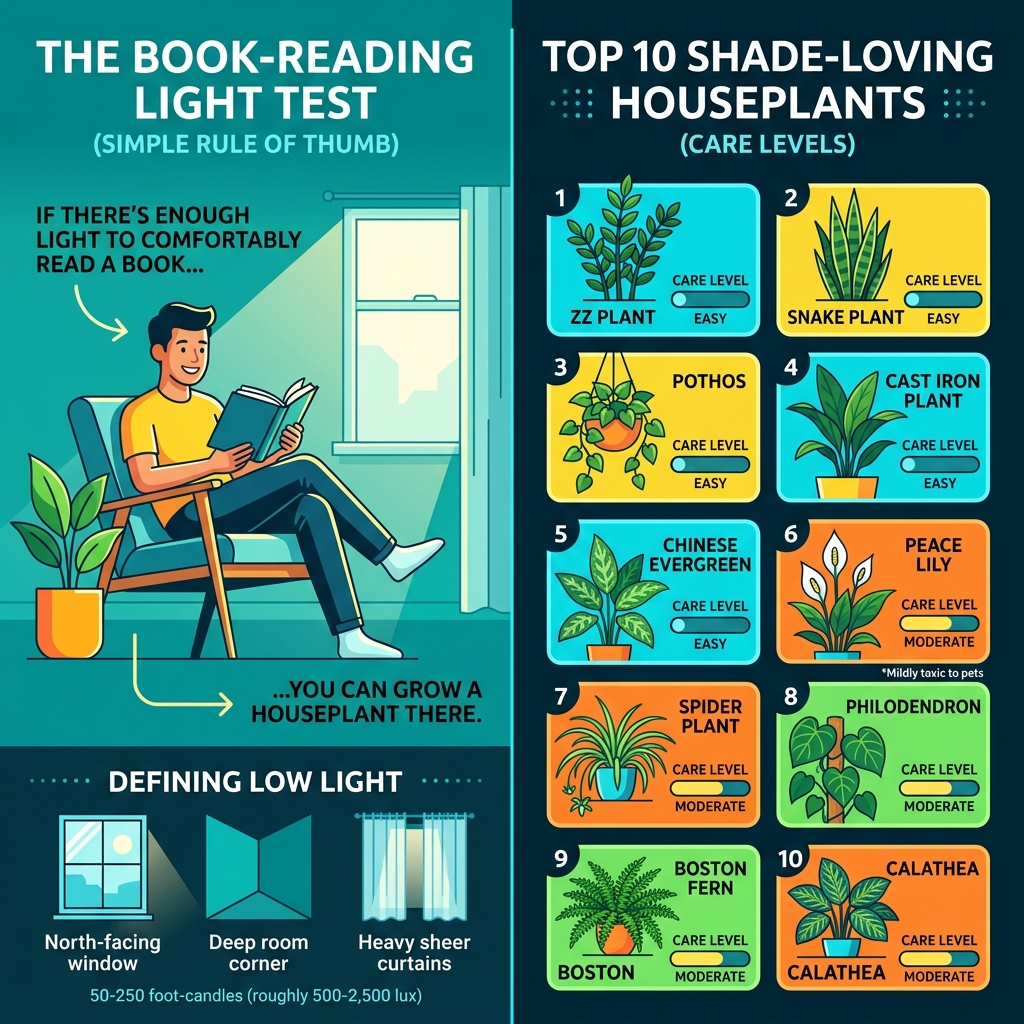
| ZZ Plant | Thrives in very low light, nearly indestructible |
| Snake Plant | Tolerates dim corners, improves air quality |
| Pothos | Trails beautifully in low light, fast-growing |
| Cast Iron Plant | Handles deep shade and poor conditions |
| Chinese Evergreen | Rich foliage, highly shade-adaptable |
| Peace Lily | Flowers in low light, pet-safe-ish* |
| Spider Plant | Pet-friendly, tolerates shaded spots |
| Philodendron | Lush, tropical feel in indirect light |
| Boston Fern | Loves humid, shaded spaces |
| Calathea | Stunning patterned leaves, thrives away from windows |
*Peace lily is mildly toxic to cats and dogs — keep out of reach.
Most houseplants sold today come from tropical rainforest floors. In the wild, a dense canopy blocks most direct sunlight. These plants evolved to do a lot with a little.
That’s great news if your home has north-facing rooms, small windows, or dim corners that feel impossible to style.
But “low light” doesn’t mean no light. Every plant needs some light to photosynthesize and stay alive. A simple rule of thumb: if there’s enough light in a room to comfortably read a book, you can grow a houseplant there.
For urban dwellers dealing with stagnant air, allergens, and low energy indoors, the right shade-tolerant plant does more than look good. It can help move air, add humidity, and make your space feel noticeably healthier.
Defining Low Light for Your Best Shade Loving Houseplants
When we talk about “low light” in indoor gardening, we aren’t talking about a windowless basement closet. In technical terms, low light usually refers to areas that receive between 50 and 250 foot-candles of light, or roughly 500 to 2,500 lux. In a typical home, these conditions are found in north-facing rooms, deep corners of a large living area, or behind heavy, sheer curtains.
Plants use light for photosynthesis—the process of turning light energy into chemical energy to fuel growth. While sun-loving plants like cacti or succulents might “stretch” or turn pale in these spots, the best shade loving houseplants have adapted larger, thinner, or darker green leaves to capture every available photon.
We categorize these plants based on their photoperiod needs:
- Short-day plants: These thrive on less than 12 hours of light per day.
- Day-neutral plants: Most of our favorite foliage plants fall here, needing between 8 to 12 hours of light to survive and maintain their glossy appearance.
If you are struggling to figure out if your room is “low light” or just “no light,” check out our guide on indoor-plants-for-low-light-rooms for a deeper dive into measuring your home’s natural brightness.
Top Picks: The Best Shade Loving Houseplants for Every Room
Finding the right plant for a specific nook requires looking at the plant’s mature size and growth habit. Some plants want to climb, while others are content to sit on a desk for a decade.
| Plant Species | Average Height | Average Spread | Light Tolerance |
|---|---|---|---|
| ZZ Plant (Zamioculcas) | 2–3 feet | 2–3 feet | Very Low to Medium |
| Snake Plant (Sansevieria) | 1–4 feet | 1–2 feet | Low to Bright Indirect |
| Cast Iron Plant (Aspidistra) | 1–3 feet | 1–3 feet | Deep Shade to Low |
| Pothos (Epipremnum) | 6–10 feet (vining) | 1–2 feet | Low to Medium |
| Chinese Evergreen (Aglaonema) | 1–3 feet | 1–3 feet | Low to Medium |
| Bird’s Nest Fern (Asplenium) | 1–2 feet | 1–2 feet | Medium Shade |
The “Indestructibles”: ZZ and Snake Plants
If you consider yourself a “black thumb,” start with the ZZ Plant or the Snake Plant. The ZZ plant is a prehistoric-looking wonder that can survive in windowless offices (provided the overhead lights stay on during the day). Its waxy leaves are masters at moisture retention. Similarly, the Snake Plant is famous for its architectural upright leaves. It’s a day-neutral champion that helps with air circulation by exchanging gases even at night.
The Victorian Classic: Cast Iron Plant
The Cast Iron Plant earned its name in Victorian England because it could survive the dim, soot-filled air of coal-heated homes. It doesn’t mind a bit of neglect or a dark hallway. It’s a slow grower, but its resilience makes it one of the best shade loving houseplants for those tricky spots under stairs or in draughty entries.
Patterned Perfection: Rattlesnake Plant and Calathea
For something more decorative, the Rattlesnake plant offers narrow, wavy leaves with dark green spots and deep purple undersides. It belongs to the Calathea family, known for “praying”—their leaves fold up at night and open during the day. These plants love the dappled light of a north-facing window and provide a massive boost to indoor humidity.
Vining Favorites: Pothos and Philodendron
If you have high shelves, the Pothos (Devil’s Ivy) and Heartleaf Philodendron are essential. Pothos can grow several meters long even in dim light. A pro-tip for shade: choose varieties with darker green leaves, like ‘Jade’ Pothos. Variegated versions (like ‘Marble Queen’) may lose their white marbling and turn solid green if the light is too low, as the plant produces more chlorophyll to compensate for the darkness.
Pet-Friendly and Flowering Best Shade Loving Houseplants
Many people assume that if you want flowers, you need a sun-drenched solarium. That isn’t always true! Several of the best shade loving houseplants produce stunning blooms or are completely safe for your furry roommates.
1. Peace Lily (Spathiphyllum): The Peace Lily is the gold standard for flowering in low light. Its white spathes (which are actually modified leaves) can bloom even in rooms with north-facing windows. It’s also a powerhouse for air quality, though it is mildly toxic to pets, so keep it on a high stand.
2. Anthurium: Known for its waxy, heart-shaped “flowers” in shades of red, pink, or white, the Anthurium is a tropical epiphyte. It likes conditions that feel like a warm, bright bathroom. While it prefers medium light to bloom constantly, it will tolerate lower light—you’ll just see fewer flowers.
3. Spider Plant (Chlorophytum comosum): Spider plants are 100% pet-friendly and incredibly adaptable. They produce “babies” on long runners that look like tiny stars. They are excellent for air circulation and can thrive in almost any light condition except direct, scorching sun.
4. Boston Fern: If you have a shaded bathroom with high humidity, the Boston Fern is your best friend. It’s non-toxic to cats and dogs and its lush fronds act as natural humidifiers. Just remember: ferns never want to dry out completely.
Best Shade Loving Houseplants for Windowless Spaces
Can a plant survive in a room with absolutely no windows? Yes, but only with a little help from artificial technology. In windowless offices or bathrooms, your “sun” comes from light bulbs.
Traditional incandescent bulbs don’t do much for plants—they produce too much heat and not enough of the right light spectrum. Instead, look for:
- LED Grow Lights: These are highly efficient. Blue light spectrums stimulate vegetative growth (leafy bits), while red light encourages flowering.
- Fluorescent Tubes: These are great for “day-neutral” foliage plants. They provide a steady, cool light that mimics the overcast sky of a rainforest.
To keep a plant healthy in a windowless room, aim for 12 to 14 hours of artificial light. This helps maintain the plant’s circadian rhythm, allowing it to “rest” at night and photosynthesize during the day.
Essential Care and Maintenance for Shaded Greenery
Caring for plants in the shade is actually different than caring for those in the sun. The biggest mistake we see? Overwatering.
In a dark room, water evaporates much slower. Photosynthesis is also slower, meaning the plant “drinks” less. If you water a shade plant on the same schedule as a sun-loving succulent, you’ll likely end up with root rot—a fungal disease that turns roots into mush.
The Knuckle Test: Before reaching for the watering can, stick your finger two inches into the soil. If it feels moist, wait. Most low-light plants prefer the top inch or two of soil to dry out before their next drink.
Humidity and Dust: Since many shade-lovers are tropical, they enjoy humidity. In the winter, when heaters dry out the air, use a pebble tray (a tray filled with stones and water set beneath the pot) to boost local moisture. Also, because these plants have less energy to spare, dust on the leaves can be a major problem. Wipe leaves monthly with a damp cloth so they can breathe and catch every bit of light.
If you are growing Calatheas, you might run into specific challenges. Learn more about calathea pest control to keep those beautiful leaves free of spider mites and thrips.
Troubleshooting Your Best Shade Loving Houseplants
Even the best shade loving houseplants will tell you when they are unhappy. Here is how to translate their “language”:
- Leggy Growth (Etiolation): If your plant is growing long, weak stems with huge gaps between the leaves, it’s “reaching” for light. Move it a few feet closer to the window or add a small LED grow light.
- Yellowing Leaves: This is usually a sign of overwatering. Check the drainage holes in your pot; if the soil is soggy, let it dry out completely before watering again.
- Brown Tips: This often signals low humidity or tap water sensitivity (common with Calatheas and Spider Plants). Try using filtered water or a humidifier.
- Pests: Fungus gnats love damp, low-light soil. Letting the top layer of soil dry out usually solves the problem. For spider mites, a quick lukewarm shower in the tub once a month works wonders.
Frequently Asked Questions about Shade Loving Plants
Can houseplants survive in a room with no windows?
They can survive, but they won’t “thrive” without some form of light. In a windowless room, you must provide artificial light. LED grow lights or even strong fluorescent office lights kept on for 8-12 hours a day can sustain plants like the ZZ plant, Snake plant, or Pothos. Without any light at all, a plant will eventually use up its stored energy and die.
How often should I water plants in low light?
Generally, much less often than you think. Because there is less sun to evaporate the water and the plant’s metabolism is slower, the soil stays wet longer. Always use the “knuckle test” and only water when the top 2 inches of soil are dry. In winter, you might only water your Snake plant once every 3-4 weeks!
Do low-light plants need fertilizer?
Yes, but sparingly. We recommend fertilizing only during the active growing season (spring and summer). Use a balanced liquid fertilizer diluted to half-strength. Avoid fertilizing in the winter when the plant is in a semi-dormant state, as this can lead to a salt buildup in the soil that burns the roots.
Conclusion
At Mount Pilchuck, we believe that every home deserves a touch of nature, regardless of how much sun it gets. Choosing the best shade loving houseplants isn’t just about interior design; it’s about optimizing your indoor environment. These resilient species work tirelessly to improve air circulation, boost humidity, and provide a calming, health-boosting atmosphere in the rooms where we spend the most time.
Whether you are looking to green up a dark hallway with a Cast Iron plant or add a splash of color to a north-facing bedroom with a Calathea, a little care goes a long way. Start small, watch your plants’ signals, and enjoy the transformation of your darkest nooks into lush, living sanctuaries.
