
The Best Big House Plants for Low Light (Quick Answer)
Big house plant low light options do exist — and several of them are genuinely stunning.
If your room gets little natural light, here are the top large indoor plants that truly thrive (not just survive):
| Plant | Max Indoor Height | Light Tolerance | Pet Safe? |
|---|---|---|---|
| Kentia Palm | ~10 ft | Low indirect | Yes |
| Bamboo Palm | ~8 ft | Low indirect | Yes |
| Snake Plant | ~5.5 ft | Low to full shade | No |
| Mass Cane | ~7 ft | Medium indirect/partial shade | No |
| ZZ Plant | ~4.5 ft | Lowest of low light | No |
| Cast Iron Plant | ~3 ft | Full shade | Yes |
| Janet Craig Cane | ~5 ft | Low indirect | No |
Most people think a dim room means no plants. That’s not true.
Many of the most dramatic, room-filling houseplants actually prefer low light. That’s not a compromise — it’s their natural habitat. These plants evolved on forest floors, shaded by towering trees, adapted to thrive on dappled light filtered through a canopy far above.
The result? Plants that are tough, forgiving, and genuinely beautiful in the kind of light most homes actually have.
This matters especially if you’re dealing with stale indoor air, low energy, or a space that just feels flat and lifeless. A large plant doesn’t just look good — it moves air, adds humidity, and changes how a room feels.
The key is choosing the right plants. Not every tall houseplant handles low light well. Some will stretch, drop leaves, or slowly decline. The ones on this list won’t.

Why Choose a Big House Plant for Low Light Areas?
At Mount Pilchuck, we believe that your indoor environment directly impacts your well-being. When we talk about Indoor Plants, we aren’t just talking about decoration; we are talking about creating a living, breathing ecosystem within your walls. Choosing a big house plant low light variety is one of the smartest moves you can make for several reasons.
First, let’s talk about air circulation. Large plants have a significant leaf surface area. This isn’t just for show; more leaves mean more photosynthesis and more transpiration. As a plant “breathes,” it pulls air toward its leaves and releases moisture, which helps naturally circulate air in stagnant corners of a room. This can lead to a health-boosting environment where carbon dioxide is converted into oxygen more efficiently. In fact, some plants, like the Snake Plant, are famous for doing this heavy lifting at night, making them perfect for low-light bedrooms.
Visually, a large plant acts as an “anchor.” In interior design, a tall plant provides scale and structure, filling empty vertical space that furniture often misses. It’s a natural focal point that adds warmth to minimalist or industrial spaces.
Perhaps the most surprising benefit is their resilience. Large houseplants are often more forgiving than their smaller counterparts. Why? Because a bigger pot contains a larger mass of soil. This soil mass retains moisture longer, creating a buffer if you forget to water for a few days. These plants are established, with robust root systems that have the “stamina” to handle the occasional bout of neglect.
However, before you bring a giant green friend home, we always recommend checking the ASPCA’s Toxic & Non-Toxic Plant List. While these plants are great for humans, some can be troublesome for curious cats and dogs.
Top Rated Big House Plant Low Light Varieties
Selecting the right variety is the difference between a thriving indoor jungle and a slow-motion plant funeral. Some plants are marketed as “low light” but actually just “tolerate” it while slowly starving. The varieties we’ve selected here are the true champions of the shadows.
The Resilient Snake Plant: A Big House Plant Low Light Essential
The Snake Plant (Dracaena trifasciata, formerly Sansevieria) is the undisputed heavyweight champion of low-light resilience. We’ve seen these plants grow up to 5.5 feet tall even in rooms that rarely see a sunbeam. They are essentially the “cast iron” of the succulent world.
What makes them a big house plant low light favorite is their architectural vertical growth. They don’t spread out and take up your entire hallway; they grow straight up, making them perfect for tight corners. Beyond their looks, they are air-purifying powerhouses. Unlike most plants, they convert CO2 to oxygen at night, which can improve your sleep quality.
One thing to keep in mind is Sansevieria pet safety. While they are incredibly tough, they contain saponins which are toxic to pets if ingested, so place them on a sturdy plant stand or in a room your furry friends don’t frequent.
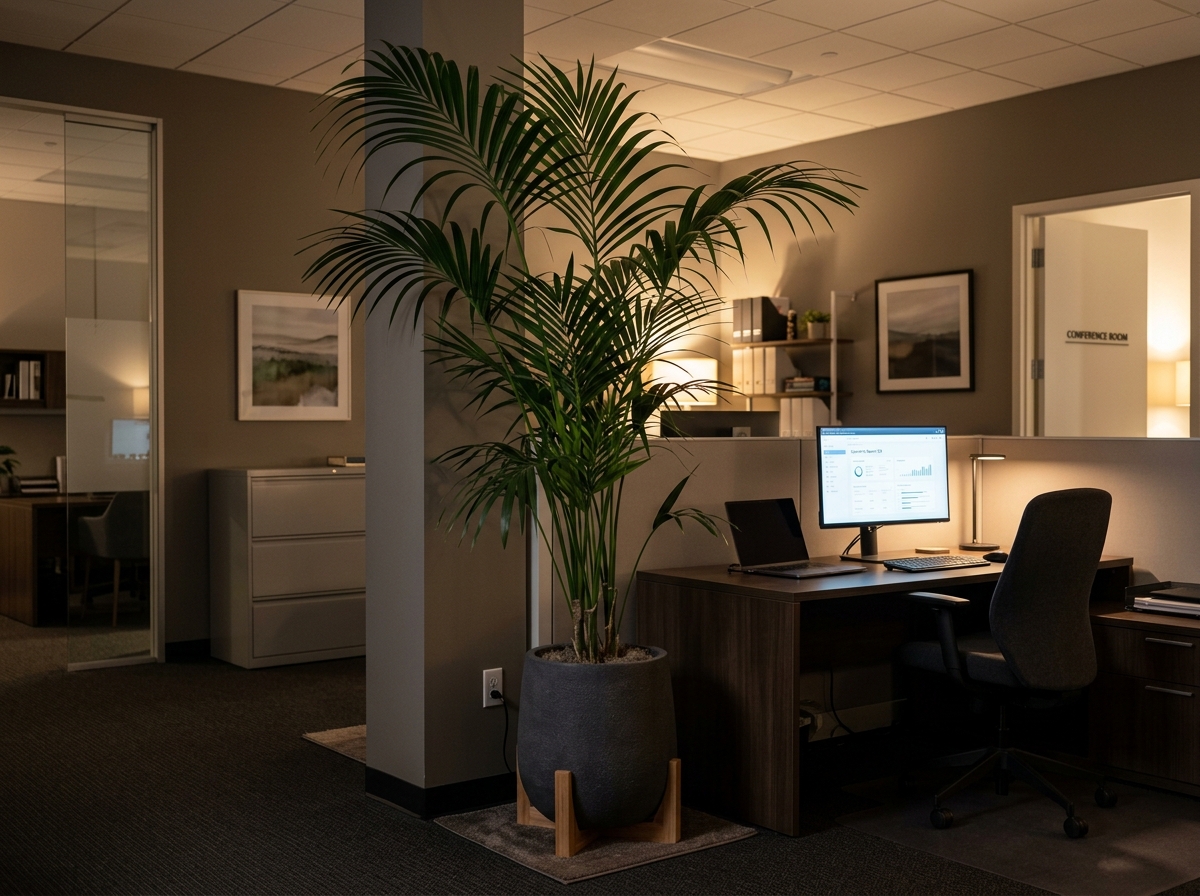
Kentia Palm: The Victorian Big House Plant Low Light Classic
If you want a plant with a pedigree, look no further than the Kentia Palm (Howea forsteriana). This plant was a favorite in Victorian parlors because it could survive the dim, coal-heated rooms of 19th-century London. Today, it remains the gold standard for office buildings and low-light living rooms.
The Kentia can grow up to 10 feet tall indoors. It is a slow grower, which is actually a benefit—it won’t outgrow its space in a single season. Its elegant, arching fronds provide a soft, tropical aesthetic without the finicky light requirements of most other palms. It is also one of the few large plants on our list that is non-toxic to pets, making it a safe, high-impact choice for any household.
Dracaena Janet Craig and Mass Cane
The Dracaena family offers some of the best “floor plants” in the industry. The Dracaena fragrans group, which includes the popular “Mass Cane” (or Corn Plant) and the “Janet Craig,” are interior workhorses.
- Janet Craig Cane: This variety can grow up to 5 feet tall (or more) and features deep, forest-green leaves. It is specifically adapted to understory life, meaning it actually prefers filtered light over direct sun.
- Mass Cane: Recognizable by its thick, woody trunks and corn-like foliage, the Mass Cane can reach 7 feet tall. It’s a great way to add a “tree-like” feel to a room without needing a skylight.
One expert tip for Dracaenas: they are notoriously sensitive to fluoride, often found in tap water. This can lead to brown leaf tips. We suggest using filtered water or letting tap water sit out for 24 hours before watering. Also, be aware of Dracaena pet toxicity, as they can cause vomiting and pupil dilation in cats and dogs.
Essential Care Tips for Large Low-Light Greenery
Caring for a big house plant low light variety is different from caring for your high-maintenance succulents. In lower light, a plant’s metabolism slows down. They don’t “eat” or “drink” as fast as plants in a sunny window.
1. The Watering “Knuckle Test” Overwatering is the number one killer of low-light plants. Because there is less sun to evaporate the water, the soil stays wet longer. Always use the knuckle test: stick your finger two inches into the soil. If it feels damp, walk away. For plants like the ZZ Plant or Snake Plant, you might only water once every 3–4 weeks.
2. Soil Aeration and Drainage Large pots can become compacted over time. We recommend using a chopstick to gently poke holes in the soil once a month. This “aeration” allows oxygen to reach the roots, preventing the stagnant conditions that lead to root rot. Ensure your pot has excellent drainage—never let a large plant sit in a saucer full of water.
3. Dusting is Vital In a dim room, every bit of light counts. Dust buildup on large leaves acts like a window shade, blocking the plant’s ability to photosynthesize. We suggest wiping the leaves with a damp microfiber cloth every few weeks. Not only does this keep the plant healthy, but it also keeps your indoor air cleaner by removing settled allergens.
4. Humidity and Pests While low-light plants are tough, they can still fall prey to pests like mealybugs or spider mites, especially in dry indoor heat. Keeping humidity levels between 50-70% is ideal. For specific advice on one of the toughest low-light survivors, check out The ZZ plant | horticulture and home pest news for troubleshooting tips.
5. Fertilization Schedule Don’t overfeed! We recommend fertilizing at half-strength only during the growing season (spring and summer). In winter, your low-light plants are essentially “napping” and don’t require extra nutrients.
Common Mistakes: Plants That Hate Low Light
One of the biggest frustrations for new plant parents is following “low light” advice that is simply wrong. Some of the most popular large plants are frequently mislabeled as low-light tolerant, leading to heartbreak.
- Monstera deliciosa: While the “Swiss Cheese Plant” is iconic, it is not a true low-light plant. In a dim room, it will stop producing those beautiful leaf holes (fenestrations) and start “reaching” for the window, becoming leggy and weak. For more on why this beauty needs its light, see Swiss cheese plant toxicity and care requirements.
- Fiddle Leaf Fig: This is the “diva” of the plant world. It needs bright, consistent, indirect light. In a low-light corner, it will drop its leaves faster than a tree in autumn.
- Rubber Tree (Ficus elastica): These plants need significant light to maintain their dark, moody colors. In low light, they drop lower leaves and lose their structural integrity.
When a plant doesn’t get enough light, it suffers from “etiolation”—it grows long, thin, and pale as it searches for a light source. If you see your plant stretching toward the nearest lamp, it’s a sign it needs a promotion to a brighter spot.
Troubleshooting Signs of Distress
Even the best big house plant low light varieties will occasionally complain. Learning to read their “body language” is key.
- Yellow Leaves: This is often a sign of overwatering. In low light, the soil takes a long time to dry. If the yellowing is accompanied by mushy stems, check for root rot immediately.
- Brown Tips: Usually a sign of low humidity or chemical sensitivity (like the fluoride issue in Dracaenas). Try misting your plant or using a pebble tray to boost local humidity.
- Leaf Drop: This is common in plants like the Weeping Fig if they are moved or exposed to a cold draft. However, if a low-light plant drops leaves suddenly, it might be a sign of a “light shock” or significant underwatering.
- Pests: Look for white, cottony spots (mealybugs) or tiny webs (spider mites). A quick wipe with neem oil or insecticidal soap usually does the trick. For more on spotting these early, the Dieffenbachia care and safety guide offers excellent insights into managing common indoor plant ailments.
Frequently Asked Questions about Large Low-Light Plants
How tall can these plants actually grow indoors?
The growth potential of a big house plant low light variety depends on the species and the size of the pot.
- Kentia Palms are the giants of the group, reaching up to 10 feet.
- Snake Plants can surprise you, reaching 5.5 feet with their vertical swords.
- ZZ Plants are slower but can eventually reach a bushy 4.5 feet.
- Corn Plants (Mass Cane) typically top out around 6 to 7 feet indoors.
A larger pot allows for more root growth, which supports a taller plant. If you want to keep your plant at a specific height, keep it in a slightly smaller pot to “bonsai” its growth.
Are large low-light plants safe for cats and dogs?
This is a vital question for any pet owner. Many popular large plants contain calcium oxalate crystals or saponins that can cause oral irritation, vomiting, or more severe issues if chewed.
- Toxic: Snake Plant, ZZ Plant, Dracaena varieties, and Dieffenbachia.
- Safe (Non-Toxic): Kentia Palm, Bamboo Palm, and Cast Iron Plant.
If you have a toxic plant, we suggest “strategic placement.” Use heavy, tall planters that a cat can’t easily jump into, or place the plant in an area of the home that is off-limits to pets. Always consult the ASPCA guidelines before making a final purchase.
How do I know if my room is “low light” or “no light”?
There is a big difference between “low light” and “no light.” No plant can survive in a room with zero windows (unless you use specialized grow lights).
- Low Light: A room with a north-facing window, or a spot more than 10 feet away from an East or West window. If you can comfortably read a book mid-day without turning on a lamp, you have low light.
- Medium Light: Within a few feet of an East or West window.
- Survival vs. Thriving: In low light, your plant will grow slowly. This isn’t necessarily a bad thing—it means it will stay “magazine-worthy” for longer without needing a massive pruning!
Conclusion
At Mount Pilchuck, our mission is to help you breathe easier and live better through the power of greenery. Adding a big house plant low light variety to your home is more than just a design choice; it’s an investment in your health. These “interior workhorses” move air, boost humidity, and provide a calming, natural presence in even the dimmest corners of your home.
Whether you choose the towering elegance of a Kentia Palm or the indestructible verticality of a Snake Plant, success comes down to matching the plant to your specific environment. Don’t be afraid to start big—these established plants are often the easiest to care for, even for those who claim to have a “black thumb.”
For more expert advice on creating a health-boosting indoor environment, explore our other guides on Indoor Plants and start your journey toward a lush, air-purifying indoor jungle today.
