
Why the Asparagus Fern Is One of the Best Natural Air Purifiers for Your Home
The asparagus fern air purifier is more than a pretty houseplant — it’s one of the top five air-cleaning plants out of 28 common houseplants tested, according to University of Georgia research.
Quick answer: Does an asparagus fern purify indoor air?
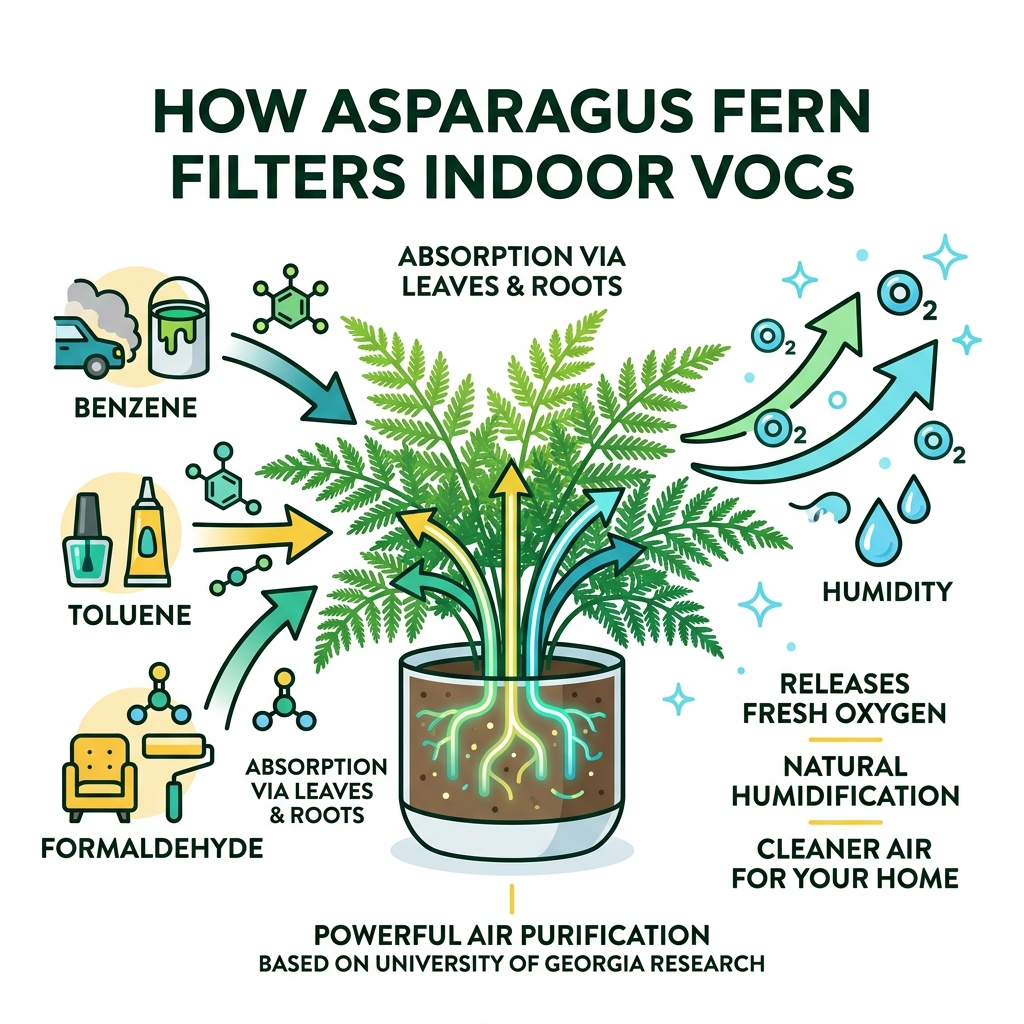
- Yes. Asparagus ferns remove harmful volatile organic compounds (VOCs) from indoor air, including:
- Benzene (from paint, cigarette smoke)
- Toluene (from nail polish, adhesives)
- Octane, trichloroethene (TCE), and alpha-pinene
- They also absorb formaldehyde — ferns as a class ranked highest for formaldehyde removal among 86 plant species tested
- They release oxygen and increase indoor humidity naturally
- They work quietly in the background, requiring minimal effort to maintain
Here’s why this matters: the U.S. Environmental Protection Agency (EPA) ranks indoor air among the top five environmental health risks. We spend up to 90% of our time indoors, yet researchers have identified as many as 179 different VOCs in the air of just two ordinary homes. That’s a significant pollution problem hiding in plain sight.
The good news? A lush, feathery asparagus fern on your shelf may be doing more for your lungs than you realize.
The Science Behind the Asparagus Fern Air Purifier
When we talk about the asparagus fern air purifier, we aren’t just repeating “green thumb” folklore. There is rigorous data backing up these claims. A landmark University of Georgia study tested 28 common houseplants to see which ones could actually handle the chemical soup found in modern homes. Out of nearly thirty species, the Asparagus Fern (specifically Asparagus densiflorus) landed in the top five.
The researchers focused on five specific volatile organic compounds (VOCs) that are notorious for degrading indoor air quality: benzene, toluene, octane, trichloroethene (TCE), and alpha-pinene. These aren’t obscure chemicals; they are emitted by new furniture, carpet adhesives, paint, drywall, and even your dry cleaning.
Dr. Stanley Kays, a lead researcher in the study, noted that the volume of VOCs identified in homes—up to 179 different types in just two houses—was “shocking.” This highlights a severe indoor air pollution problem that an asparagus fern air purifier can help address. By absorbing these toxins through their leaves and processing them via soil microorganisms, these plants act as living filters. For a deeper dive into how different species compare, you can explore this study on indoor pollutants and plant application, which confirms that plants are a viable solution for improving the air we breathe 90% of our day.
How the Asparagus Fern Air Purifier Targets Formaldehyde
Formaldehyde is one of the most pervasive indoor pollutants, often found in dish detergents, fabric softeners, and pressed-wood furniture. In an extensive test of 86 different plant species across five classes (ferns, woody foliage, herbaceous plants, Korean native plants, and herbs), ferns consistently outperformed the rest.
The asparagus fern air purifier is particularly efficient at formaldehyde removal. While it isn’t a “true” fern (more on that later!), its growth habit and foliage structure allow it to mimic the high-surface-area efficiency of the fern class. If you are looking for the best leafy plants for air purification, the asparagus fern should be at the top of your list. It is one of the most effective plants that filter toxins from the air, especially in energy-efficient homes where air exchange is limited and toxins tend to accumulate.
Maximizing Oxygen and Humidity with an Asparagus Fern Air Purifier
Beyond chemical filtration, the asparagus fern air purifier improves your environment through a process called evapotranspiration. Because the plant has a massive number of tiny, needle-like structures called cladodes (which are actually modified stems, not leaves), it has a vast surface area relative to its size.
This large surface area allows the plant to:
- Release significant amounts of oxygen: More surface area means more photosynthesis.
- Increase humidity: The plant “sweats” water vapor, acting as a natural humidifier.
This is a game-changer for respiratory health. During dry winter months or in air-conditioned offices, increased humidity can alleviate dry skin, irritated sinuses, and chapped lips. For those struggling with asthma or congestion, these are the indoor plants that improve breathing by keeping the air moist and clean.
Beyond Purification: Holistic Benefits for Your Home

While the air-cleaning stats are impressive, the benefits of an asparagus fern air purifier extend into the realm of mental well-being. At Mount Pilchuck, we believe that a healthy home involves more than just clean air; it involves a connection to nature, often called biophilic design.
Research shows that the presence of greenery like the asparagus fern can decrease anxiety and promote relaxation. Its lush, vibrant green color offers a “visual break” from the glare of computer screens and paperwork. Many owners find that the act of caring for such a delicate-looking (yet hardy) plant provides a sense of routine and responsibility, helping them slow down in a world.
Furthermore, having plants in your workspace has been linked to enhanced focus and productivity. It’s like having a little green cheerleader on your desk, encouraging you to stay on track. If you are looking for easy care plants for home air quality, this plant offers the perfect balance of aesthetic drama and health-boosting utility.
Popular Varieties for Indoor Spaces
Not all asparagus ferns look the same. Depending on your decor style, you might prefer one “look” over another. Here are the most common varieties used as an asparagus fern air purifier:
| Variety | Common Name | Growth Habit | Best For |
|---|---|---|---|
| Asparagus sprengeri | Sprenger’s Fern | Cascading, airy, and wild | Hanging baskets & high shelves |
| Asparagus meyersii | Foxtail Fern | Upright, fluffy, “plume” look | Pedestals & floor pots |
| Asparagus setaceus | Plumosa Fern | Flat, lace-like, horizontal | Terrariums & tabletops |
Each of these varieties offers the same air-purifying benefits, but their shapes allow for different design applications. The Sprengeri is fantastic for adding verticality to a room, while the Meyersii (Foxtail) acts as a structural architectural piece.
Essential Care for a Healthy Air-Cleaning Plant
To ensure your asparagus fern air purifier is working at peak efficiency, the plant needs to be healthy. A stressed or dying plant won’t filter toxins as effectively as a thriving one. Fortunately, these are considered low maintenance air purifying plants.
Here is our expert guide to keeping them happy:
- Light: They love bright, indirect sunlight. Think of a spot near a window with a sheer curtain. While they are often listed as indoor plants for low light rooms, their growth will slow down significantly if they are kept in the dark. Avoid direct afternoon sun, which can scorch those delicate cladodes.
- Temperature: They prefer a “Goldilocks” range of 65°F to 75°F (18°C to 24°C). They can tolerate drops to 50°F in the winter, but they won’t be happy about it!
- Humidity: This is the big one. Asparagus ferns crave humidity of 40% or higher. If your home is dry, mist the plant daily, use a pebble tray, or place it in a naturally humid room like a bathroom.
- Soil: Use a rich, well-draining potting mix. A blend containing coco coir, perlite, and worm castings works wonders.
Maintenance, Pruning, and Troubleshooting
Maintaining your asparagus fern air purifier involves a few simple weekly tasks. We recommend watering when the top inch of soil feels dry. When you water, do it thoroughly until water runs out of the drainage holes—this ensures the deep, tuberous roots get a good soak.
Pruning and Repotting: As the plant grows, it may become “leggy.” Don’t be afraid to prune! Snipping off old, yellowed stems at the base encourages fresh, green growth and keeps the plant’s air-purifying surface area “young” and efficient. Because they are “gross feeders,” give them a balanced liquid fertilizer once a month during the spring and summer.
Common Issues:
- Yellowing needles: This is usually a sign of too much light or underwatering.
- Needle drop: This is the plant’s “annoying habit” when it’s stressed by a sudden change in temperature or low humidity. It’s one of the indoor plants that reduce dust by trapping particles in its fine foliage, but if it drops its needles, it creates its own mess!
- Fluoride sensitivity: If the tips of the needles turn brown, it might be the fluoride in your tap water. Try using filtered water or letting tap water sit out overnight before using it.
Safety First: Toxicity and Placement Tips
While we love the asparagus fern air purifier, we must issue a word of caution regarding safety. According to North Carolina State University, the berries, foliage, stems, and roots of the asparagus fern are toxic to humans, cats, dogs, and horses.
The plant contains sapogenins—steroid-like compounds that can cause digestive upset if the berries are eaten, or skin irritation (dermatitis) if you handle the plant frequently without gloves. Some varieties, like the Sprengeri, even develop small thorns as they age.
Placement Strategy: To enjoy the air-purifying benefits while keeping everyone safe, we recommend:
- Hanging Baskets: This is the safest way to keep the plant away from curious toddlers and pets. It also allows the cascading varieties to show off.
- High Shelves: Place them on top of bookcases or mantles.
- Gloves: Always wear gardening gloves when pruning or repotting.
If you have a home with very active pets, you might want to cross-reference this with our list of indoor plants safe for pets. However, for most households, simply keeping the fern out of reach is sufficient. If you’re looking for top air purifying plants for bedrooms, a high shelf in the corner is the perfect spot for a fern to clean the air while you sleep.
Frequently Asked Questions about Asparagus Ferns
Is the asparagus fern a true fern?
No! This is one of nature’s great “imposter” stories. While it looks like a fern and shares a name, it is actually a member of the Asparagaceae (Lily) family. Unlike true ferns that reproduce via spores and love deep shade, the asparagus fern grows from tuberous roots, produces tiny flowers and berries, and can handle much more light than a typical fern. Those “leaves” you see are actually cladodes—flattened stems that perform photosynthesis.
Why are my asparagus fern’s needles falling off?
This is almost always a humidity or water issue. If the air is too dry (common in heated homes during winter), the plant will drop its needles to conserve moisture. It can also happen if the soil dries out completely or if the plant experiences a “light shock” from being moved too quickly from a dark corner to a bright window.
How many plants do I need to clean a room?
While one asparagus fern air purifier is a great start, the effectiveness depends on foliage density and room size. NASA’s original studies suggested roughly one plant for every 100 square feet of indoor space. However, even a single healthy plant on your nightstand will improve the micro-environment directly around you.
Conclusion
At Mount Pilchuck, our mission is to help you create a home that supports your health through expert plant advice. The asparagus fern air purifier is a “green superhero” that offers a rare combination of high-efficiency toxin removal, natural humidification, and stunning aesthetic appeal.
By choosing an asparagus fern, you aren’t just decorating a room; you’re investing in a living piece of technology that fights VOCs and refreshes your indoor air circulation. Whether you choose the fluffy Foxtail or the lacy Plumosa, your lungs (and your mood) will thank you.
Ready to breathe easier? Explore more indoor plants and start building your own indoor oasis today.
