
The Best Common Low Light Houseplants for Your Home
Common low light houseplants are some of the easiest and most rewarding plants you can grow indoors — especially if your space doesn’t get much natural sunlight.
Here are the most popular options to get you started:
| Plant | Light Tolerance | Pet-Friendly? |
|---|---|---|
| Snake Plant | Very low (25+ foot-candles) | No |
| Pothos | Low to moderate | No |
| ZZ Plant | Very low | No |
| Cast Iron Plant | Very low | Yes |
| Chinese Evergreen | Low to moderate | No |
| Bird’s Nest Fern | Low to moderate | Yes |
| Heartleaf Philodendron | Low to moderate | No |
| Calathea | Low to moderate | Yes |
| Spider Plant | Low to moderate | Yes |
| Corn Plant (Dracaena) | Low to high | No |
Many people assume that keeping houseplants requires bright, sunny windows. That’s simply not true.
A surprising number of plants evolved under the dense canopy of tropical rainforests — where very little sunlight ever reaches the forest floor. Those are exactly the plants that do well in your dim living room, shaded bedroom, or artificially lit office.
The tricky part? Not every plant labeled “low light” online actually survives in low light. Some just tolerate it — struggling along rather than growing happily. Others genuinely thrive in those conditions with minimal effort from you.
That difference matters a lot, especially if poor indoor air quality, stagnant air, or low energy in your space is part of why you want plants in the first place. A stressed, barely-surviving plant won’t do much for your air or your mood. A thriving one will.
This guide covers the plants that actually work — backed by what they are, why they grow well in dim spaces, and how to keep them healthy long-term.
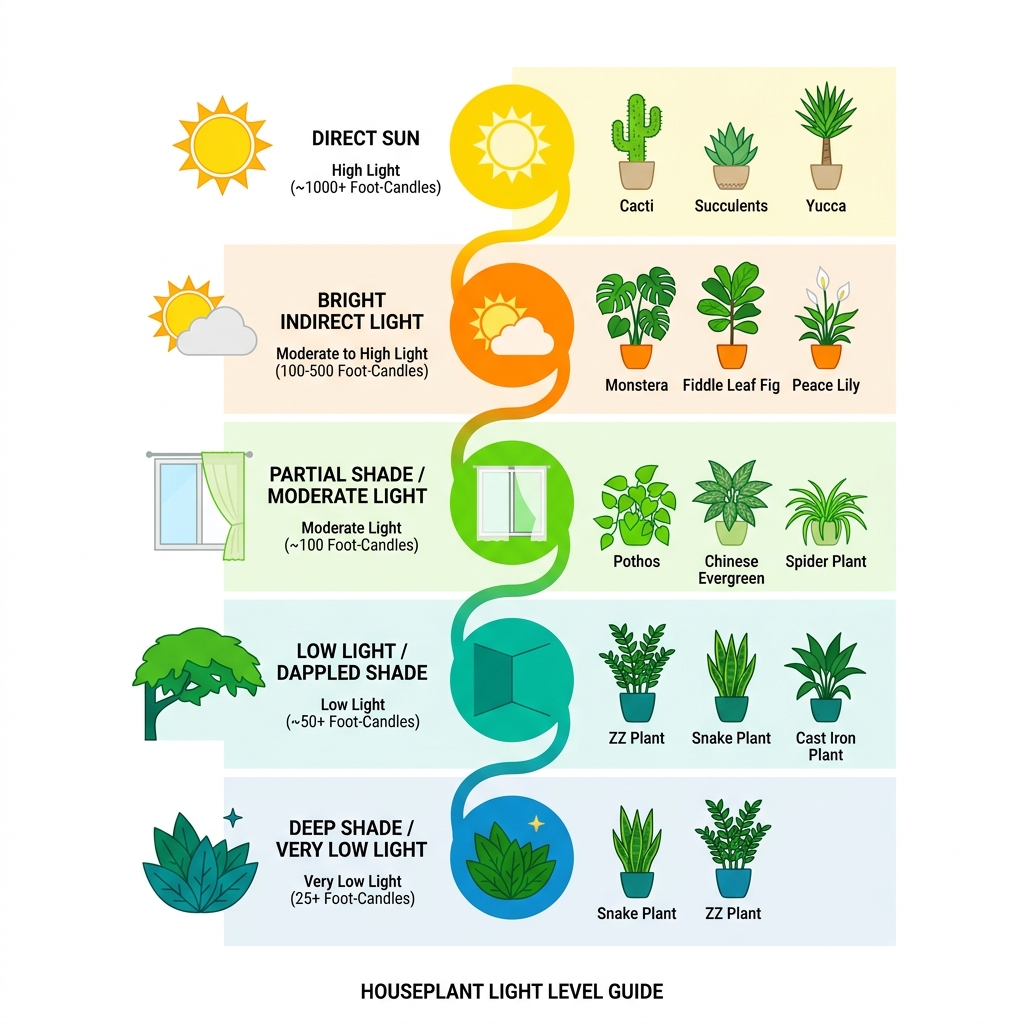
Understanding Low Light: Tolerating vs. Thriving
When we talk about “low light” in indoor gardening, we aren’t talking about a pitch-black cave. In technical terms, light is often measured in “foot-candles”—which is essentially the amount of light a single candle emits one foot away.
While a sunny window might provide over 1,000 foot-candles, the baseline for low light is generally considered to be around 100 foot-candles. However, some champions of the plant world are even more resilient. For instance, the scientific profile for snake plant reveals that it can stay healthy in as little as 25 foot-candles. This makes it a perfect candidate for those tricky north-facing windows or corners far from a light source.

There is a vital distinction between a plant that tolerates low light and one that thrives in it.
- Tolerating: The plant stays alive. It won’t die immediately, but it might not grow new leaves, and its colors might fade. It is essentially in “survival mode.”
- Thriving: The plant continues to push out new growth, maintains its vibrant color, and remains structurally strong.
Many common low light houseplants possess high “plasticity.” This is a fancy botanical term meaning they can adapt their biology to their environment. In dim spaces, these plants often produce leaves with a higher chlorophyll concentration. This makes the leaves look darker green, allowing the plant to absorb every possible photon of light available. If you want to dive deeper into which species fit your specific floor plan, check out our guide on indoor plants for low-light rooms.
Growth Expectations for Common Low Light Houseplants
We often get asked if plants in the shade grow more slowly. The short answer is: yes. Light is food for plants, so less light means a slower metabolism. However, “slow” is relative. A healthy Pothos can still add 12 to 18 inches of length in a single month under ideal low-light conditions!
Most of these plants follow a seasonal rhythm. During the spring and summer, they use what light they have to grow. In the winter, they enter a period of semi-dormancy where growth stalls. This is perfectly normal. According to the RHS guide to Sansevieria, keeping these plants between 60°F and 75°F helps maintain steady, albeit slow, growth year-round.
Can Plants Survive in Windowless Rooms?
This is the ultimate test for any “green thumb.” Can a plant live in a room with no windows at all?
Technically, no plant can survive in total darkness forever. They need light for photosynthesis. However, you can cheat! Modern LED grow lights and full-spectrum bulbs have made it possible to grow lush greenery in basements or windowless office cubicles. These bulbs mimic the sun’s spectrum, providing the red and blue light waves plants crave. If you are working with a tiny, sunless studio, you might find our tips on small potted plants for apartments particularly helpful for maximizing your artificial light setup.
Top Common Low Light Houseplants for Every Room
If you’re ready to start your indoor jungle, these are the heavy hitters. They are widely available, hard to kill, and look fantastic in almost any decor.
- Snake Plant (Dracaena trifasciata): Often called “Mother-in-Law’s Tongue,” this plant is nearly indestructible. It stores water in its thick, sword-like leaves and can go weeks without a drink.
- ZZ Plant (Zamioculcas zamiifolia): With waxy, deep green leaves that look almost fake, the ZZ plant is a master of the “set it and forget it” lifestyle. It’s a best-seller for a reason.
- Pothos (Epipremnum aureum): Known as “Devil’s Ivy” because it’s so hard to kill, this vining beauty is a classic. The potted pothos characteristics include heart-shaped leaves that can reach up to 4 inches long even in dim settings.
- Cast Iron Plant (Aspidistra elatior): This plant earned its name by surviving in the dark, drafty hallways of Victorian-era homes. It is the definition of resilient.
- Chinese Evergreen (Aglaonema): These come in stunning variegated patterns. While the darker green versions handle low light best, they all add a tropical flair to quiet corners.
- Corn Plant (Dracaena fragrans): Looking like a small indoor tree, the Corn Plant can reach 6 feet tall or more indoors. It’s a great way to fill vertical space in a room with limited light.
For those living in tighter quarters, choosing the right size is key. We’ve compiled a list of indoor plants for small apartments to help you find the perfect fit for your bedside table or bookshelf.
Pet-Friendly Common Low Light Houseplants
One major concern for many plant parents is safety. Unfortunately, some of the most popular low-light plants (like Pothos and Snake Plants) are toxic if ingested by curious cats or dogs.
If you have furry roommates, look for these non-toxic options:
- Spider Plant: Famous for its “babies” that hang down like little spiders, it’s completely safe and loves indirect light.
- Bird’s Nest Fern: This fern features wavy, bright green fronds that grow in a rosette shape. It adds a wonderful texture to a room and is pet-safe.
- Calathea (Prayer Plant): These are famous for folding their leaves up at night as if in prayer. They are stunning, non-toxic, and prefer the shade.
Using these varieties ensures easy-care plants for home air quality without worrying about a trip to the emergency vet.
Vining and Climbing Varieties
There is something magical about a plant that “moves” through a room. Vining common low light houseplants like the Golden Pothos or the Heartleaf Philodendron are perfect for high shelves where they can trail downward.
These plants often use “aerial roots” to grab onto surfaces. In the wild, they use these to climb trees to reach more light. Indoors, you can provide a moss pole to encourage them to climb upward, which often results in larger leaves. According to Pothos botanical facts, these plants are incredibly hardy and can even be grown in just a jar of water for extended periods!
Essential Care Guide for Dim Environments
The biggest mistake people make with common low light houseplants is overwatering. Because these plants are in dim areas, they don’t process water as quickly as plants sitting in a sunny window.
Watering Frequency: Always check the soil before you pour. Stick your finger an inch into the dirt; if it feels damp, wait a few more days. Overwatering leads to root rot, which is the number one killer of indoor greenery.
Drainage is Non-Negotiable: Ensure your pots have holes at the bottom. If you find a beautiful decorative pot without holes, keep the plant in its plastic “nursery pot” and simply set it inside the decorative one. For more tips on keeping your hobby affordable, see our guide on budget-friendly air-purifying plants.
Repotting Cycles: Low light plants don’t outgrow their pots very fast. You’ll likely only need to repot every 2–3 years. Spring is the best time for this maintenance, as it gives the plant a fresh burst of nutrients just as the natural growing season begins.
Humidity and Temperature Needs
Most of these plants have tropical origins, meaning they appreciate a bit of moisture in the air. Our modern homes, especially during winter when the heater is running, can become very dry.
To keep your plants happy:
- Pebble Trays: Fill a shallow tray with pebbles and water, then set the plant pot on top (making sure the pot isn’t actually sitting in the water).
- Misting: A quick spritz of water on the leaves can help, though it’s less effective than a humidifier.
- Groupings: Placing plants together creates a “micro-climate” that naturally boosts local humidity.
Temperature-wise, if you’re comfortable, they’re usually comfortable. Aim for a 60-80°F range and keep them away from cold drafts or direct heat vents. You can find more advice on managing these conditions in our resource for budget-friendly air-purifying plants 2.
Fertilizing Common Low Light Houseplants
Because they grow slower, these plants need less “food” than their sun-loving cousins. A balanced, water-soluble houseplant fertilizer (often labeled as 10-10-10 or 20-20-20) works wonders.
During the active growing season (spring and summer), a monthly feeding is plenty. When winter hits and the plant’s metabolism slows down, you should cease fertilizing entirely until the following spring.
Troubleshooting and Benefits of Indoor Greenery
Even the most resilient plants can run into trouble. The key is to catch the signs early.
- Yellowing Leaves: This is often a sign of overwatering or poor drainage.
- Leggy Growth: If your plant is growing long, thin stems with very few leaves, it’s “stretching” for light. Move it a bit closer to a window.
- Leaf Scorching: If you see brown, crispy spots, it might actually be getting too much direct sun.
- Dust: Dust blocks light. Wipe your leaves down with a damp cloth once a month to keep the “solar panels” working efficiently.
Pests like mealybugs or spider mites can occasionally appear. A simple treatment of neem oil or insecticidal soap usually clears them right up. For a deeper dive into maintenance, check out our list of low-maintenance air-purifying plants.
Health and Air Quality Benefits
At Mount Pilchuck, we are passionate about how plants improve our daily lives. Beyond their beauty, common low light houseplants are functional tools for health. They act as natural air filters, removing toxins like formaldehyde and benzene from the air.
Furthermore, plants improve indoor air circulation and boost mental well-being. Studies have shown that having greenery in an office can increase productivity and reduce stress levels.
| Plant Species | Top Toxin Removed | Air Circulation Benefit |
|---|---|---|
| Snake Plant | Formaldehyde | High (Oxygen at night) |
| Peace Lily | Ammonia | Moderate |
| Spider Plant | Carbon Monoxide | High |
| Pothos | Xylene | Moderate |
Frequently Asked Questions about Common Low Light Houseplants
How do I know if my low light plant needs more sun?
The most common sign is “legginess”—where the stems get very long and spindly as the plant reaches toward the nearest light source. You might also notice that variegated plants (those with white or yellow spots) start turning solid green to maximize their chlorophyll.
What is the best way to water plants in dark corners?
Water sparingly! Use the “finger test” to ensure the soil is dry at least an inch down. Because there is less evaporation in dark corners, these plants can hold onto moisture for a long time.
Are all low light plants slow growers?
Generally, yes, but there are exceptions. The Pothos and Heartleaf Philodendron are surprisingly fast growers even in moderate to low light, making them great for people who want to see quick results.
Conclusion
Creating a green sanctuary doesn’t require a sun-drenched solarium. By choosing the right common low light houseplants, you can bring life, color, and cleaner air into the quietest corners of your home. Remember the golden rule: “Right plant, right place.” Start with a resilient Snake Plant or a trailing Pothos, and you’ll soon see how a little bit of nature can transform your indoor environment.
Ready to grow your collection? Explore the Mount Pilchuck indoor plant collection for more expert tips and curated selections.
