
Why Indoor Air Quality Matters More Than You Think
Indoor air quality tips are something most people don’t think about until symptoms appear — a persistent cough, itchy eyes, constant fatigue, or waking up congested. But the air inside your home may already be working against you.
Here are the most important ways to improve indoor air quality at home:
- Control pollution at the source — remove or reduce what’s creating the problem
- Improve ventilation — bring in fresh outdoor air regularly
- Filter the air — use HEPA filters or MERV-13 rated HVAC filters
- Manage humidity — keep levels between 30-50% to limit mold and dust mites
- Test for hidden dangers — especially radon and carbon monoxide
- Clean consistently — vacuum weekly, wash bedding in hot water, dust with microfiber
We spend roughly 90% of our time indoors. And the air inside is often more polluted than the air outside — sometimes 2 to 5 times worse, according to EPA data. Everyday sources like cooking fumes, cleaning products, building materials, and even furniture can silently release pollutants into the air you breathe every day.
The good news? Most fixes are low-cost or free. You don’t need a fancy system or a complete home renovation. Small, consistent habits make a real difference — especially for children, older adults, and anyone dealing with asthma or allergies.
This guide covers everything you need to know, room by room and problem by problem.
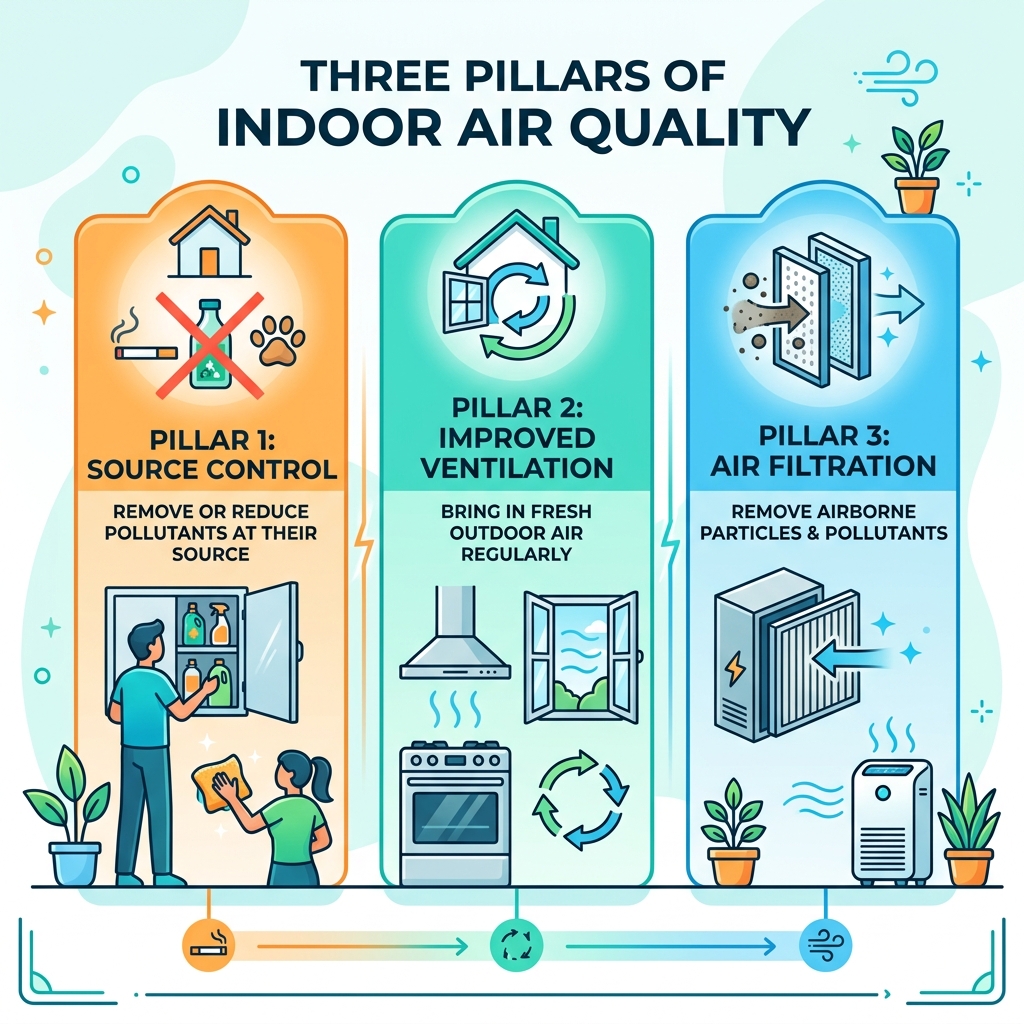
Core Strategies for Better Air Quality
When we talk about fixing the air in our homes, we like to think of it as a three-pronged attack. You can’t just buy a machine and hope for the best; you need a holistic approach. According to the EPA, the three basic strategies are source control, improved ventilation, and air cleaning.

Source control is usually the most effective (and cheapest!) way to improve your environment. This means stopping the problem before it starts. If you have an old gas stove that’s leaking pollutants, adjusting it to burn more efficiently is better than trying to filter the air later. Similarly, sealing away asbestos or choosing not to smoke indoors removes the hazard entirely.
High-Efficiency Filtration
If source control is your first line of defense, filtration is your hardworking backup. Most of us have a forced-air heating or cooling system, but many of the standard filters are designed only to protect the machinery, not your lungs. To really clean the air, we recommend looking for filters with a MERV-13 rating or higher. These are dense enough to trap bacteria, tobacco smoke, and even some virus-carrying particles.
For those in smaller apartments or specific “problem rooms,” a HEPA (High-Efficiency Particulate Air) filter is the gold standard. These filters can remove 99.97% of dust, pollen, mold, and bacteria. If you’re feeling handy, you can even look into a Step-by-Step Homemade Air Filter for Small Spaces to get the job done on a budget. You can find more info about air purifiers on our dedicated category page to help you choose the right tech for your home.
Natural and Mechanical Ventilation
Ventilation is simply the process of “thinning out” the bad stuff. Think of it like a glass of salty water—if you keep adding fresh water, eventually the saltiness disappears.
- Natural Ventilation: This is as simple as opening windows and doors. Even in the winter, cracking a window for 10 minutes can help flush out stale air.
- Mechanical Ventilation: This includes the fans in your kitchen and bathroom that exhaust air directly outside. In newer, more energy-efficient homes, you might even have a Heat Recovery Ventilator (HRV). These clever devices bring in fresh air while “stealing” the heat from the air being pushed out, keeping your home fresh without sending your heating bill into orbit.
For a deeper dive into how air moves through your home, check out the Indoor Air Quality | US EPA resources.
Practical Indoor Air Quality Tips for Every Room
Improving your air doesn’t always require a technician. Often, it’s about changing how we clean and live in our spaces. One of our favorite indoor air quality tips is the “no-shoe policy.” Think about what you walk through outside—pesticides, oil, bird droppings, and pollen. When you wear shoes inside, you’re tracking those pollutants directly into your carpets where they linger for years.
Essential Indoor Air Quality Tips for Kitchens and Bathrooms
The kitchen and bathroom are “hot zones” for air pollution. In the kitchen, cooking—especially on gas stoves—releases nitrogen dioxide and carbon monoxide. Always run your exhaust fan while cooking, and if your fan just recirculates air back into the room rather than outside, open a nearby window. For those dealing with smoke from cooking (or other sources), we have a Guide to DIY Air Purifiers for Smoke that can help.
In the bathroom, the enemy is moisture. High humidity leads to mold growth, which releases spores that can trigger asthma attacks. Ensure your bathroom fan runs for at least 15-20 minutes after a shower to pull that damp air out. You can find more Natural Ways to Boost Indoor Air Quality on our blog.
Bedroom Hygiene for Allergy Sufferers
We spend a third of our lives in the bedroom, making it a priority for air quality. Dust mites are the most common indoor allergen, and they love your bedding. To keep them at bay:
- Wash all bedding weekly in water that is at least 130°F.
- Use dust-mite-proof covers on your mattress and pillows.
- Keep pets out of the bedroom if possible, as dander is a major respiratory irritant.
For more advice on managing health through your environment, visit our Health Benefits Category.
Managing Humidity and Biological Pollutants
Humidity is a “Goldilocks” problem—too much and you get mold; too little and your throat and skin become irritated.
| Humidity Level | Effect on Indoor Environment |
|---|---|
| Below 30% | Dry skin, irritated sinuses, increased respiratory infections. |
| 30% – 50% | The Ideal Range. Minimizes mold, dust mites, and bacteria. |
| Above 50% | Dust mites thrive; mold begins to grow on surfaces. |
| Above 60% | High risk of structural damage and significant mold colonies. |
Maintaining this balance is crucial. Using a dehumidifier in damp basements or during muggy summers can make a world of difference. To understand how this impacts your physical comfort, read about the Benefits of Humidity Control for Breathing.
Preventing Mold and Mildew
Mold doesn’t just look and smell bad; it releases mycotoxins that can cause serious health issues. If you find mold, you must fix the moisture problem first. Scrubbing mold with soap and water while wearing a mask is effective for small areas, but if the mold covers more than 10 square feet, you may need professional help. The EPA’s guide on improving your indoor environment provides excellent protocols for moisture control.
Controlling Pet Dander and Dust
Our furry friends are family, but their dander (dead skin cells) is a persistent pollutant. Beyond regular grooming, we recommend replacing wall-to-wall carpeting with hard-surface flooring like wood or tile where possible. Carpets act as a “sink” for allergens that get kicked back into the air every time you walk on them. If you must have carpets, use a vacuum with a HEPA filter to ensure you aren’t just blowing the dust back out the exhaust. Interestingly, there are even Indoor Plants that Reduce Dust by trapping particles on their leaves!
Reducing Exposure to Harmful Gases and VOCs
Some of the most dangerous pollutants are the ones you can’t see or smell. Volatile Organic Compounds (VOCs) are chemicals that “off-gas” from common household items like paints, new furniture, and cleaning sprays. EPA research shows that VOC levels are often 2 to 5 times higher indoors than outdoors.
Advanced Indoor Air Quality Tips for Remodeling and Painting
If you are planning a home project, your indoor air quality tips should focus on prevention.
- Low-VOC Products: Look for paints and finishes labeled “Low-VOC” or “No-VOC.”
- Ventilation: Increase air exchange significantly during and after painting. Keep windows open and fans running for several days.
- Pressed Wood: Avoid products made with urea-formaldehyde resins. Instead, look for exterior-grade pressed wood which emits less formaldehyde.
For more technical advice on managing home projects, check out our DIY Solutions Category.
Radon and Carbon Monoxide Safety
Radon is a naturally occurring radioactive gas that seeps into homes from the soil. It is the second leading cause of lung cancer in the United States, responsible for about 14,000 to 21,000 deaths annually. Because it is odorless and colorless, the only way to know if you have it is to test. EPA-approved kits are inexpensive and easy to use.
Carbon Monoxide (CO) is another “silent killer” produced by fuel-burning appliances. Ensure you have a CO alarm on every level of your home and near sleeping areas. Annual inspections of your furnace and water heater are non-negotiable for safety. You can find more comprehensive safety info at Indoor Air Quality: What You Need To Know.
The Role of Indoor Plants and Natural Solutions
We at Mount Pilchuck are big believers in the power of greenery. While there is a bit of a debate in the scientific community about exactly how many plants it takes to “scrub” the air in a large home, there is no denying the benefits of Plants that Filter Toxins from the Air.
Plants like the Peace Lily, Snake Plant, and Spider Plant are known for their ability to absorb small amounts of VOCs like formaldehyde and benzene. Beyond the chemistry, plants also help with air circulation and provide a significant psychological boost, reducing stress which in turn helps our overall respiratory health.
Maximizing Plant Benefits
To get the most out of your indoor jungle without creating new problems:
- Avoid Over-watering: Soggy soil is a breeding ground for mold and gnats.
- Clean the Leaves: Dust on leaves prevents the plant from “breathing” and doing its job.
- Circulation: Use a small fan to move air around your plants to help them process pollutants more effectively.
Check out our Turn Your Houseplants into Air Purifiers: A DIY Guide for more tips, or browse our Indoor Plants Category for inspiration.
Frequently Asked Questions about Indoor Air Quality
How do I test my home for specific pollutants like radon?
Testing for radon is simple. You can buy an EPA-approved “short-term” kit at most hardware stores. You leave the canister in your lowest living level for 2–7 days, then mail it to a lab. If your levels are above 4 pCi/L, you should contact your state radon office to discuss mitigation systems.
Are houseplants actually effective for improving indoor air quality?
In a laboratory setting (like a sealed chamber), plants are incredibly effective. In a real home with air leaks and high ceilings, you would need a lot of plants to match the cleaning power of a HEPA filter. However, they are a fantastic supplemental strategy. They help manage humidity and can reduce specific toxins. We invite you to explore our Indoor Plants Category to learn which species work best for your specific needs.
What are the most common sources of indoor air pollution?
The “big hitters” include:
- Tobacco smoke: Contains over 4,000 chemicals.
- Combustion: Gas stoves, space heaters, and fireplaces.
- Biologicals: Mold, pet dander, and dust mites.
- Household Products: Cleaning sprays, air fresheners, and pesticides (75% of U.S. households used at least one pesticide indoors last year!).
Conclusion
Improving the air in your home is a journey, not a one-time task. By prioritizing source control, ensuring your home can “breathe” through proper ventilation, and using high-quality filtration, you can significantly reduce the risks of respiratory illness and long-term health issues.
At Mount Pilchuck, we believe that a healthy home starts with the air you breathe. Whether you’re adding a few air-purifying plants to your bedroom or installing a MERV-13 filter in your furnace, every step counts. For more guides on creating a health-boosting indoor environment, visit us at https://www.mountpilchuck.com/. Breathe easy!
