
Introduction
Why the Air Cleaning Succulents List Matters for Small Spaces
The air cleaning succulents list is the quickest way to find which plants actually help filter indoor air in compact living spaces. Here are the top options:
| Succulent | Key Toxins Removed | Light Needs |
|---|---|---|
| Snake Plant | Formaldehyde, benzene, xylene, toluene | Low to bright indirect |
| Aloe Vera | Formaldehyde, benzene, VOCs | Bright indirect |
| Jade Plant | VOCs, CO2 | Bright indirect |
| Christmas Cactus | CO2, VOCs | Low to medium |
| Zebra Haworthia | VOCs | Low to medium |
| Hoya Carnosa | Formaldehyde, toluene | Bright indirect |
| Bunny Ears Cactus | CO2, VOCs | Bright direct |
| Burro’s Tail | VOCs | Bright indirect |
We spend up to 90% of our time indoors, where air can actually be more polluted than outside. Everyday items like furniture, cleaning products, and paint release harmful chemicals called volatile organic compounds, or VOCs. These build up fast in small apartments with limited airflow.
Succulents offer a low-maintenance, space-friendly way to fight back.
What makes them especially useful for small spaces is their size, their toughness, and a unique biological process called CAM photosynthesis — which lets certain succulents absorb CO2 and release oxygen at night, unlike most plants.
But not all succulents clean air equally. This guide helps you pick the right ones.
The Science Behind the Air Cleaning Succulents List
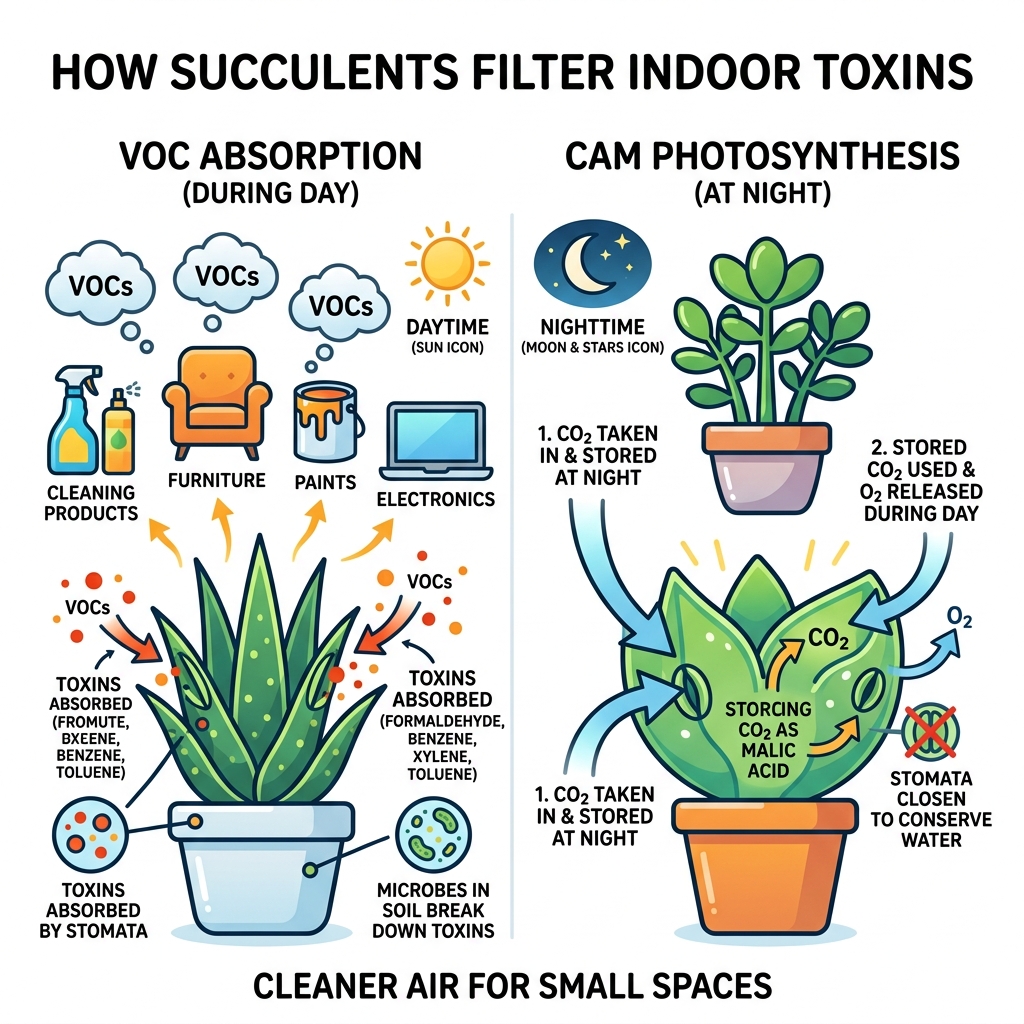
To understand why an air cleaning succulents list is more than just a decorative trend, we have to look at the science. Most of our modern understanding of “botanical air purification” stems from a landmark study performed by NASA in 1989. NASA scientists were looking for ways to keep the air clean in sealed space stations. They discovered that certain plants—including succulents like the Snake Plant and Aloe Vera—could effectively remove common indoor toxins like formaldehyde, benzene, and trichloroethylene.
But how do they do it? It isn’t magic; it’s biology. According to WHO air pollution definitions, air pollution consists of any chemical or substance that changes the natural characteristics of the atmosphere. Inside our homes, these pollutants often come from synthetic materials, cleaning products, and even the “new car smell” of fresh furniture.
Succulents are unique because many of them utilize Crassulacean Acid Metabolism (CAM) photosynthesis. Most plants open their pores (stomata) during the day to take in CO2, but this causes them to lose precious water through evaporation. Desert-dwelling succulents can’t afford that. Instead, they keep their stomata closed during the heat of the day and open them at night. This means they absorb CO2 and release fresh oxygen while you sleep—making them the ultimate bedroom companions.
Beyond just “breathing,” these plants that filter toxins from the air also work through their root systems. Microbes in the soil help break down complex chemicals into nutrients the plant can use. So, when you bring a succulent home, you aren’t just buying a plant; you’re installing a tiny, living biological filter.
Top 8 Plants for Your Indoor Garden
When building your personal air cleaning succulents list, it helps to know which plants are the heavy hitters. In a small apartment, you want plants that work hard but don’t take up too much real estate.
Essential Varieties for Your Air Cleaning Succulents List
1. Snake Plant (Sansevieria trifasciata)
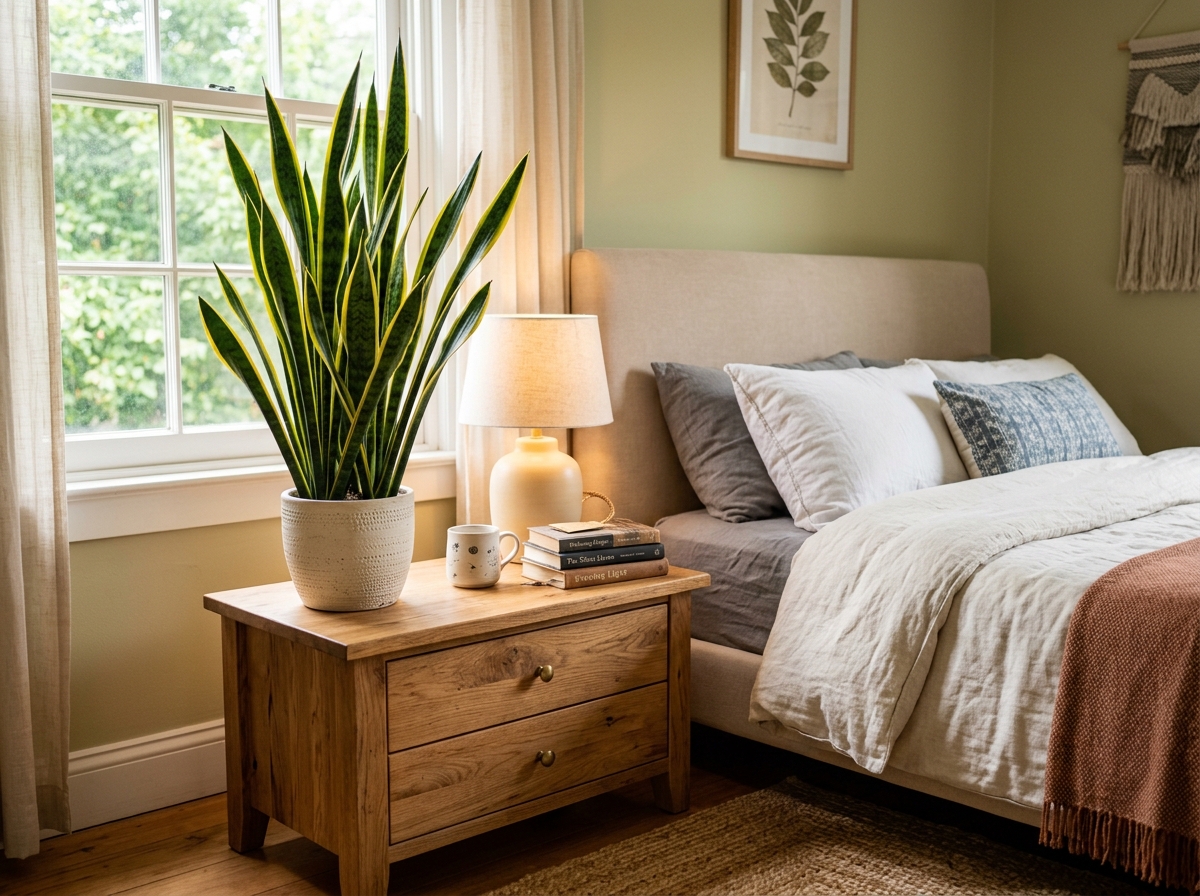
Often called “Mother-in-Law’s Tongue” because of its sharp, upright leaves, the Snake Plant is the undisputed champion of indoor air quality. Research shows it can remove over 50% of air toxins in a single day, including formaldehyde, xylene, and toluene. Because of its nighttime oxygen release, it is one of the best low-maintenance air-purifying plants for bedrooms. It’s almost impossible to kill, thriving in everything from dim corners to bright windowsills.
2. Aloe Vera
Everyone knows Aloe Vera for its skin-soothing gel, but it’s also a powerhouse air filter. A study on Aloe Vera purification suggests it can remove up to 90% of formaldehyde and benzene from the air. It’s a “hardy” succulent that acts as a natural air quality monitor—if the leaves develop brown spots, it might be a sign that the air is heavily polluted.
3. Jade Plant (Crassula ovata)
The Jade Plant is often associated with good luck and wealth, but its real value is in the air. Research on Jade Plant humidity indicates it is one of the most potent plants for improving relative humidity in indoor environments. This is a lifesaver during winter months when heaters dry out our skin and sinuses.
4. Christmas Cactus (Schlumbergera)
Unlike its desert cousins, the Christmas Cactus is a tropical succulent. It’s a CAM plant, meaning it provides that wonderful nighttime oxygen boost. It’s also incredibly safe for households with curious pets and adds a splash of color with its seasonal winter blooms.
5. Zebra Haworthia (Haworthiopsis attenuata)
If you are looking for small potted plants for apartments, the Zebra Plant is a perfect choice. It stays compact and features beautiful white stripes. It’s excellent for office desks, where it helps reduce eye strain and filters out VOCs from office equipment and cleaning supplies.
6. Hoya Carnosa (Wax Plant)
The Hoya is a trailing succulent that is highly effective at removing “hydrophilic” VOCs. Research on Hoya air cleaning highlights its ability to scrub formaldehyde and toluene from the atmosphere. Its thick, waxy leaves can also trap fine dust particles, making it a great addition to your air cleaning succulents list.
7. Bunny Ears Cactus (Opuntia microdasys)
This cactus is included because of its large surface area. A study on cactus photosynthesis suggests that plants with more leaf (or pad) area are more potent when it comes to CAM photosynthesis. Just be careful with those tiny spines—keep this one on a high shelf away from children!
8. Burro’s Tail (Sedum morganianum)
This trailing beauty is perfect for hanging baskets. It adds a calming aesthetic to a room, which has been shown to reduce stress and improve mood. While it works quietly to filter the air, its cascading stems create a “green waterfall” effect that maximizes vertical space in small rooms.
Maximizing Toxin Removal in Small Spaces
Simply buying one tiny succulent isn’t going to turn your apartment into a pristine forest. To see a measurable difference in air quality, you have to think about plant density.
A conservative estimate based on NASA-style research suggests you need about 10 to 12 plants (in 8-10 inch pots) per 100 square feet to significantly impact toxin levels. In a small apartment, this might sound like a lot, but you can achieve this by grouping plants together.
Grouping succulents doesn’t just look great; it creates a “micro-environment.” When plants are clustered, they collectively increase the humidity and air circulation in that specific area. We recommend placing your top air-purifying plants for bedrooms directly on your nightstand or a nearby shelf to ensure you are breathing that fresh nighttime oxygen directly.
For living areas, try “vertical gardening.” Use wall-mounted planters or tiered shelving to stack your air cleaning succulents list without sacrificing floor space. This placement helps the plants catch more light and allows air to circulate around the leaves more effectively.
Care and Safety Guidelines
The biggest mistake people make with succulents is “killing them with kindness”—usually in the form of too much water.
How to Maintain Your Air Cleaning Succulents List
To keep your air-purifying team in top shape, follow these expert tips:
- The Soak-and-Dry Method: Never water on a schedule. Stick your finger an inch into the soil; if it’s bone dry, give it a good soak until water runs out of the drainage holes. Then, wait for it to dry out completely again.
- Well-Draining Soil: Use a specific cactus or succulent mix. Regular potting soil holds too much moisture and will rot the roots.
- Light Requirements: Most succulents need at least 6 hours of bright, indirect light. A south or east-facing window is usually the “sweet spot.”
- Dusting: This is a crucial “pro tip.” If your plant’s leaves are covered in dust, they can’t “breathe” or absorb toxins. Wipe them gently with a damp cloth once a month.
- Safety First: While many succulents are harmless, some can be toxic if nibbled. Always check for indoor plants safe for pets if you have furry friends. For example, Aloe Vera and Jade are mildly toxic to cats and dogs, so keep them on high shelves.
For those looking for easy-care plants for home air quality, start with the Snake Plant. It is the most forgiving member of the air cleaning succulents list and can survive even if you forget about it for a few weeks.
Frequently Asked Questions about Air Purifying Succulents
Can succulents replace mechanical air purifiers?
In short: no. While succulents are fantastic at removing specific chemical toxins (VOCs) and boosting oxygen, they aren’t nearly as fast as a HEPA filter at removing physical particles like smoke or heavy dander. Think of succulents as a long-term, supplemental solution that works 24/7 to improve the “chemistry” of your air, while mechanical purifiers handle the “dust.”
Which succulents are best for nighttime oxygen?
The “CAM” superstars are your best bet. The Snake Plant, Aloe Vera, and Christmas Cactus are the most famous for opening their stomata at night. Placing these in your bedroom can help improve sleep quality by lowering CO2 levels while you rest.
How many succulents do I need per room?
For a standard 10×10 bedroom (100 sq ft), we recommend at least 3 to 5 medium-sized succulents to notice a difference in “freshness.” If you want to reach the levels suggested by scientific studies for toxin removal, aim for 10 or more.
Conclusion
At Mount Pilchuck, we believe that your home should be a sanctuary. Creating an air cleaning succulents list is a simple, beautiful, and scientifically-backed way to take control of your indoor environment. Whether you are living in a cozy studio or a sprawling house, these indoor plants that improve breathing offer health benefits that go far beyond just looking pretty.
From the oxygen-boosting Snake Plant to the humidity-lifting Jade, each succulent brings something unique to the table. By choosing the right varieties and caring for them with a light touch, you can enjoy cleaner air and a more relaxed, focused lifestyle.
Ready to turn your thumb green? Explore our full guide to indoor plants for more expert advice on building your own indoor jungle!
