
Why the ZZ Plant is a Top Choice for Clean Air
When we talk about ZZ plant low maintenance air benefits, we aren’t just talking about a pretty face. This plant is a functional powerhouse. Most of us spend nearly 90% of our time indoors, where air can actually be more polluted than the air outside. Furniture, carpets, and even cleaning sprits release Volatile Organic Compounds (VOCs) that linger in our living spaces.
The ZZ plant was part of the famous NASA Clean Air Study, which sought ways to scrub the air in space stations. Researchers found that Zamioculcas zamiifolia is exceptionally effective at removing specific toxins from the environment, including:
- Benzene: Often found in plastics, resins, and synthetic fibers.
- Xylene: Commonly found in paints and lacquers.
- Toluene: Frequently present in adhesives and nail polish.
- Formaldehyde: Emitted by pressed-wood products and some household cleaners.
Beyond just filtering out the “bad stuff,” the ZZ plant contributes to a healthier home through a process called transpiration. As the plant “breathes,” it releases moisture vapor into the air. In the dry winter months when heaters sap the humidity from our rooms, a collection of ZZ plants can act as a natural humidifier, potentially soothing dry skin and respiratory passages.
We also can’t overlook the psychological boost. Studies consistently show that indoor greenery reduces stress and increases productivity. For those of us living in tight quarters, low-maintenance-air-purifying-plants like the ZZ provide a sense of accomplishment without the anxiety of a high-maintenance “diva” plant. It’s the ultimate “set it and forget it” wellness tool for your home.
Mastering ZZ Plant Low Maintenance Air Care
The secret to the ZZ plant’s “indestructible” reputation lies in its biology. If you were to dig one up (don’t worry, we’ve done the dirty work for you), you would see thick, potato-like structures called rhizomes. These rhizomes are modified stems that grow underground, acting as massive water storage tanks.
This evolutionary trait allows the ZZ plant to survive for months in its native East African habitat without a drop of rain. In our homes, this means the plant is incredibly drought-tolerant. While other plants might wilt and crisp up if you go on a two-week vacation, the ZZ plant simply sips from its internal reservoir and waits patiently for your return.
To keep your ZZ plant low maintenance air system running at peak performance, you should aim for a temperature range of 60-75°F (15-24°C). While they can tolerate temperatures as low as 45°F, they will stop growing and may suffer damage if they get too chilly. They are also quite happy with standard indoor humidity levels (40-50%), making them much easier to manage than tropical ferns that require constant misting. For more tips on keeping things simple, check out our guide on easy-care-plants-for-home-air-quality.
Optimal Lighting for Your ZZ Plant Low Maintenance Air Setup
One of the most common questions we hear is: “Can I put this in a dark corner?” The answer is a resounding yes. The ZZ plant is a champion of indoor-plants-for-low-light-rooms. It can thrive in windowless offices under fluorescent lights or in north-facing apartments where the sun rarely visits.
However, “thriving” looks different depending on the light. In low light, the ZZ plant will maintain its deep green color and architectural shape, but it will grow very slowly. In bright, indirect light (like near an east-facing window), it will push out new stems much faster.
| Light Level | Growth Rate | Appearance |
|---|---|---|
| Low Light / Fluorescent | Very Slow | Deep green, maintains current size |
| Medium Indirect Light | Moderate | Steady growth, healthy sheen |
| Bright Indirect Light | Fast (for a ZZ) | Rapid new “spears,” lighter green new growth |
| Direct Sunlight | Risky | Can cause “sunburn” or scorched brown spots |
Pro Tip: If your ZZ plant is in a very dark spot, we recommend rotating the pot 90 degrees every few weeks. This prevents the stems from leaning too far toward the nearest light source, keeping the plant symmetrical and upright.
Watering Schedules for ZZ Plant Low Maintenance Air Health
If you want to kill a ZZ plant, the fastest way to do it is with “kindness”—specifically, too much water. Because of those water-storing rhizomes we mentioned earlier, the ZZ plant hates sitting in wet soil. Overwatering leads to rhizome rot, which turns the base of the stems mushy and yellow.
The golden rule for ZZ plant low maintenance air care is: When in doubt, don’t water.
- Check the soil: Stick your finger 2-3 inches into the potting mix. If it feels even slightly damp, wait another week.
- The “Lift Test”: If your plant is in a plastic grower pot, lift it up. If it feels light as a feather, it’s time for a soak. If it feels heavy, it’s still holding water.
- Drainage is non-negotiable: Always ensure your pot has drainage holes. If you have a beautiful decorative “cachepot” without holes, keep the ZZ in its plastic liner and take it to the sink to water it, letting all the excess liquid drain away before putting it back.
- Seasonal shifts: In the summer, you might water every 2 weeks. In the winter, when the plant is dormant, you might only need to water once every 4-6 weeks.
Choosing the Right Variety and Placement
While the classic glossy green ZZ is a staple, there are several exciting varieties that have hit the market recently. Each offers the same ZZ plant low maintenance air benefits but with a different aesthetic flair.
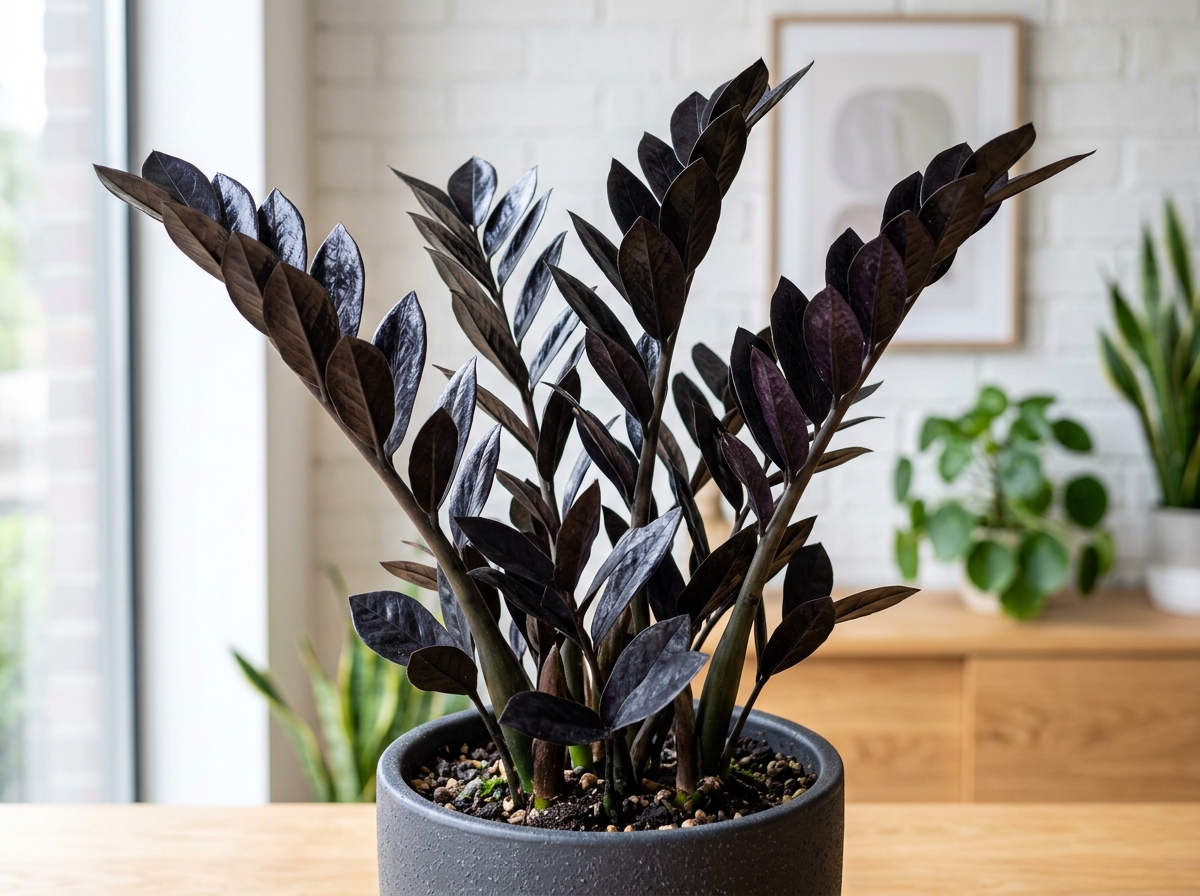
- Raven ZZ (Z. zamiifolia ‘Dowon’): This is a showstopper. The new growth emerges bright lime green, but as the leaves mature, they turn a deep, smoky purple that looks almost black. It’s perfect for modern, moody interiors.
- Zenzi: If you are looking for indoor-plants-for-small-apartments, the Zenzi is your best friend. It’s a dwarf variety with thicker stems and curled leaves that stays compact and bushy.
- Zamicro: Even smaller than the Zenzi, this variety rarely exceeds 12 inches in height, making it ideal for bookshelves or tiny desks.
- Chameleon ZZ: A newer variety where the leaves emerge yellow and slowly fade to green, providing a variegated look without the finicky care requirements of other variegated plants.
Placement and Energy
Beyond air quality, many people choose the ZZ plant for its symbolic value. In Feng Shui, the ZZ plant is considered a “fortune tree.” Its upright growth and succulent-like leaves are thought to attract “Sheng Chi” (positive energy). Many practitioners recommend placing it in the Southeast corner of a room to invite wealth and prosperity.
In Vaastu Shastra, it is often placed in the North or East to promote health. Regardless of the philosophy, we find that placing a ZZ plant in an office or workspace is a brilliant move. It cleans the air of printer-related toxins and provides a calming green focal point during stressful Zoom calls.
Safety, Troubleshooting, and Propagation
While we love the ZZ plant, we have to be honest: it does have a “sharp” side. The plant contains calcium oxalate crystals. If a leaf is chewed or the sap gets on your skin, it can cause significant irritation, swelling, and a burning sensation.
- Pets and Kids: If you have curious cats, dogs, or toddlers, place the ZZ plant on a high shelf or in a room they can’t access. It is not a “pet-safe” plant. For safer alternatives, you can browse our list of indoor-plants-safe-for-pets.
- Safe Handling: We always recommend wearing gloves when pruning or repotting. If you do get sap on your hands, wash them immediately with soap and water and avoid touching your eyes.
Troubleshooting Common Problems
Even the “unkillable” plant can run into trouble. Here is how to read your ZZ plant’s signals:
- Yellow Leaves: Usually a sign of overwatering. Stop watering immediately and let the soil dry out completely. If the stems are mushy, you may need to repot and trim away rotted rhizomes.
- Brown, Crispy Tips: This usually indicates extremely low humidity or that the soil has been dry for too long. A good soak usually fixes this.
- Leaning Stems: The plant is reaching for light. Move it closer to a window or rotate it more frequently.
- Leaf Drop: In extreme drought, the ZZ plant will actually drop its leaflets to conserve moisture. It’s a survival mechanism! Water it, and it will likely bounce back.
Propagation: Making More ZZ Plants
One of the best things about the ZZ plant is that you can grow new ones for free. It just requires one thing: patience.
- Division: When your ZZ plant becomes “pot-bound” (the roots are pushing against the sides of the pot), you can gently pull the rhizomes apart and plant them in separate containers. This is the fastest way to get a new, large plant.
- Stem Cuttings: Cut a stem at the base and place it in water. After several months, a small rhizome and roots will form.
- Leaf Cuttings: You can actually grow a whole new plant from a single leaf! Simply tuck the bottom of a leaf into moist soil. It can take 6-9 months for a new plant to emerge, but it’s a fascinating science project to watch.
Frequently Asked Questions about ZZ Plants
Is the ZZ plant toxic to cats and dogs?
Yes. As mentioned, the ZZ plant contains calcium oxalate crystals. If ingested, it can cause oral irritation, vomiting, and difficulty swallowing. Always keep this plant out of reach of pets. If you suspect your pet has eaten a leaf, contact your veterinarian immediately.
How often should I fertilize my ZZ plant?
Because the ZZ plant is a slow grower, it doesn’t need much food. We recommend using a balanced, liquid houseplant fertilizer diluted to half-strength. Feed your plant only during the growing season (spring and summer), roughly twice a year. Do not fertilize in the winter when the plant is dormant.
Can a ZZ plant survive in a room with no windows?
Yes, but with a caveat. It can live under standard office fluorescent lights for long periods. However, no plant can live in total, 24/7 darkness. If the room is completely dark when you leave for the day, the plant will eventually decline. We suggest rotating “windowless” plants into a brighter room for a week every month to “recharge” their batteries.
Conclusion
The ZZ plant is the ultimate solution for the modern, busy individual. It tackles indoor air pollution, boosts your mood, and asks for almost nothing in return. By following these ZZ plant low maintenance air tips, you can transform even the dimmest corner of your home into a fresh, oxygen-rich sanctuary.
At Mount Pilchuck, we believe that everyone deserves a healthier indoor environment. Whether you are looking to improve air circulation or simply want a touch of nature that won’t die on you, the ZZ plant is our top recommendation.
Breathe easier with expert plant tips from Mount Pilchuck and start your journey toward a greener, cleaner home today!
