
Your Gift Orchid Doesn’t Have to Die
Care for orchids inside is simpler than most people think. Here’s a quick-start summary:
- Light: Place near an east-facing window with bright, indirect light
- Water: Water once a week by soaking the pot, then draining fully — never let roots sit in water
- Humidity: Aim for 40–70% humidity; a pebble tray with water works well
- Temperature: Keep between 60–85°F; a 10–15°F drop at night helps trigger blooming
- Fertilizer: Feed weekly at quarter strength with an orchid-specific fertilizer
- Potting mix: Use bark or sphagnum moss — never regular potting soil
- Repotting: Every 2–3 years, after blooming ends
You received a beautiful orchid as a gift. It’s blooming. It looks incredible on your windowsill.
Then, a few weeks later, the flowers drop. The leaves go yellow. You’re not sure what went wrong.
Here’s the thing: orchids have an undeserved reputation for being difficult. With over 28,000 known species found on every continent except Antarctica, these plants have survived and thrived in some of the most varied environments on earth. The ones sold in stores are almost always hardy, beginner-friendly hybrids — bred specifically to do well in home conditions.
The real problem isn’t that orchids are fragile. It’s that they need different care than a typical houseplant. Most of them aren’t soil plants at all. In nature, they cling to tree bark in humid jungle air, soaking up nutrients from rain and organic debris. Treat them like a regular potted plant, and they struggle. Understand what they actually need, and they thrive — and rebloom — for 15 years or more.
This guide covers everything you need to know to keep your indoor orchid alive, healthy, and blooming.
Mastering the Basics of Care for Orchids Inside
To succeed with orchids, we first need to change how we think about “houseplants.” Most plants we grow indoors are terrestrial, meaning they grow in the dirt. However, the majority of tropical orchids are epiphytes. In their natural jungle habitat, they aren’t parasites, but they don’t live in the ground either. Instead, they use their roots to cling to the rough bark of trees high above the forest floor.
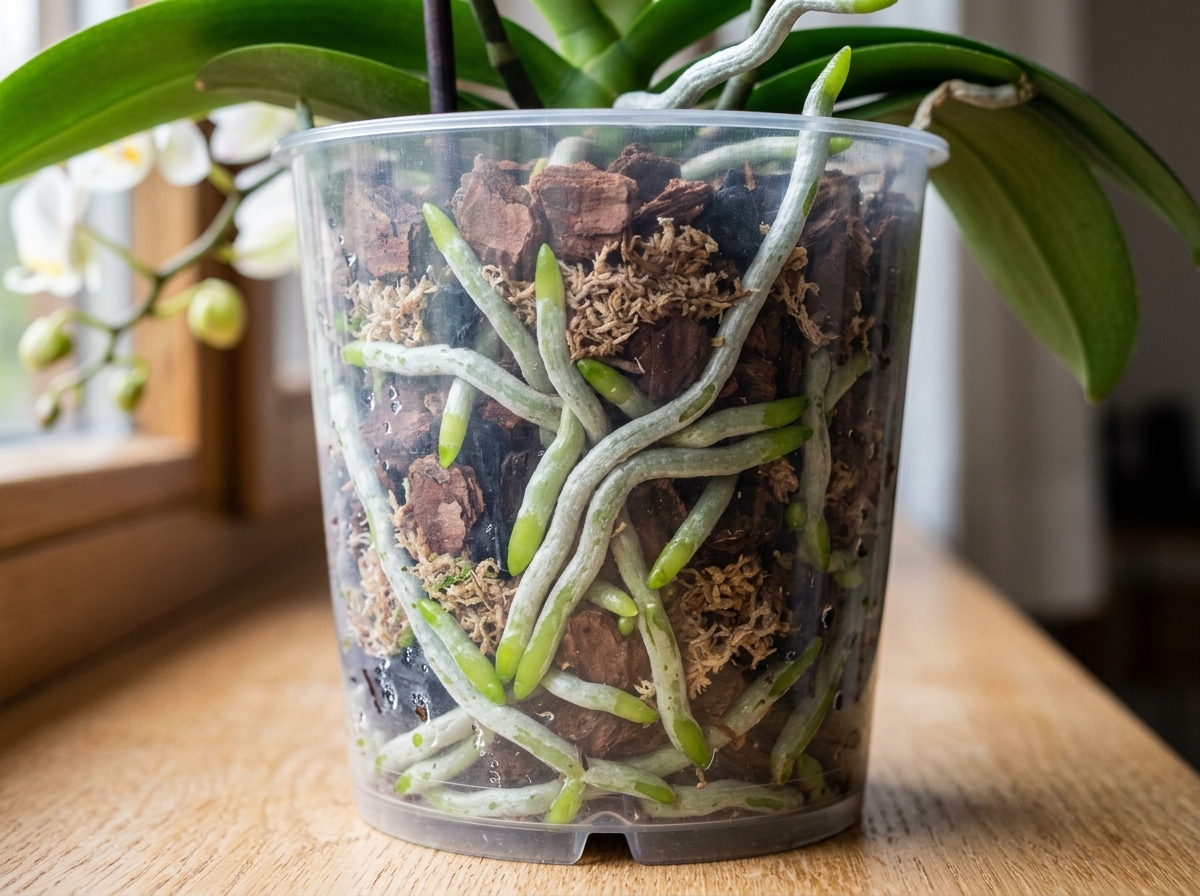
This epiphytic nature is the “secret code” to understanding care for orchids inside. Because they live on trees, their roots are exposed to constant air movement and dappled sunlight. Orchid roots are unique; they are covered in a specialized tissue called velamen that acts like a sponge, absorbing moisture from the humid air and rain.
Crucially, many orchid roots also perform photosynthesis. This is why we often see orchids sold in clear plastic pots. These transparent containers allow light to reach the roots, mimicking the way they would be exposed on a tree limb. When we provide excellent air circulation and avoid “wet feet” (roots sitting in stagnant water), we are mimicking that jungle environment where water washes over the roots and then quickly drains away.
Light Requirements for Success When You Care for Orchids Inside
Light is perhaps the most misunderstood factor in indoor orchid health. While we might think our homes are bright, a plant’s perspective is different. To an orchid, the interior of a house can feel like a dark cave.
For the most common gift orchid, the Phalaenopsis (Moth Orchid), an east-facing window is usually the “Goldilocks” spot—just right. It provides bright, weak morning sun and indirect light for the rest of the day. West-facing windows can work, but the afternoon sun is often too intense; we recommend using a sheer curtain to filter the rays. North windows are generally too dark, while south windows may be too hot unless the plant is set back a few feet.
How do you know if your orchid is getting enough light? Look at the leaves:
- Bright, “grassy” green: This is the goal. It indicates your orchid is happy and healthy.
- Dark, forest green: Your orchid is struggling to photosynthesize. It may grow leaves, but it likely won’t bloom.
- Yellow or Reddish-Purple: This is a sign of too much light (sunburn). If you see scorched, crispy patches, move the plant immediately.
If your home lacks natural light, don’t despair. We’ve found that supplemental LED or full-spectrum fluorescent lights work wonders. Position the lights about 6 to 12 inches above the foliage for about 14 hours a day to simulate a tropical day-length.
Ideal Temperature and Humidity for Orchids Inside
Tropical orchids love humidity, but most modern homes have air that is far too dry, often dipping below 20% in the winter. Orchids prefer a range between 40% and 70% humidity.
To boost moisture without turning your living room into a swamp, try these methods:
- Pebble Trays: Fill a shallow tray with pebbles and water. Place the orchid pot on top of the stones, ensuring the bottom of the pot never touches the water. As the water evaporates, it creates a humid microclimate around the leaves.
- Grouping: Placing several plants together naturally increases the local humidity through transpiration.
- Humidifiers: If you have a large collection, a small room humidifier is the most effective solution.
Temperature is the other half of the environmental puzzle. Most indoor orchids thrive in the same temperatures humans enjoy: 70–80°F during the day and 60–70°F at night. However, there is a trick to getting them to flower again. Many species require a 10–15 degree temperature drop at night for several weeks to trigger the production of a flower spike.
| Orchid Type | Day Temp (Ideal) | Night Temp (Ideal) | Humidity Preference |
|---|---|---|---|
| Phalaenopsis | 75–85°F | 65–70°F | 50–70% |
| Dendrobium | 70–80°F | 55–65°F | 40–60% |
| Cattleya | 70–85°F | 55–60°F | 50–60% |
Watering and Feeding Without the Guesswork
If you ask us what the number one killer of indoor orchids is, the answer is always overwatering. Because orchids have those “sponge-like” roots, they cannot breathe if they are constantly submerged in water. This leads to root rot—a condition where the roots turn mushy and black, eventually killing the plant.
The best way to water an orchid is the soaking method. Instead of pouring a little water on top every day, take your orchid to the sink once a week. Place the inner plastic pot in a bowl of tepid water (never hot or ice-cold) and let it sit for about 10 to 15 minutes. This allows the bark or moss to fully hydrate. Afterward, lift the pot and let every drop of excess water drain out before putting it back in its decorative container.
The Pot Weight Test: Not sure if it’s time to water? Pick up the pot. If it feels heavy, there is still moisture inside. If it feels light as a feather, it’s time for a soak. You can also look at the roots: silvery-white roots mean the plant is thirsty, while plump green roots mean it has plenty of water.
Choosing the Right Potting Medium and Fertilizer
Never, ever use standard potting soil for an epiphytic orchid. Soil will suffocate the roots instantly. Instead, use a specialized orchid bark mix or sphagnum moss.
- Bark: Provides excellent drainage and air pockets. It’s very forgiving for those who tend to overwater.
- Sphagnum Moss: Retains more moisture. It’s great for smaller orchids or for people who forget to water, but you must be careful not to keep it “soggy.”
Feeding your orchid is the difference between a plant that just survives and one that truly thrives. We recommend the “weakly, weekly” approach. Use a balanced NPK fertilizer (like a 20-20-20) diluted to one-quarter strength every time you water during the growing season.
Once a month, water with plain, clear water only. This “flushes” out any accumulated mineral salts from the fertilizer that could burn the sensitive root tips. According to the American Orchid Society, using soft water like rainwater or distilled water can also prevent mineral buildup, though most orchids handle tap water just fine as long as it isn’t “hard” or heavily softened with sodium.
How to Encourage Reblooming and Long-Term Health
The most common question we get is: “My orchid finished blooming; is it dead?” Absolutely not! It is simply entering a rest phase. With the right care for orchids inside, you can encourage it to bloom again and again.
When the last flower falls off, you have two choices for the flower spike:
- If the spike is still green: Look for the small “nodes” (bumps) along the stem. Cut the spike about half an inch above the second or third node from the bottom. Often, the plant will grow a side branch from that node and produce more flowers within a few months.
- If the spike has turned brown and crispy: Cut it off entirely at the base of the plant. This allows the orchid to redirect all its energy into growing new leaves and roots, which will lead to a stronger, more spectacular bloom cycle next year.
To trigger a brand-new spike, ensure the plant gets that 10–15 degree temperature drop at night we mentioned earlier. Placing it near a slightly cool (but not drafty) window in the autumn is often enough to send the “bloom signal” to the plant.
When and How to Repot Your Orchid
Orchids don’t need to be repotted often—usually every two to three years. You should repot if the potting medium has started to break down and smell “earthy,” or if the roots are crawling out of the pot and the plant looks top-heavy.
The Repotting Process:
- Timing: Only repot after the orchid has finished blooming.
- Preparation: Soak your new bark mix in water overnight so it’s fully hydrated.
- Clean Up: Gently remove the orchid from its old pot and shake off the old bark. Use sterilized scissors to snip away any dead, mushy, or shriveled roots. Healthy roots will be firm.
- New Home: Place the orchid in a pot that is only slightly larger than the old one. Orchids actually prefer to be a bit “snug.”
- Fill: Gently tuck the new bark or moss around the roots, using a chopstick to ensure there are no large air gaps, but don’t pack it so tightly that air can’t circulate.
Troubleshooting Common Orchid Problems
Even with the best care for orchids inside, you might run into a few hiccups. Early detection is key to saving your plant.
- Yellow Leaves: If it’s just one bottom leaf, it’s likely natural aging. If many leaves are yellowing, it could be overwatering or too much direct sun.
- Bud Drop: If your orchid has buds that shrivel and fall off before opening, it’s usually due to a sudden change in environment—like a cold draft from an air conditioner or being too close to a heating vent.
- Mealybugs and Scale: These look like tiny bits of white cotton or small brown bumps. Wipe them off with a cotton swab dipped in isopropyl alcohol.
- Root Rot: If the plant looks wilted despite being watered, check the roots. If they are brown and mushy, you must prune the dead roots and repot into fresh, dry media immediately.
At Mount Pilchuck, we often emphasize that better air circulation is a natural deterrent for many fungal and bacterial orchid diseases. A small, oscillating fan in the room can prevent stagnant air from allowing mold spores to settle on the leaves.
Frequently Asked Questions about Indoor Orchids
What are the easiest orchid varieties for beginners?
The Phalaenopsis (Moth Orchid) is the undisputed king of beginner orchids. They are incredibly hardy, tolerate low light better than most, and their blooms can last for three to four months. Paphiopedilum (Slipper Orchids) are also excellent for indoors because they prefer lower light levels similar to many common houseplants.
Why are my orchid’s leaves turning yellow?
As we noted, yellowing can be caused by several factors. The most common is overwatering, which suffocates the roots. However, if the leaves feel “crispy,” it’s likely sunburn. If the leaves are limp and yellow, the plant might need more nutrients. Always check the roots first; they tell the true story of the plant’s health.
Is the “ice cube method” safe for watering?
While some studies suggest that a few ice cubes won’t immediately kill a hardy hybrid, we generally advise against it. Orchids are tropical plants; they don’t experience ice in the jungle. Ice can shock the roots and lead to tissue damage. Furthermore, three ice cubes rarely provide enough water to fully saturate the bark or moss, leading to a chronically dehydrated plant over time. The “soak and drain” method is much more effective.
Conclusion
Orchids are more than just beautiful decorations; they are fascinating, long-lived companions that can transform the atmosphere of your home. By understanding their epiphytic nature and providing the right balance of light, water, and air, you can enjoy these exotic blooms for decades.
At Mount Pilchuck, we believe that bringing nature indoors is essential for creating a healthy, vibrant living space. Orchids, with their unique ability to thrive in airy environments, are the perfect example of how the right plant can encourage better indoor conditions. For more expert advice on health-boosting plants and maintaining a thriving home garden, explore our other guides on indoor plants.
Don’t let that gift orchid intimidate you. Give it a soak, find a bright window, and watch as it rewards you with some of the most stunning flowers in the botanical world. Happy growing!
