
The Best Medium Light Houseplants for Cleaner Air and Healthier Rooms
The best medium light houseplants thrive in the sweet spot between a sun-drenched windowsill and a dim corner — and that happens to describe most rooms in a typical home or apartment.
Quick answer — top medium light houseplants:
| Plant | Why It Works |
|---|---|
| Snake Plant | Extremely low maintenance, purifies air |
| ZZ Plant | Tolerates neglect, thrives in indirect light |
| Chinese Evergreen | Forgiving, beautiful foliage |
| Spider Plant | Pet-safe, great for air quality |
| Monstera | Bold leaves, easy to grow |
| Philodendron | Fast-growing, adaptable |
| Peace Lily | Air-purifying, low-fuss |
| Money Tree | Compact, beginner-friendly |
| Boston Fern | Loves humidity, filters toxins |
| Calathea | Stunning patterns, thrives in filtered light |
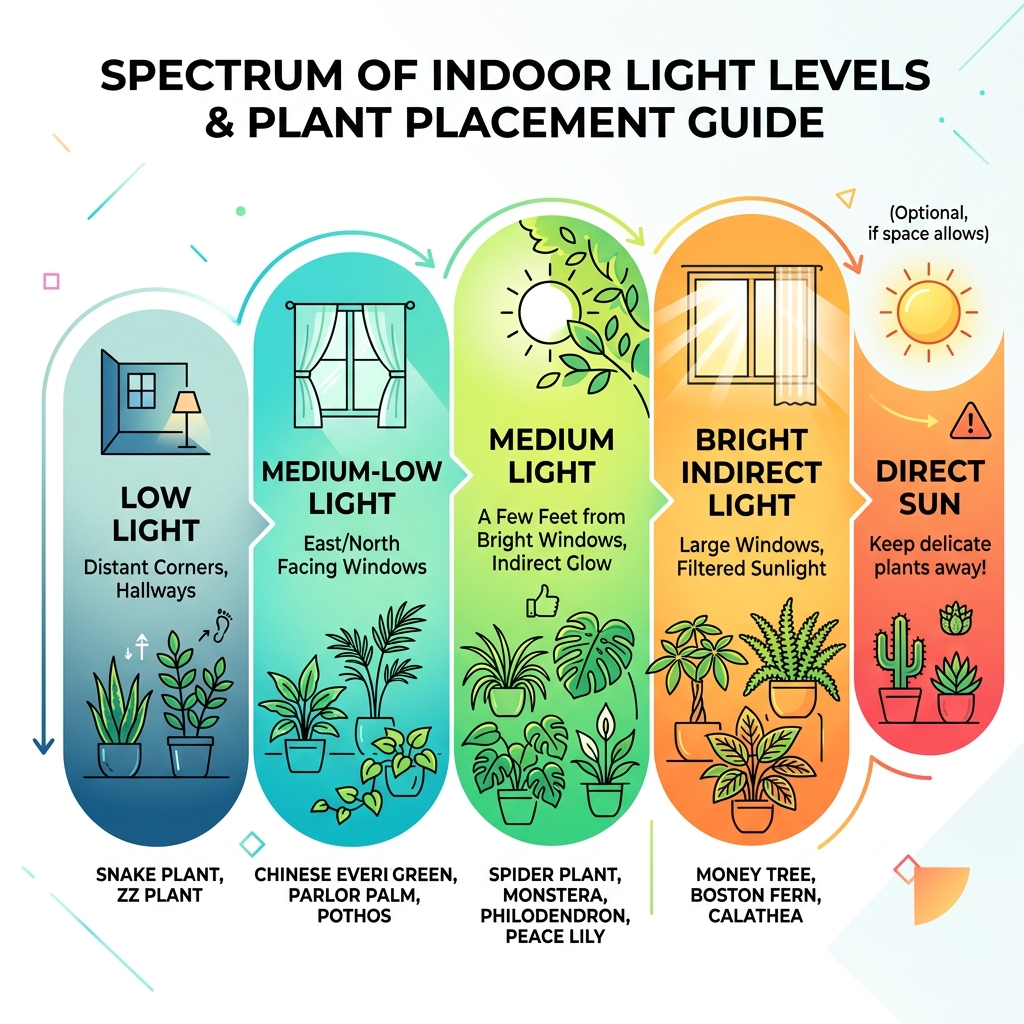
Medium light means no direct sun hitting the leaves — think the dappled shade under a leafy tree, or the natural glow you get a few feet back from an east-facing window. Many popular houseplants actually prefer these conditions, since their natural habitats sit under forest canopies where sunlight is filtered.
If you share your space with pets or struggle with stagnant air, you’re in luck. Many of these plants also purify indoor air and include non-toxic varieties that are safe around cats and dogs.
Read on to find the right plant for every room in your home.
What Exactly is Medium Light for Houseplants?
When we talk about the best medium light houseplants, we are describing plants that want to be “in the room” with the sun but not necessarily “in the sun” themselves. In the wild, many of these species are understory plants. They live on the forest floor, shielded by a thick canopy of taller trees. They receive “dappled” or “filtered” sunlight—a gentle, consistent glow that provides energy without the heat of direct rays.
To identify this in your home, we use a few different methods.
The Exposure Method
In most homes, the direction your window faces determines the light quality:
- East-Facing Windows: These are the gold standard for medium light. They provide gentle morning sun that isn’t too hot, followed by bright, indirect light for the rest of the day.
- North-Facing Windows: These provide a steady, weak light. While often considered “low light,” placing a plant directly on the sill of a large North window often qualifies as medium light.
- South and West-Facing Windows: These are the “hot” windows. To achieve medium light here, we use the 6-foot rule. Place your plant about 6 to 8 feet away from the window, or use a sheer curtain to diffuse the intense afternoon sun.
Measuring the “Sweet Spot”
If you want to get technical (and we often do for the sake of our plants’ health!), you can measure light in foot-candles or lux.
- Low Light: 50–500 lux (or 25–50 foot-candles).
- Medium Light: 1,000–3,000 lux (or 100–300 foot-candles).
- Bright Light: 5,000+ lux (or 500+ foot-candles).

Seasonal Variations
It is important to remember that light isn’t static. A spot that provides perfect medium light in the summer might drop into the “low light” category during a dark, snowy winter. Conversely, a North window in winter might become much brighter in the summer. We recommend observing your rooms at different times of the day and year to ensure your best medium light houseplants aren’t being left in the dark.
Finding the Best Medium Light Houseplants for Your Space
With over 512 products often categorized under medium light in major catalogs, the choices can be overwhelming. We have narrowed down the list to the absolute champions of the “middle ground.”
Monstera Deliciosa (Swiss Cheese Plant)
The Monstera is the “it” plant for a reason. Its iconic split leaves (fenestrations) are designed to let light reach the lower leaves in the jungle. In a home, it thrives in medium to bright indirect light. If the light is too low, the leaves won’t split; if it’s too bright, they might scorch. It’s a perfect balance.
Philodendron
Whether you choose the Heartleaf Philodendron or the stunning ‘Pink Princess,’ these plants are incredibly adaptable. They are fast-growing climbers that look beautiful on a mantle or trailing from a shelf. They are widely considered some of the best medium light houseplants because they can tolerate slight dips in light without losing their vigor.
African Violet
If you want color, look no further. African Violets are famous for their constant blooms when kept in medium light. However, they are sensitive; too much sun and they “wilt like spinach in a hot pan,” as some gardeners say. They prefer the gentle, consistent light of an East-facing window.
Alocasia (Elephant Ear)
Plants like the ‘Amazonica’ or ‘Black Shield’ Alocasia offer dramatic, dark foliage with striking veins. These plants are a bit more “intermediate” in care, preferring high humidity and consistent medium light to keep their large leaves healthy.
Boston Fern
Ferns are the quintessential understory plants. The Boston Fern, with its lush, arching fronds, is excellent for hanging baskets. They love the humid environment of a bathroom or kitchen that receives moderate light.
Money Tree (Pachira Aquatica)
Often sold with a braided trunk, the Money Tree is a symbol of good fortune. It is a hardy choice that prefers a spot that is bright but shielded from the sun’s direct heat.
Chinese Evergreen (Aglaonema)
This is a hall-of-fame plant for beginners. It comes in various colors, including silver, green, and even pink (like the ‘Lady Valentine’). It is incredibly shade-tolerant but maintains its best variegation in medium light.
Top Beginner-Friendly Best Medium Light Houseplants
If you are just starting your indoor jungle, you want plants that are resilient. These “confidence boosters” are hard to kill and provide excellent air-cleaning benefits.
- Spider Plant (Chlorophytum comosum): The Spider Plant is a classic for a reason. It produces “pups” or babies that hang down like little spiders. It is one of the easy-care-plants-for-home-air-quality that we always recommend. It’s tough, pet-safe, and grows rapidly in medium light.
- ZZ Plant (Zamioculcas zamiifolia): If you tend to forget to water your plants, the ZZ is for you. It has waxy, succulent-like leaves that store water. While it is often listed for indoor-plants-for-low-light-rooms, it actually grows much faster and looks glossier in medium light.
- Snake Plant (Sansevieria): The ultimate “set it and forget it” plant. It has upright, sword-like leaves and is famous for its ability to convert CO2 into oxygen at night. It is virtually indestructible.
Care Tips for the Best Medium Light Houseplants
Owning the best medium light houseplants is only half the battle; keeping them happy requires a few simple habits.
- The Knuckle Test: Most medium light plants prefer to dry out slightly between waterings. Stick your finger into the soil up to the second knuckle. If it feels dry, it’s time to water. If it’s damp, wait a few days.
- Well-Draining Soil: Use a mix that includes perlite or orchid bark. This ensures that water doesn’t pool at the bottom, which can cause root rot.
- Humidity is Key: Many medium light plants are tropical. If your home is dry (especially in winter), use a humidity tray (a tray filled with pebbles and water) or a small humidifier to keep the air moist.
- Balanced Fertilizer: During the growing season (Spring and Summer), feed your plants once a month with a balanced, water-soluble fertilizer. Hold off on feeding during the winter when growth slows down.
- Rotation and Cleaning: Plants grow toward the light. To keep your plant from leaning or becoming “one-sided,” give it a quarter turn every time you water it. Also, wipe the leaves with a damp cloth monthly. Dust blocks sunlight and prevents the plant from “breathing.”
- Pruning and Repotting: Don’t be afraid to snip off yellowing or dead leaves. This directs energy to new growth. Most of these plants will need a larger pot every 18–24 months.
For more tips on keeping things simple, check out our guide on low-maintenance-air-purifying-plants.
Health Benefits: Air Purification and Pet Safety
At Mount Pilchuck, we focus on how plants improve our living environments. The best medium light houseplants aren’t just pretty to look at; they are functional tools for a healthier home.
The NASA Connection
In 1989, a famous NASA study proved that many common houseplants can remove toxins from the air. These toxins, known as Volatile Organic Compounds (VOCs), include benzene, formaldehyde, and trichloroethylene, which are often found in household carpets, paints, and furniture.
- Benzene Removal: Plants like the Peace Lily and Ivy are excellent at filtering this common toxin.
- Formaldehyde Filtering: The Snake Plant and Spider Plant are superstars at scrubbing formaldehyde from the air.
For those concerned about respiratory health, we have a list of plants-that-filter-toxins-from-the-air and specific top-houseplants-for-allergies that won’t irritate your senses.
Pet Safety
We know your furry friends are family. Unfortunately, some popular plants (like the Philodendron or Dieffenbachia) can be toxic if ingested. We always recommend checking the ASPCA guidelines before bringing a new plant home.
Pet-Safe Medium Light Options:
- Spider Plant
- Boston Fern
- Money Tree
- Areca Palm
- African Violet
If you are looking to green up your sleeping space, see our recommendations for the top-air-purifying-plants-for-bedrooms.
Troubleshooting Common Issues in Moderate Light
Even the best medium light houseplants run into trouble occasionally. Here is how to spot and fix the most common problems.
Legginess
If your plant is growing long, thin stems with very few leaves, it is “reaching” for more light. This is a sign that your “medium light” spot is actually too dark.
- The Fix: Move the plant closer to the window or add a small LED grow light to supplement the natural light.
Leaf Burn
If you see brown, crispy patches on the leaves (especially on the side facing the window), your plant is getting a “sunburn.”
- The Fix: Move the plant back a few feet or hang a sheer curtain to diffuse the light.
Yellowing Leaves and Root Rot
Yellow leaves are often a sign of overwatering. In medium light, plants process water more slowly than they do in bright sun. If the soil stays soggy, the roots can’t breathe and will begin to rot.
- The Fix: Ensure your pot has drainage holes. Only water when the top inch of soil is dry.
Pests
Spider mites and aphids love indoor plants. Spider mites, in particular, thrive in dry, stagnant air.
- The Fix: Regularly misting your plants or using a humidifier can deter mites. If you spot webs, wash the leaves with a mild insecticidal soap.
For more on choosing the right foliage for your home’s air quality, explore our list of the best-leafy-plants-for-air-purification and budget-friendly-air-purifying-plants.
Frequently Asked Questions about Medium Light Plants
How do I identify medium light in my home?
The easiest way is the “shadow test.” On a sunny day, place a piece of paper where you want to put your plant and hold your hand about a foot above it. A sharp, well-defined shadow means bright light. No shadow means low light. A faint, blurry shadow is the “Goldilocks” zone—perfect medium light.
Can medium light plants tolerate seasonal changes?
Yes, but they may need to be moved. In the northern hemisphere, the sun sits lower in the sky during winter, which can actually make South-facing windows brighter inside. Meanwhile, East and West windows may become significantly darker. Be prepared to shuffle your plants a few feet closer to or further from windows as the seasons shift.
Which medium light plants are safest for cats and dogs?
As mentioned earlier, the Spider Plant, Boston Fern, and Money Tree are excellent non-toxic choices. Always double-check the species name on the ASPCA website if you have a curious pet who likes to nibble on greenery.
Conclusion
Finding the best medium light houseplants is about creating a balance in your home. These plants are the workhorses of the indoor garden—adaptable, beautiful, and capable of significantly improving your indoor air quality and circulation.
At Mount Pilchuck, we believe that every room deserves a touch of nature that boosts your health and brightens your mood. Whether you are looking for a bold Monstera for your living room or a resilient Snake Plant for your hallway, medium light conditions offer some of the most diverse and rewarding options in the plant world.
Ready to start your collection? View our full collection of indoor plants for more expert advice on building your own healthy, indoor sanctuary.
