
Why the Peace Lily Is One of the Best Plants for Cleaner Indoor Air
The peace lily purifies air by absorbing harmful chemicals like benzene, formaldehyde, and trichloroethylene through its leaves and root system — making it one of the most effective natural air-cleaning plants you can keep indoors.
Quick answer: What does a peace lily do for your air?
| Benefit | What the Research Shows |
|---|---|
| Pollutants removed | Benzene, formaldehyde, TCE, xylene, ammonia |
| TCE removal in 24 hours | Up to 23% (NASA Clean Air Study) |
| TVOC removal (real environment) | Up to 74% |
| Odor reduction | Up to 68% |
| Overall air quality improvement | Up to 60% |
| Recommended coverage | 1 plant per 100 sq ft |
If you spend most of your day indoors — and most of us do — the air around you is likely more polluted than you think. The EPA has found that indoor air can be two to five times more contaminated than outdoor air. That stagnant feeling, the low energy, the persistent headaches? Poor air quality is often the culprit.
Peace lilies offer a natural, low-maintenance way to fight back.
NASA’s 1989 Clean Air Study put peace lilies on the map when researchers found they were among the top plants for removing toxic VOCs from enclosed spaces. Since then, further studies in real indoor environments have backed up those findings — showing meaningful reductions in both chemical pollutants and odors.
The best part? Peace lilies thrive in low light, ask for very little, and look beautiful doing the work.
The Science Behind How a Peace Lily Purifies Air
When we talk about how a peace lily purifies air, we aren’t just repeating a gardening myth. There is rigorous scientific data backing these claims, most notably the Interior Landscape Plants for Air Pollution Abatement study conducted by NASA.
In the late 1980s, NASA was looking for ways to keep the air clean in sealed space stations. They discovered that certain best-leafy-plants-for-air-purification could act as biological filters. The peace lily (Spathiphyllum) emerged as a superstar performer.
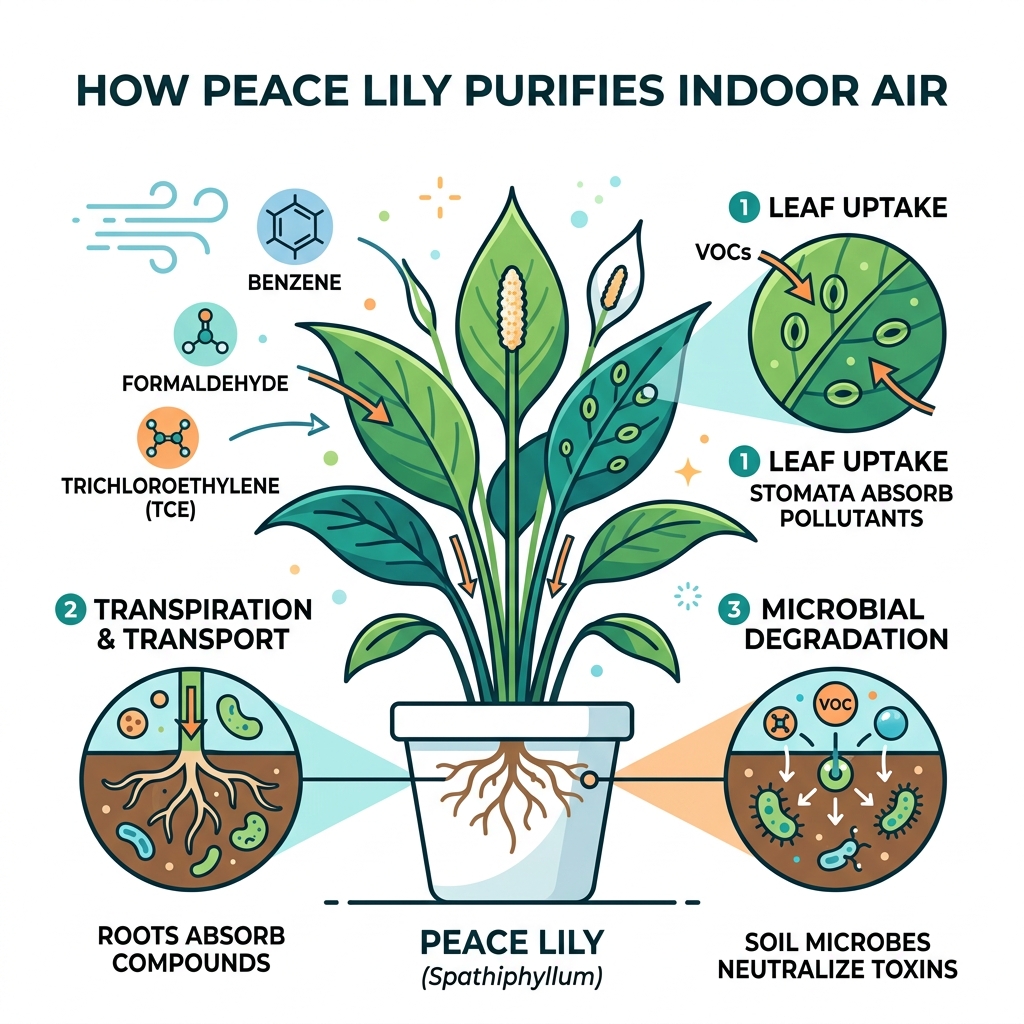
The study focused on Volatile Organic Compounds (VOCs), which are invisible gases emitted by common household items. Here is the “hit list” of toxins the peace lily handles:
- Benzene: Found in plastics, synthetic fibers, and detergents. Exposure can lead to dizziness and headaches.
- Formaldehyde: Common in carpets, upholstery, and plywood. It is a known respiratory irritant.
- Trichloroethylene (TCE): Often found in printing inks, lacquers, and adhesives.
- Xylene and Toluene: Chemicals found in many paints and nail polishes.
Research shows that a single peace lily can remove approximately 23% of trichloroethylene from the air in a sealed chamber within just 24 hours. While your home isn’t a sealed NASA chamber, the biological “machinery” inside the plant remains the same. It is constantly working to pull these toxins out of your breathing zone.
Why a peace lily purifies air more effectively than English ivy
While many plants have air-purifying qualities, the peace lily is often considered superior to the popular English ivy for comprehensive indoor cleaning. English ivy is fantastic at removing airborne mold and benzene, but it lacks the “all-in-one” punch of the Spathiphyllum.
The peace lily is one of the few plants capable of removing ammonia, a common ingredient in many household cleaners that can irritate the lungs. It also shows a higher tolerance for varying levels of pollutants. While English ivy is a woody vine that prefers cooler temperatures, the peace lily is a tropical powerhouse that stays active and efficient in the warm, humid environments humans typically enjoy.
Furthermore, research indicates that the peace lily’s rate of toluene removal is about 1.2 times higher than that of many other common houseplants, making it a more aggressive cleaner for those who live in recently painted or furnished homes.
Biological Mechanisms of Phytoremediation
To understand how a peace lily purifies air, we have to look at the process of phytoremediation. This isn’t just a fancy word; it’s the biological process where living plants clean up soil, air, or water.
The peace lily uses a multi-stage filtration system:
- Stomata Absorption: The leaves of the peace lily are covered in tiny pores called stomata. During photosynthesis, the plant “breathes” in CO2 and incidentally pulls in VOCs like formaldehyde.
- Translocation: Once absorbed, these toxins are moved down through the plant’s vascular system toward the roots.
- The Rhizosphere and Soil Microbes: This is where the real magic happens. The area around the roots, known as the rhizosphere, is teeming with beneficial microbes. These microorganisms actually “eat” the pollutants, breaking them down into harmless organic compounds that the plant then uses as food.
- Transpiration: As the plant releases moisture back into the air, it creates a “pump” effect that pulls more air down into the soil, ensuring a continuous cycle of purification.
Because the peace lily has broad, thin leaves with a high density of stomata, it acts like a high-surface-area filter. It isn’t just the leaves doing the work; it’s a symbiotic relationship between the plant and the soil it lives in.
Determining how many peace lily purifies air plants you need
We often get asked: “Will one tiny plant clean my entire house?” In a word: No. To see a measurable difference in air quality, you need to consider your plant density.
NASA’s general recommendation is to have at least one plant for every 100 square feet of living or office space. If you are looking for indoor-plants-for-office-spaces, where synthetic carpets and printer inks are prevalent, you might want to increase that density.
For a standard 10×10 bedroom, one large peace lily (in a 10-inch pot) or two medium ones are sufficient to help regulate humidity and reduce CO2 levels. If you live in a larger open-concept home, grouping three to five plants together can create a “micro-climate” of purified air that is far more effective than scattering them individually.
Real-World Effectiveness and Placement Strategies
While lab studies are impressive, how does a peace lily purifies air in a real-world home or office? Outside of a sealed chamber, factors like ventilation, ceiling height, and the “off-gassing” rate of your furniture play a role.
In real environment tests, peace lilies have shown a Total Volatile Organic Compound (TVOC) removal rate of up to 74%. Perhaps more noticeably for the average homeowner, they achieved a 68% reduction in odors. This makes them excellent additions to kitchens or areas near trash bins.
To maximize their effectiveness, consider these placement strategies:
- Near New Furniture: If you just bought a new sofa or memory foam mattress, place a peace lily nearby to catch the formaldehyde and benzene as it off-gasses.
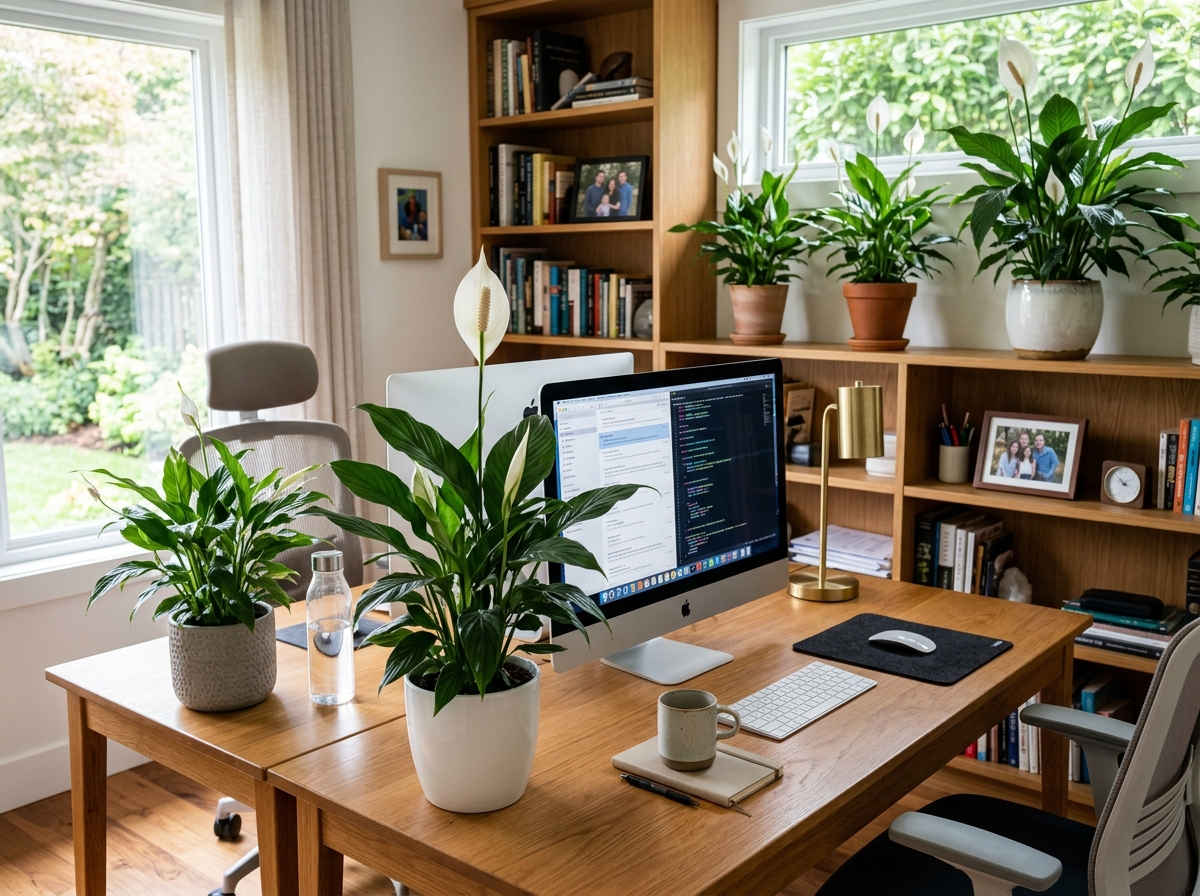
- The Home Office: Printers and cleaning supplies contribute to indoor pollution. A peace lily on your desk provides a 24/7 cleaning service while reducing stress.
- The Bedroom: Since they help regulate humidity and produce oxygen, they are the perfect bedside companions.
- The Bathroom: Peace lilies love the high humidity of a bathroom and are particularly good at absorbing the ammonia found in many bathroom cleaners.
Essential Care for Maintaining Air-Purifying Health
A sick plant cannot clean the air effectively. In fact, if a peace lily is struggling, its stomata may close, and its root microbes may become dormant. To ensure your peace lily purifies air at its maximum capacity, you need to keep it healthy.
Here is our expert guide to easy-care-plants-for-home-air-quality:
- Light: Peace lilies are famous for being “low-light” plants, but that doesn’t mean “no light.” They prefer bright, indirect light. If the leaves are dark green and they aren’t blooming, they need a bit more light. If the leaves are turning yellow or look “burnt,” they are getting too much direct sun.
- Watering: These plants are dramatic! They will literally droop to tell you they are thirsty. We recommend watering about once a week. Use filtered water if possible, as they can be sensitive to the chlorine in tap water.
- Humidity: Being tropical, they love moisture. Mist the leaves daily or place the pot on a tray of pebbles and water to increase the local humidity.
- Cleaning the Leaves: This is a crucial “pro tip.” Dust can clog the stomata, preventing the plant from absorbing pollutants. Every few weeks, gently wipe the leaves with a damp cloth to keep the “filters” clear.
- Temperature: Keep them in a comfortable range between 65°F and 80°F. Avoid placing them near drafty windows or heating vents, which can dry them out.
Safety and Health Benefits for the Home
Beyond just chemical filtration, the peace lily offers several health boosts that can improve your daily life. One of the most unique features of the peace lily is its ability to produce oxygen at night. While most plants switch to absorbing oxygen when the sun goes down, peace lilies (and a few others like snake plants) continue to refresh the air while you sleep.
They are also natural humidifiers. Through a process called transpiration, they release moisture into the air. This can be a lifesaver during the winter months when heaters dry out our skin and nasal passages. By keeping the humidity between 40% and 60%, peace lilies can actually help suppress the growth of airborne mold and bacteria.
However, we must address safety. Peace lilies contain calcium oxalate crystals. If a leaf is chewed or swallowed, it can cause intense mouth irritation and swelling. While they are beautiful, they are NOT indoor-plants-safe-for-pets or small children who might be tempted to take a bite. Always place them on high shelves or stands if you have curious furry friends.
Common signs of poor air quality
How do you know if your home needs a peace lily (or five)? Your body usually tells you before you even notice a smell. Look out for these signs:
- Persistent headaches: Often caused by high CO2 levels or VOC exposure.
- Frequent sneezing or “stuffy” nose: A sign of high dust, mold, or pollen levels.
- Dry, itchy skin: Indicates that your indoor air is too dry.
- Unpleasant, “stale” odors: A sign of poor air circulation and trapped TVOCs.
- Fatigue: High levels of indoor pollutants can make you feel sluggish and “foggy.”
Frequently Asked Questions about Peace Lilies
Do peace lilies produce oxygen at night?
Yes! While many plants rest at night, peace lilies continue to produce oxygen and absorb CO2 during the evening hours. This makes them one of the best choices for bedroom placement to help you wake up feeling refreshed.
Are peace lilies toxic to cats and dogs?
Unfortunately, yes. Peace lilies are toxic to pets if ingested. They are not “true” lilies (which are deadly to cats), but the calcium oxalate crystals in their leaves cause irritation, drooling, and vomiting. We recommend keeping them in areas that are inaccessible to pets.
Can peace lilies remove mold spores from the air?
Yes, to an extent. Peace lilies can reduce airborne mold levels by up to 78% in a small room. They do this by absorbing mold spores through their leaves and using them as a food source, while their humidity-regulating properties make the environment less hospitable for mold growth.
Conclusion
At Mount Pilchuck, we believe that your home should be a sanctuary, not a source of stress. The evidence is clear: the peace lily purifies air with a level of efficiency that few other natural solutions can match. By removing toxic chemicals, boosting humidity, and even providing oxygen while you sleep, these “dramatic” tropical beauties do far more than just sit pretty in a corner.
Whether you are looking to clear out the “new house smell” or simply want to breathe easier during the workday, the peace lily is a budget-friendly, high-impact investment in your health.
Ready to transform your home into a natural oxygen bar? Discover our full range of air-purifying plants and start your journey toward a cleaner, greener indoor environment today.
