
The Best Tall Low Light Plants for Statement Greenery Indoors
The best tall low light plants for most homes are:
| Plant | Max Indoor Height | Pet Safe? |
|---|---|---|
| Kentia Palm | 10 ft | Yes |
| Bamboo Palm | 8 ft | Yes |
| Dracaena ‘Janet Craig’ | 8 ft | No |
| Corn Plant | 7 ft | No |
| Parlor Palm | 6 ft | Yes |
| Money Tree | 6 ft | Yes |
| ZZ Plant | 4.5 ft | No |
| Snake Plant | 5.5 ft | No |
| Cast Iron Plant | 3 ft | Yes |
| Chinese Evergreen ‘Maria’ | 3 ft | No |
You don’t need a sun-drenched apartment to fill a room with dramatic, floor-to-ceiling greenery.
Most people assume that big, lush plants need big, bright windows. But that’s simply not true. Many of the most striking statement plants on the planet evolved in forest understories — places where towering trees blocked nearly all direct sunlight. These plants are hardwired to thrive in the kind of dim, filtered light you get in a north-facing living room, a hallway, or a windowless office corner.
The catch? Not every plant labeled “low light” actually does well in low light. Some merely survive. Others quietly decline — dropping leaves, growing leggy, or developing root rot in dim corners. Knowing the difference is what separates a thriving indoor forest from a graveyard of struggling plants.
Poor indoor air quality is a real problem in confined spaces. Stagnant air, allergens, and low energy are common complaints — especially in urban apartments. The good news is that tall, leafy plants don’t just look good. Their greater leaf mass means more surface area actively cleaning and moving the air around you.
Below, we break down the top statement plants that genuinely grow tall in low light, what realistic heights to expect, and which ones are safe around pets.

Defining the Best Tall Low Light Plants for Your Space
When we talk about “low light,” we aren’t talking about a sensory deprivation chamber. All plants need some light to photosynthesize. In an indoor setting, low light typically means a spot that is 10 to 15 feet away from a window, a room with a single north-facing window, or a hallway that only receives “spillover” light from other rooms.
There is a massive difference between a plant that can thrive in these conditions and one that merely tolerates them. A plant that thrives will continue to put out new, healthy leaves. A plant that only tolerates low light is essentially in a state of slow-motion decline; it stops growing, its stems become weak and “leggy” as they stretch for light, and it becomes highly susceptible to root rot because it isn’t “drinking” water fast enough.
For those of us living in indoor plants for low-light rooms, growth expectations need to be realistic. In low light, a plant’s metabolism slows down. A Pothos that grows a foot a month in a sunny window might only grow three inches in a dim corner. However, many tall species, like the Kentia Palm or certain Dracaenas, are naturally slow growers regardless of light. This makes them perfect for indoor life because they won’t outgrow your ceiling in a single season.
Most of the best tall low light plants reach heights between 2 and 10 feet indoors. Their ancestors adapted to the dappled shade of tropical canopies, meaning they have evolved larger, darker leaves to soak up every available photon. This biological “solar panel” design is exactly what allows them to decorate our shadowy corners so effectively.
Top 10 Statement Plants That Reach New Heights
If you want to make a vertical impact, you need plants with architectural foliage and enough height to act as a focal point. We have curated this list based on their ability to actually grow tall—not just sit in a pot looking sad.
1. Snake Plant (Dracaena trifasciata)
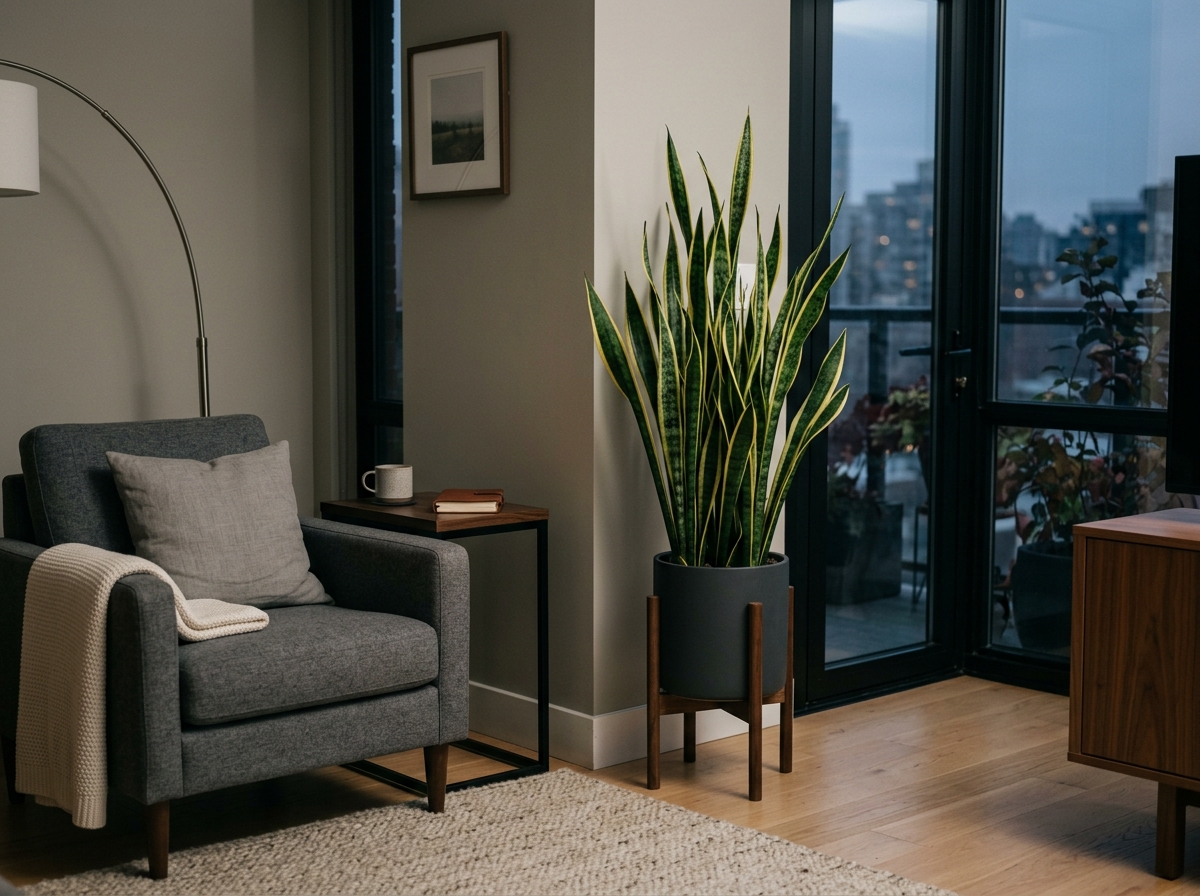
The Snake Plant is the undisputed champion of the “set it and forget it” world. While many think of them as small desk plants, varieties like Zeylanica and Laurentii can reach heights of 3 to 5.5 feet indoors. They feature stiff, sword-like leaves that shoot straight up, making them perfect for narrow corners where a bushy plant wouldn’t fit.
Beyond their indestructible nature, they are famous for air purification. However, owners should be aware of Sansevieria toxicity and care—they are toxic to cats and dogs if ingested. They thrive on neglect; in low light, you might only need to water them once every 3–4 weeks.
2. ZZ Plant (Zamioculcas zamiifolia)
If the Snake Plant is the king of neglect, the ZZ Plant is the queen. Reaching up to 4.5 feet tall, its waxy, deep green leaves reflect what little light is available, giving it a healthy glow even in a basement.
According to The ZZ plant guide, these plants use bulbous rhizomes (roots that look like potatoes) to store water, making them incredibly drought-tolerant. They grow slowly, but their structural, upright stems make them a fantastic architectural statement.
3. Kentia Palm (Howea forsteriana)
For a touch of Victorian elegance, the Kentia Palm is unmatched. It can reach a majestic 10 feet tall indoors. Unlike many other palms that are “divas” about light and humidity, the Kentia is durable and handles low light with grace. It is also non-toxic to pets, making it one of the safest best tall low light plants for a family home. Because it grows so slowly, we recommend buying a specimen that is already close to your desired height.
4. Dracaena ‘Janet Craig’
The ‘Janet Craig’ is a true low light workhorse. It features solid, dark green, accordion-like foliage that can reach 5 to 8 feet in height. It is often used in professional office “interiorscapes” because it is so dependable.
As noted in Dracaena reflexa horticultural specs, these plants have a distinct cane structure. One thing to watch for is fluoride sensitivity; if your tap water is heavily treated, the tips of the leaves may turn brown. Using filtered water or letting tap water sit out for 24 hours can help.
5. Corn Plant (Dracaena fragrans)
Also known as the Mass Cane, the Corn Plant looks like a piece of tropical art. It features a thick, woody trunk topped with clusters of variegated, corn-like leaves. It easily reaches 6-7 feet tall. While beautiful, it’s important to check Corn Plant toxicity info if you have furry roommates, as it can cause distress if chewed.
6. Cast Iron Plant (Aspidistra elatior)
The name says it all. This plant is virtually impossible to kill. While it usually tops out around 3 feet, its broad, dark green leaves create a lush, “leafy” look that fills out a room’s lower vertical space beautifully. It is one of the premier low-maintenance air-purifying plants because its slow metabolism allows it to exist in deep shade where other plants would wither.
7. Parlor Palm (Chamaedorea elegans)
The Parlor Palm has been a classic houseplant since the Victorian era. It grows in clusters and provides a soft, feathery texture that contrasts well with modern furniture. It can reach 6 feet in height, though it takes its time getting there. It loves a bit of humidity, so it’s a great candidate for a bathroom with a small, frosted window.
8. Bamboo Palm (Chamaedorea seifrizii)
If you want a tropical aesthetic without the high-light requirements of a Coconut Palm, the Bamboo Palm is your answer. Reaching up to 8 feet, its multi-stemmed growth habit allows for excellent air circulation—a key factor in the Mount Pilchuck philosophy of health-boosting indoor environments. It loves shade and serves as a fantastic natural room divider.
9. Chinese Evergreen ‘Maria’ (Aglaonema)
The ‘Maria’ cultivar was specifically bred for superior shade tolerance. While it typically stays between 2 and 4 feet, it is one of the best-leafy-plants-for-air-purification. Its silver-green patterns add visual interest to dark corners, and its compact growth means it stays looking “full” rather than getting leggy.
10. Money Tree (Pachira aquatica)
The Money Tree is famous for its braided trunk and its reputation for bringing prosperity. Indoors, it can reach about 6 feet. It is surprisingly tolerant of lower light conditions, provided it isn’t overwatered. It’s pet-friendly and adds a unique, structural element to any living room.
Why Some Popular Varieties Struggle in the Shade
We have all seen the Pinterest photos of massive Monstera plants or towering Rubber Trees in chic, moody rooms. Unfortunately, those photos are often misleading.
Why Some Popular Best Tall Low Light Plants Fail
Plants like Monstera deliciosa, Ficus elastica (Rubber Plant), and the Fiddle Leaf Fig are often marketed as “low light” because they can survive for a few months in a dim corner. However, they will eventually fail. A Monstera in low light will lose its iconic “holes” (fenestrations) and grow long, weak vines. A Rubber Tree will drop its lower leaves until it looks like a sad lollipop.
Check the Rubber tree plant safety and light requirements before buying; these plants are high-energy species that need bright, indirect light to maintain their structure. Placing them in a windowless room is a recipe for light starvation and root rot.
Managing Growth and Structure
For the plants that do thrive in low light, maintenance is key to keeping them “tall” rather than “floppy.”
- Staking: As Dracaenas and Palms grow, they may need discreet bamboo stakes to stay upright.
- Dusting: In low light, every bit of leaf surface counts. Dust acts like a curtain, blocking the plant’s “solar panels.” Wipe leaves monthly with a damp cloth.
- Rotation: Plants naturally grow toward the light. Rotate your pot a quarter-turn every two weeks to prevent your “forest” from leaning like the Tower of Pisa.
- Pruning: Don’t be afraid to snip off yellowing lower leaves. This directs the plant’s limited energy to new, tall growth. For those with a “Swiss Cheese” plant in a brighter spot, consult the ASPCA Swiss cheese plant info for safety tips.
Essential Care Tips and Frequently Asked Questions
Growing a forest indoors requires a shift in mindset. Because there is less light, the “rules” of gardening change.
Can I grow the best tall low light plants in a room with no windows?
The short answer is: No, not without help. No plant can survive in 100% darkness forever. However, you can grow them in a windowless room if you use grow lights.
Modern LED grow lights are affordable and can be screwed into standard lamps. For low-light plants, aim for 8-12 hours of artificial light. This respects the plant’s circadian rhythm—they need a “night” period to process nutrients just as much as they need “day” light. Look for “full spectrum” LEDs; blue light spectrums help with foliage growth, while red promotes overall plant strength.
How do I prevent my tall plants from becoming leggy?
“Legginess” happens when a plant stretches its stems to find a light source. To prevent this:
- Choose the right species: Stick to the list above. Plants like the ZZ and Snake plant have a naturally upright habit that resists stretching.
- Proximity: Even in a low-light room, moving a plant two feet closer to the light source can make a massive difference.
- Fertilize Sparingly: Only fertilize during the growing season (spring and summer) and use half-strength. Too much fertilizer in low light creates weak, rapid growth that can’t support its own weight.
- Watch for Salt: Tap water minerals can build up in the soil. Every few months, “leach” the soil by watering until it runs freely out the bottom of the pot to wash away salt accumulation.
Which tall low-light plants are safe for cats and dogs?
If you have pets that like to nibble, your best bets for tall greenery are:
- Kentia Palm
- Parlor Palm
- Cast Iron Plant
- Money Tree
These are all non-toxic. Always avoid Dracaenas (Corn Plants, Snake Plants) and ZZ plants if your pets are known chewers, as these can cause vomiting and oral irritation.
Conclusion
Creating an indoor forest in a windowless or dim apartment is one of the most rewarding ways to improve your home’s “vibe” and air quality. By choosing the best tall low light plants—like the resilient Kentia Palm or the indestructible ZZ plant—you aren’t just decorating; you’re investing in a living system that boosts air circulation and reduces stress.
At Mount Pilchuck, we believe that everyone deserves a touch of the wild, regardless of how many windows they have. Start with one or two statement pieces, pay attention to their watering needs, and watch as your “cozy cave” transforms into a lush, health-boosting sanctuary.
Ready to expand your collection? Find more indoor plants for your home and start building your vertical jungle today!
