
Why an Anthurium Air Purifier Belongs in Your Home
An anthurium air purifier is simply an Anthurium plant used to naturally clean indoor air — and it works surprisingly well. Here’s a quick summary of what you need to know:
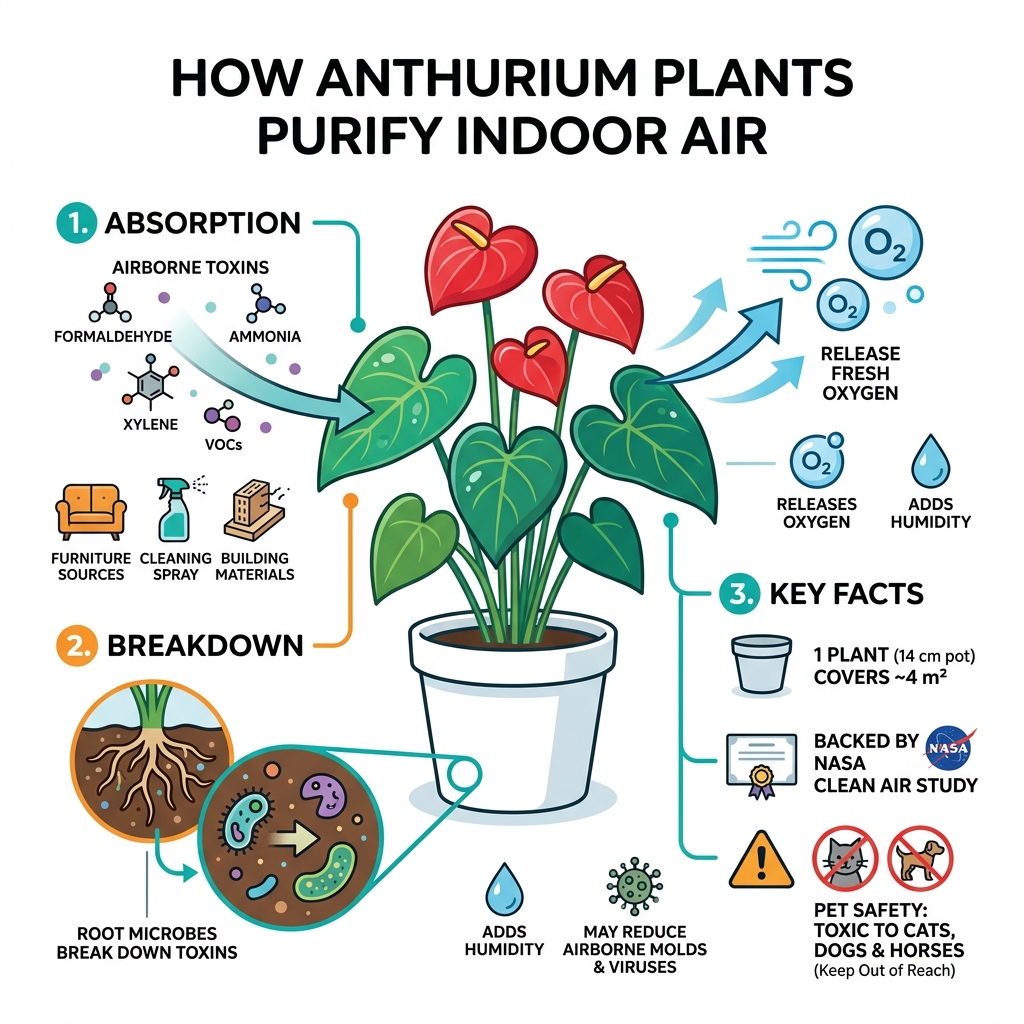
- What it removes: Formaldehyde, ammonia, xylene, and other volatile organic compounds (VOCs)
- How it works: Leaves absorb airborne toxins; root microbes break them down
- Coverage: One plant in a 14 cm pot can purify roughly 4 m² of space
- Backed by research: NASA’s Clean Air Study identifies Anthuriums as effective against common indoor toxins
- Bonus benefits: Adds humidity, releases oxygen, and may reduce airborne molds and viruses
- Pet safety: Toxic to cats, dogs, and horses — keep out of reach
If you share your home with stagnant air, allergens, or low energy levels, a living air purifier might be one of the simplest upgrades you can make.
Anthuriums are tropical plants with glossy, heart-shaped blooms that last eight to twelve weeks at a time. They’re low-maintenance, visually striking, and genuinely functional — a rare combination in houseplants.
Below, we break down the science, the care, and the smartest ways to use Anthuriums to breathe easier at home.
The Science Behind the Anthurium Air Purifier
When we talk about an anthurium air purifier, we aren’t just talking about a pretty face. There is hard science backing up the ability of these tropical wonders to scrub the air. Most famously, the NASA Clean Air Study put various plants to the test to see if they could keep space station air breathable. The results were clear: Anthuriums are heavy hitters when it comes to toxin removal.
Our indoor environments are often filled with “off-gassing” from carpets, furniture, and cleaning supplies. The Anthurium specializes in filtering out some of the most common offenders:
- Formaldehyde: Found in pressed-wood products and some household cleaners.
- Ammonia: Common in window cleaners and floor waxes.
- Xylene: Often found in adhesives and paints.
Beyond just chemical filtration, these plants are subject to strict scientific research on plant import and health standards to ensure they are hardy and disease-free when they reach your home. By choosing plants that filter toxins from the air, you are essentially installing a biological filter that works 24/7 without needing to be plugged in.
How an Anthurium Air Purifier Removes Toxins
You might wonder, “How does a leaf actually ‘clean’ the air?” It’s a multi-stage process. First, the plant breathes through tiny pores on its leaves called stomata. As it takes in carbon dioxide for photosynthesis, it also pulls in airborne toxins.
Once inside the plant, these chemicals travel down to the root zone. This is where the real magic happens. Microbes living in the soil and around the roots break down these complex toxins into food for the plant. Furthermore, Anthuriums are known to secrete substances that can help eliminate airborne molds and viruses, making them a powerhouse for health benefits of plant air filters.
Optimizing Your Anthurium Air Purifier for Home Health
To get the most out of your plant, size matters. The larger the leaf surface, the more “breathing” the plant can do. Anthuriums also have high transpiration rates, meaning they pull water up from the roots and release it as vapor through the leaves. This process naturally increases indoor humidity, which is a massive win for your respiratory system.
By maintaining healthy indoor plants that improve breathing, you ensure that the oxygen production remains at its peak. A dusty leaf can’t breathe well, so keeping your “purifier” clean is the best way to keep your lungs happy.
Health and Environmental Benefits of Tropical Greenery
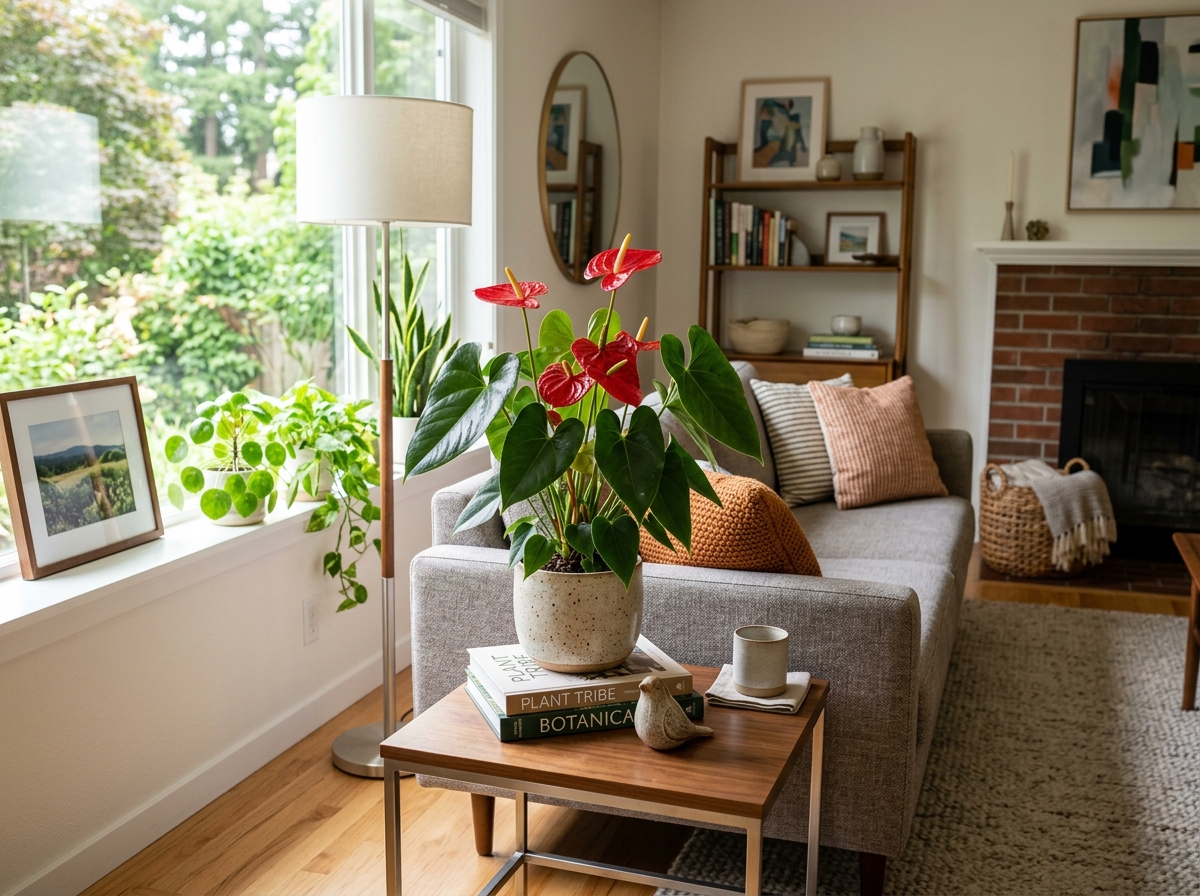
The benefits of an anthurium air purifier extend far beyond chemistry. In the winter, when we seal our windows to keep the heat in, indoor air quality can plummet. Pollutants accumulate, and the air becomes dry and stuffy. Anthuriums act as natural humidifiers, easing the dry skin and scratchy throats that often come with central heating.
For those prone to sneezing, they are among the top houseplants for allergies because they don’t produce heavy, wind-borne pollen. Instead, they focus on respiratory relief and stress reduction. Studies have shown that simply being around greenery can lower cortisol levels and improve focus. Whether you’re working from home or trying to unwind, the presence of a blooming Anthurium makes the environment feel more alive and less sterile.
Essential Care for a Healthy Anthurium
If you want your anthurium air purifier to keep working, you have to treat it like the tropical guest it is. These plants aren’t particularly “diva-ish,” but they do have specific preferences that mimic their South American rainforest origins.
- Light: They love bright, indirect light. Think of the dappled sunlight under a jungle canopy. Direct sun will scorch the leaves, while too little light will stop the blooms from appearing.
- Temperature: Keep them comfortable in the 65-80°F (18-27°C) range. If you’re comfortable, they probably are too.
- Humidity: Aim for at least 60% humidity. Since most homes are drier than this, placing them in a bathroom or near a humidifier is a great idea.
- Soil: Use a well-draining mix. A blend of peat, pine bark, and perlite works wonders to prevent “wet feet.”
Following these easy-care-plants-for-home-air-quality tips will ensure your plant stays in peak toxin-fighting condition.
Watering and Feeding for Longevity
Watering is where most plant parents go wrong. The goal is to keep the soil moist but never soggy. A good rule of thumb is to stick your finger one inch into the soil; if it feels dry, it’s time for a drink. Use room-temperature, filtered water if possible.
To keep those heart-shaped blooms lasting their full 8-12 week duration, feed your plant monthly from March through October with a diluted, balanced fertilizer. This extra energy helps the plant maintain its filtration systems. For more DIY tips, check out our turn-your-houseplants-into-air-purifiers-a-diy-guide.
Troubleshooting Common Growth Issues
Even the best anthurium air purifier can hit a snag. Here is how to handle the most common “complaints” from your plant:
- Yellowing Leaves: Usually a sign of overwatering. Let the soil dry out a bit more between sessions.
- Green Flowers: This often happens when the plant is getting too much direct light. Move it a few feet back from the window.
- Dusty Foliage: Dust blocks the stomata. Wipe the leaves gently with a damp cloth once a month.
- Pests: If you see tiny bugs, a gentle wipe with soapy water usually does the trick.
By staying proactive, you’ll find these are quite low-maintenance air-purifying plants.
Strategic Placement and Quantity for Clean Air
How many plants do you actually need? While one plant is better than zero, there is a “sweet spot” for air purification. Research suggests that one Anthurium in a 14 cm pot is sufficient to purify the air in about 4m² (roughly 43 square feet) of space.
| Room Size | Recommended Number of Anthuriums (14cm pot) |
|---|---|
| Small Office / Bathroom (4-8m²) | 1-2 Plants |
| Standard Bedroom (12-16m²) | 3-4 Plants |
| Large Living Room (24m²+) | 6+ Plants |
Grouping plants together doesn’t just look great; it creates a “micro-environment” where the plants share humidity, making them more efficient purifiers. This is especially effective in indoor plants for office spaces, where stagnant air and office equipment can lead to a buildup of toxins.
Safety Considerations and Popular Varieties
While we love the anthurium air purifier, we have to be honest: it’s not edible. Anthuriums contain calcium oxalate crystals, which are toxic if ingested. According to the ASPCA, they are toxic to dogs, cats, and horses. If you have curious pets or toddlers, place your plants on high shelves or in indoor-plants-safe-for-pets hanging baskets.
When shopping, you’ll likely encounter these popular varieties:
- Anthurium andraeanum: The classic “Flamingo Flower” with waxy red, pink, or white blooms.
- Anthurium clarinervium: Known for its stunning, velvet-textured dark green leaves with white veins. It’s a foliage-first variety that still offers great air benefits.
- Anthurium ‘Fingers’: A unique variety with multi-lobed leaves that looks like a hand, perfect for a modern aesthetic.
Frequently Asked Questions about Anthuriums
Are Anthurium plants safe for households with pets?
No. As mentioned, they contain insoluble calcium oxalates. If a pet chews on the leaves, it can cause intense oral irritation, drooling, vomiting, and difficulty swallowing. Always prioritize indoor-plants-safe-for-pets if your furry friends are known to nibble on greenery.
How many Anthuriums do I need to purify a standard room?
For a standard 12m² bedroom, we recommend at least three plants in 14cm pots. This ensures enough leaf surface area to noticeably impact VOC levels. If you have high ceilings or poor ventilation, you might want to add a few more plants-to-improve-indoor-air-circulation.
Why are my Anthurium flowers turning green?
This is usually the plant’s way of telling you it’s getting too much light. The plant produces more chlorophyll in the “flower” (which is actually a modified leaf called a spathe) to cope with the intensity. Moving it to a spot with filtered light usually solves the problem. Check out our guide on indoor-plants-for-low-light-rooms for better placement ideas.
Conclusion
At Mount Pilchuck, we believe that your home should be a sanctuary that supports your health. Integrating an anthurium air purifier into your decor is a sustainable, beautiful way to boost your indoor wellness. From scrubbing formaldehyde to lifting your mood on a gray winter day, these tropical powerhouses are an investment that pays off with every breath you take.
Ready to start your indoor jungle? Explore our full collection of indoor plants and find the perfect green companion for your space today.
