
Why Your Windowless Office Needs Plants (And Which Ones to Get)
The best plants for office no windows are ones that thrive under artificial light and forgive missed waterings. Here are the top picks at a glance:
| Plant | Light Tolerance | Watering Frequency |
|---|---|---|
| Snake Plant | Very low | Every 3-4 weeks |
| ZZ Plant | Very low | Every 3-4 weeks |
| Pothos | Low | Every 1-2 weeks |
| Cast Iron Plant | Very low | Every 2-3 weeks |
| Peace Lily | Low | Every 1-2 weeks |
| Chinese Evergreen | Low | Every 1-2 weeks |
| Spider Plant | Low | Every 1-2 weeks |
| Philodendron | Low | Every 1-2 weeks |
| Parlor Palm | Low | Every 1-2 weeks |
| English Ivy | Low | Every 1-2 weeks |
Working in a cubicle with no natural light can feel draining. Stagnant air, low energy, and a sterile environment are real problems for your focus and health.
The good news? A few well-chosen plants can change all of that.
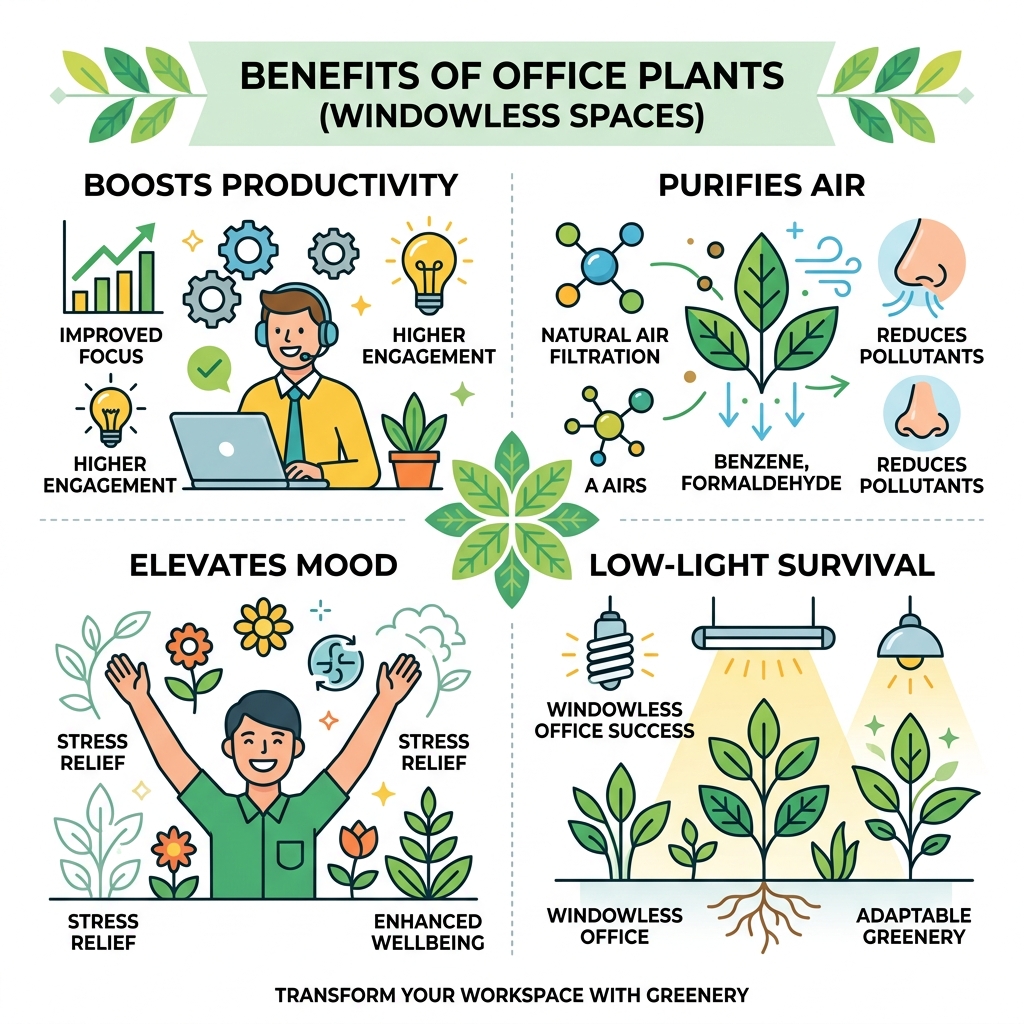
Research shows that having plants in the office can boost productivity by 15%. And a NASA study found that certain indoor plants filter harmful pollutants like benzene, formaldehyde, and trichloroethylene from the air — the exact toxins that off-gas from synthetic office furniture and building materials.
You don’t need a window. You just need the right plants and a basic care routine.
This guide covers exactly which plants work, how to keep them alive under fluorescent lights, and how to style them in your space.
The Science of Greenery in Windowless Spaces
Many of us spend upwards of 40 hours a week in environments that feel a bit like a sensory deprivation tank. When we talk about the best plants for office no windows, we aren’t just talking about office decor; we’re talking about biological upgrades to your workspace.
Boosting Your Brainpower
It might sound like a “green thumb” myth, but the numbers back it up. A UK study on office plants and productivity found that simply bringing greenery into a previously “lean” office environment increased worker productivity by 15%. Why? Because plants help reduce physiological stress, increase attention spans, and improve overall well-being. When we feel better, we work better.
Natural Air Filtration
In a windowless office, air circulation is often at the mercy of the building’s HVAC system. This is where the famous NASA study on indoor air pollutants comes into play. NASA researchers found that indoor plants are incredibly effective at removing trace amounts of toxic chemicals from the air.
- Benzene Filtration: Commonly found in inks, oils, and plastics, benzene can be absorbed by the roots and leaves of plants like the Peace Lily.
- Formaldehyde Removal: This gas is frequently emitted by particleboard furniture and carpets. Plants like the Snake Plant and Spider Plant act as natural scrubbers to keep the air fresh.
At Mount Pilchuck, we believe that understanding indoor air quality and productivity tips is the first step toward a healthier professional life. Plants don’t just sit there; they actively breathe with you, releasing oxygen and increasing humidity, which can prevent the dry skin and scratchy throats often caused by office air conditioning.
Top 10 Best Plants for Office No Windows
Selecting the best plants for office no windows requires looking for “shade-tolerant” species. In the wild, these plants often grow on the forest floor, shaded by massive tropical canopies. They’ve evolved to make the most of very little light, which makes them perfect for the fluorescent glow of a cubicle.
- Snake Plant: The champion of neglect. It grows upright, taking up very little desk “real estate.”
- ZZ Plant: Known for its waxy, shiny leaves that look almost fake because they stay so perfect in the dark.
- Pothos: A trailing beauty that can grow several feet long, even in dim corners.
- Cast Iron Plant: Aptly named because it is nearly indestructible. It handles low light and low humidity with ease.
- Peace Lily: One of the few low-light plants that produces beautiful white blooms (bracts) under office lights.
- Chinese Evergreen: Comes in various patterns; the darker green varieties are the most shade-tolerant.
- Spider Plant: Great for hanging or high shelves, it produces “babies” that dangle down like tiny ornaments.
- Philodendron: Similar to Pothos but with heart-shaped leaves. It’s a fast grower that loves to climb.
- Parlor Palm: Adds a tropical, sophisticated vibe to a desk or corner without needing a lick of sun.
- English Ivy: A classic climber that can be trained to grow along a cubicle wall or shelf.
Snake Plants: The Ultimate Low-Light Survivor
The Dracaena trifasciata, more commonly known as the Snake Plant, is the undisputed king of windowless spaces. If you are a beginner or a self-proclaimed “plant killer,” this is the one for you.
Snake plants are legendary for their neglect tolerance. They can go weeks—sometimes even a month—without water. Because they grow vertically, they are perfect for tight cubicle corners where you want to add height without cluttering your workspace. Beyond their looks, they are powerhouse air purifiers. For more detailed steps on keeping yours happy, check out our Mount Pilchuck Snake Plant care guide.
We often recommend these as low-maintenance air-purifying plants because they actually perform a unique trick: they release oxygen at night, which is rare for plants. While you might not be in the office at 2 AM, this constant cycle helps keep the air “alive” even when the building is closed.
ZZ Plants and Pothos: Best Plants for Office No Windows
If the Snake Plant is the king, the ZZ Plant (Zamioculcas zamiifolia) and Pothos (Epipremnum aureum) are the prince and princess of the cubicle.
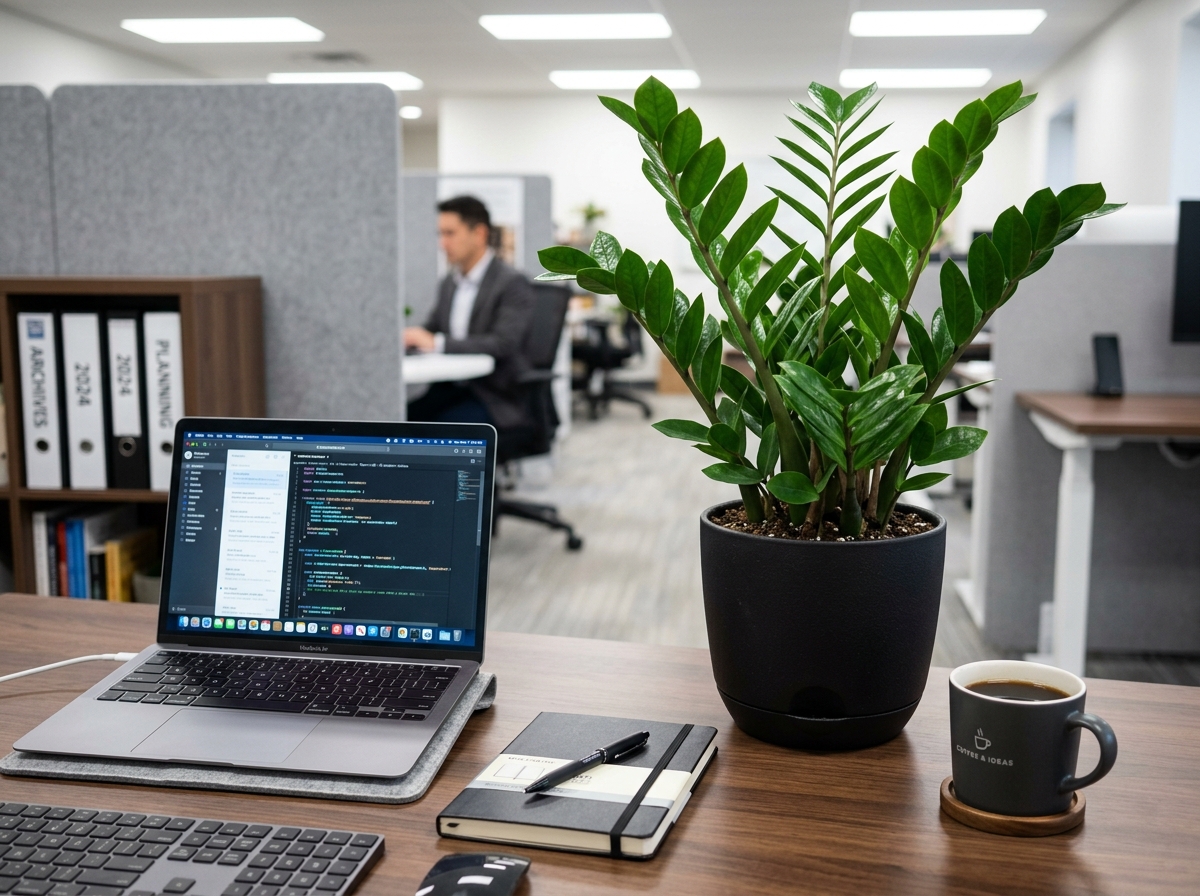
The ZZ Plant is a biological marvel. It grows from thick, potato-like structures under the soil called rhizomes. These rhizomes store water, allowing the plant to survive prolonged droughts. It actually prefers to be left alone; overwatering is its only real enemy. Its glossy leaves reflect the overhead fluorescent light, making it look vibrant even in the gloomiest basement office.
Pothos, on the other hand, provides that classic “jungle” look. Its trailing vines are incredibly versatile. You can let them spill over the side of a filing cabinet, or use small hooks to guide the vines along your cubicle walls. Pothos is one of the best plants for office no windows because it is very expressive. If it’s thirsty, the leaves will wilt slightly, giving you a clear signal that it’s time for a drink. Once watered, it perks right back up within hours.
Mastering Care and Lighting for Windowless Offices
A windowless office doesn’t mean “no light”—it just means “no sun.” Most modern office lighting is actually sufficient for low-light plants if it stays on for a standard work day.
Understanding Artificial Light
Standard office fluorescent fixtures or modern LED panels provide the blue-spectrum light that plants need for leafy growth. To ensure your plants thrive rather than just “surviving,” aim for about 8-10 hours of light on workdays.
If your office is particularly dim, you might consider a small LED grow light. Look for bulbs that offer at least 1,500 lumens—this is roughly equivalent to a 100-watt incandescent bulb but specifically tuned for plant health. Full-spectrum bulbs are best because they mimic the natural balance of the sun. For a deeper dive into setting up your space, see our Mount Pilchuck office cubicle lighting guide.
By keeping your plants within a few feet of the brightest ceiling fixtures, you ensure they get enough energy to photosynthesize. We’ve seen many successful setups where employees use a simple desk lamp with a plant-friendly bulb to create a focal point of greenery. You can find more inspiration in our guide on indoor plants for office spaces.
How to Water the Best Plants for Office No Windows
The most common way office plants die isn’t from a lack of light—it’s from too much love (and water). In a windowless room, water evaporates much slower than it does in a sunny room.
- Check the Soil: Always stick your finger about an inch or two into the soil. If it feels damp, walk away. If it’s dry and crumbly, it’s time to water.
- Drainage is Non-Negotiable: Never let your plant sit in standing water. Ensure your pot has drainage holes. If you have a beautiful decorative pot without holes, keep the plant in its plastic “nursery pot” inside the decorative one and dump out any excess water after watering.
- Prevent Root Rot: When soil stays soggy for too long, the roots can’t breathe and will begin to rot. This is why well-draining potting mixes (look for ingredients like perlite or coco coir) are essential.
For those who travel for work or simply forget the watering can, a self-watering planter can be a lifesaver. These containers use a reservoir to allow the plant to “sip” water as needed. While you’re at it, you might also look into workplace-comfort mini air purifiers for desks to complement your new green friends.
Troubleshooting and Styling Your Green Workspace
Even the best plants for office no windows can run into trouble. Here is how to keep them looking professional and healthy.
Common Issues
- Yellowing Leaves: This is usually a sign of overwatering. Slow down and let the soil dry out.
- Leggy Growth: If your plant is growing very long stems with tiny leaves spaced far apart, it’s “reaching” for more light. Move it closer to an overhead fixture or add a desk lamp.
- Dusty Leaves: Offices are dusty places. Dust on leaves blocks light and clogs the plant’s “pores.” Wipe the leaves once a month with a damp cloth to keep them shiny and healthy.
Styling Tips
Don’t just stick a single pot in the middle of your desk. Use biophilic design principles to make the space feel intentional:
- Group Your Plants: Grouping 3 or 5 plants of different heights creates a “mini-forest” effect. It also creates a small humid micro-climate that helps the plants thrive.
- Use Vertical Space: Use the tops of filing cabinets or high shelves for trailing plants like English Ivy or Pothos.
- Corner Placement: Tall plants like the Snake Plant or Parlor Palm are perfect for softening the harsh 90-degree angles of a cubicle.
- Desk-Friendly Succulents: While most succulents love sun, varieties like Haworthia or Gasteria are much more tolerant of office light and stay very compact.
For more creative layout ideas, explore our tips on indoor plants for low-light rooms.
Frequently Asked Questions about Office Plants
Can plants survive on 100% artificial light?
Yes! Many foliage plants can thrive entirely on artificial light. The key is the duration and the spectrum. Office fluorescents are heavy in the blue spectrum, which is great for leaves. If you use T5 fluorescent tubes or full-spectrum LED grow lights, you can even get some plants to flower. Just remember they need a “rest” period—don’t leave the lights on 24/7. Aim for 8–12 hours of light followed by darkness.
Which office plants are toxic to pets or humans?
In a professional setting, it’s important to be mindful of sensitivities. The ZZ Plant and Dumb Cane (Dieffenbachia) contain calcium oxalate crystals, which can cause irritation if brushed against by sensitive skin or if a leaf is accidentally ingested. While usually not a problem for adults, it’s good practice to keep them out of high-traffic areas where people might bump into them frequently. Always wash your hands after pruning these specific plants.
How do I prevent mold in office plant soil?
Mold usually grows when the soil surface stays wet for too long in an area with poor air circulation. To prevent this, ensure you are not overwatering. You can also sprinkle a little cinnamon on the soil surface (a natural antifungal) or use a small desk fan to improve air movement. Letting the top inch of soil dry out completely before watering again is the best defense.
Conclusion
At Mount Pilchuck, we are passionate about helping you create a workspace that doesn’t just look good, but feels good. A windowless office doesn’t have to be a “dead zone.” By choosing the best plants for office no windows—like the resilient Snake Plant or the graceful Pothos—you are investing in your own mental clarity and physical health.
The benefits of improved air circulation and the stress-reducing power of nature are just a few pots away. Whether you’re starting with a single ZZ plant on your monitor stand or a full “green wall” on your filing cabinets, we’re here to provide the expert advice you need to succeed.
Ready to transform your cubicle? Start your office plant journey here and discover how a little greenery can make a world of difference.
