
Why Indoor Plant Health Matters More Than You Think
Indoor plant health directly affects how much benefit your houseplants actually deliver — and yes, those benefits are real and measurable.
Quick answer: What healthy indoor plants can do for you
| Benefit | What the research shows |
|---|---|
| Lower blood pressure | Diastolic BP drops by a meaningful margin with plants present |
| Faster thinking | Reaction time was 12% faster with plants in the room |
| Better academic performance | Students in plant-filled classrooms scored measurably higher |
| Reduced stress | Plants promote relaxed physiology, including calmer brain activity |
| Cleaner air | Certain species actively filter indoor toxins and boost oxygen |
Most of us spend more than 80% of our lives indoors. That means stagnant air, limited natural light, and almost zero contact with nature — a recipe for low energy, poor focus, and chronic stress.
Houseplants are one of the simplest fixes available. But here’s the catch: a struggling plant can’t do its job. A wilting, root-bound, or pest-ridden plant isn’t purifying your air or calming your nervous system. Only a healthy plant delivers those benefits.
The good news? Keeping indoor plants healthy is straightforward once you know what to look for.
The Science of How Indoor Plants Boost Human Health
We often think of plants as mere decorations, but science suggests they are biological powerhouses that interface with our own systems. When we talk about Indoor plant health, we are really talking about an investment in our own biological performance.
One of the most compelling areas of study involves “relaxed physiology.” When we are around healthy greenery, our bodies physically shift gears. A comprehensive scientific research on human functions and indoor plants utilized meta-analyses to prove that indoor plants significantly benefit diastolic blood pressure. In fact, the pooled effect size showed a reduction of -2.526, a statistically significant drop that points to a real-world calming effect.
But the benefits don’t stop at the heart. Our brains respond to the presence of plants by entering a state of “enhanced cognition.” This is often linked to Attention Restoration Theory, which suggests that looking at nature allows our “directed attention” (the kind we use for spreadsheets and emails) to rest and recharge.
According to research on nature and health, exposure to natural environments—even indoor ones—reduces negative affect and boosts positive emotions. The data is hard to ignore:
- Reaction Time: Participants in studies were 12% faster during cognitive tasks when plants were present compared to when they were absent.
- Academic Achievement: In classroom settings, the presence of plants resulted in a pooled effect size improvement of 0.534 in academic performance.
- Brain Waves: Studies using EEG (electroencephalogram) have shown that viewing plants increases alpha wave activity, which is associated with a relaxed but alert mental state, while decreasing the beta waves linked to high stress.
Essentially, a healthy plant acts as a silent coach for your brain and body, keeping you calm, focused, and sharp.
Essential Care for Thriving Indoor Plant Health
To reap these rewards, we have to mimic the plant’s natural habitat as closely as possible. Indoor environments are notoriously difficult for plants because of low light, bone-dry air from HVAC systems, and limited soil volume.
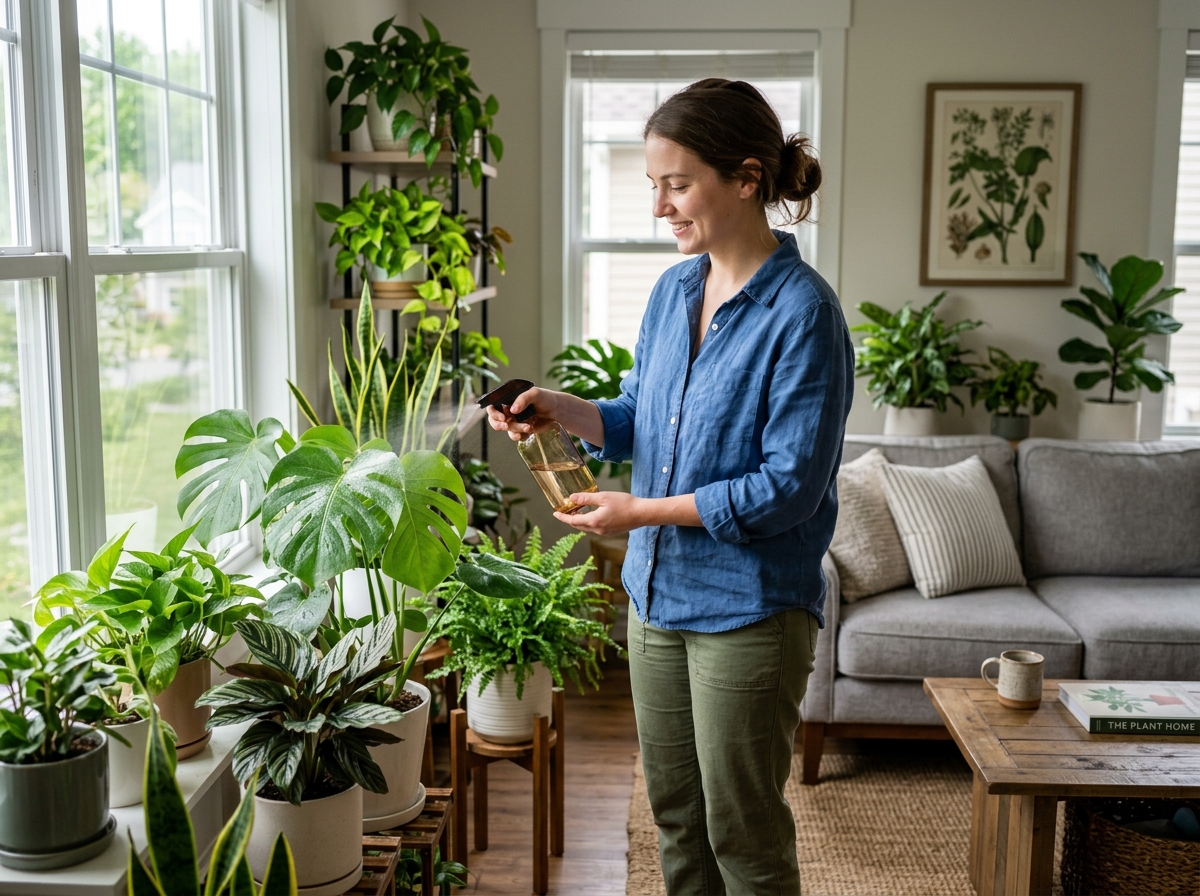
The Pillars of Plant Wellness
- Humidity: Most houseplants are tropical in origin and crave a humidity level between 40% and 60%. Most homes, especially in winter, drop well below 20%. We can fix this by grouping plants together (they “breathe” out moisture for each other), using pebble trays, or utilizing a humidifier.
- Temperature: Most plants thrive in the same temperatures we do—roughly 70-80°F during the day and 65-70°F at night. The danger comes from “micro-climates,” such as a drafty window in winter or a heat vent blowing directly on a leaf.
- Indoor Air Quality: While plants help clean our air, they are also sensitive to it. Dust on leaves acts like a blindfold, preventing the plant from “eating” sunlight. Regularly wiping leaves with a damp cloth is essential for Indoor plant health.
- Space and Air Circulation: Plants need room to breathe. Stagnant air can lead to fungal issues like powdery mildew. If you’re looking to optimize your setup, you can find more info about indoor plant services to help you choose the right quantities for your square footage.
Recognizing Early Signs of Indoor Plant Health Distress
Plants are excellent communicators; we just have to learn their language. If you catch a problem early, it is almost always reversible. This guide for diagnosing houseplant problems is an excellent resource for deep-diving into specific symptoms, but here are the “Big Four” to watch for:
- Yellowing Leaves: If the lower, older leaves are turning yellow, you are likely overwatering. If new growth is yellowing, it could be a nutrient deficiency or underwatering.
- Brown Tips: This is the plant’s way of saying “it’s too dry.” This is caused by low humidity, salt buildup from tap water, or inconsistent watering.
- Wilting: This is a tricky one. A plant wilts when its roots can’t send water to the leaves. This happens if the soil is bone-dry (underwatering) OR if the roots have rotted in soggy soil and can no longer function (overwatering). Always check the soil moisture with your finger before adding more water.
- Pests: Look for “sticky residue” (honeydew from aphids or scale) or tiny white “cotton” spots (mealybugs). Isolate infested plants immediately to prevent a full-scale outbreak.
Best Practices for Maintaining Long-term Indoor Plant Health
Maintaining a “green thumb” isn’t magic; it’s a routine.
Watering with Intent Never water on a calendar schedule (e.g., “every Monday”). Instead, check the soil. For most plants, wait until the top inch of soil is dry. When you do water, do it thoroughly until water flows out of the drainage holes. This “flushes” out excess fertilizer salts that can cause root burn.
Mastering the Light Light is a plant’s food. “Low light” does not mean “no light.” If a plant is becoming leggy or spindly, it is literally stretching toward a light source it can’t find. Use the resources for evaluating indoor light levels to match your plant to the right window.
- South-facing: High, direct light.
- North-facing: Low, indirect light.
- East/West: Medium, transitional light.
Soil and Repotting Indoor soil eventually becomes “spent,” losing its structure and nutrients. We recommend repotting most plants every 1-2 years. If you see roots circling the bottom of the pot or poking out of the drainage holes, it’s time for a bigger home. Only go up about 2 inches in pot diameter at a time; too much extra soil holds too much water, leading to the dreaded root rot.
Top Health-Boosting Plants for Apartment Living
Living in an apartment often means dealing with limited light and smaller spaces. However, even a few well-placed plants can transform your environment. Research suggests that “green coverage”—the amount of visible greenery in your field of vision—is key. Aim for about 5% to 10% green coverage in your main living or working area for maximum cognitive benefits.
1. Snake Plant (Sansevieria)
The ultimate “set it and forget it” plant.
- Health Benefit: Unlike most plants, it produces oxygen at night, making it the perfect bedroom companion for better sleep quality.
- Care: Thrives on neglect. Water every 2-4 weeks and it can handle almost any light level.
2. Spider Plant (Chlorophytum comosum)
The champion of air purification.
- Health Benefit: NASA studies have shown it is incredibly effective at removing formaldehyde and xylene from indoor air.
- Care: Prefers bright, indirect light and likes to stay slightly moist. It also produces “babies” that you can easily propagate.
3. Peace Lily (Spathiphyllum)
The humidity booster.
- Health Benefit: It can increase room humidity by up to 5%, which helps ease dry skin and respiratory issues. It also filters airborne mold spores.
- Care: It will literally “faint” (wilt dramatically) when it needs water, making it a great plant for beginners who need a visual reminder. Note: It is toxic to pets, so keep it on a high shelf.
4. Golden Pothos (Epipremnum aureum)
The mood lifter.
- Health Benefit: Its rapid growth and trailing vines provide a high “visible greenness” ratio, which is linked to reduced stress and better mood.
- Care: Very hardy. It can survive in low light and handles irregular watering like a pro.
5. Aloe Vera
The healing powerhouse.
- Health Benefit: Beyond its air-purifying qualities, the gel inside the leaves is a world-class remedy for minor burns and skin irritations.
- Care: Needs bright light (a windowsill is perfect) and very little water. Think of it as a cactus with benefits.
Common Questions About Houseplant Wellness
How often should I water for optimal indoor plant health?
There is no “one size fits all” answer, but the “finger test” is the gold standard. Stick your finger two inches into the soil. If it feels dry, water. If it feels damp, wait. Plants need less water in the winter when they are dormant and more in the summer when they are actively growing.
What are the best low-light plants for apartments?
Snake plants, ZZ plants, and Pothos are the “Big Three” for low-light situations. They can survive in north-facing windows or even in the interior of a room, though they will grow much slower than they would in brighter light.
Can indoor plants really improve my focus and cognition?
Yes! As mentioned in the meta-analysis data, reaction times improve by 12% in the presence of plants. This is due to a combination of improved air quality (more oxygen, fewer toxins) and the psychological “micro-break” our brains take when we glance at greenery, which prevents mental fatigue.
Conclusion
At Mount Pilchuck, we believe that Indoor plant health is the foundation of a healthy home. Plants aren’t just objects we own; they are living filters and biological stress-reducers that work around the clock to keep us feeling our best.
By following a simple routine of checking soil moisture, providing adequate light, and keeping leaves clean, you can ensure your “indoor forest” remains a thriving sanctuary. If you’re ready to take the next step in your plant journey or need professional guidance on which species are right for your space, you can find more info about indoor plant services here.
Remember: when you root for your plants, they root for you too. Happy growing!
