
Your Kitchen Air Is More Polluted Than You Think
The best air purifier for kitchen smells combines a True HEPA filter with a thick activated carbon layer, a high CADR rating matched to your kitchen size, and an auto-mode with real-time air quality sensors.
Top features to look for:
- True HEPA filter – captures 99.97% of fine particles including smoke and grease
- Activated carbon filter – neutralizes odors and absorbs VOCs like benzene and formaldehyde
- High CADR – matched to at least two-thirds of your kitchen’s square footage
- Auto-mode with air quality sensor – adjusts fan speed automatically when you start cooking
- Compact, counter-friendly design – fits in kitchens without blocking workspace
Cooking is one of life’s great pleasures. But here’s a fact that often gets overlooked: cooking is one of the primary sources of indoor air pollution in most homes.
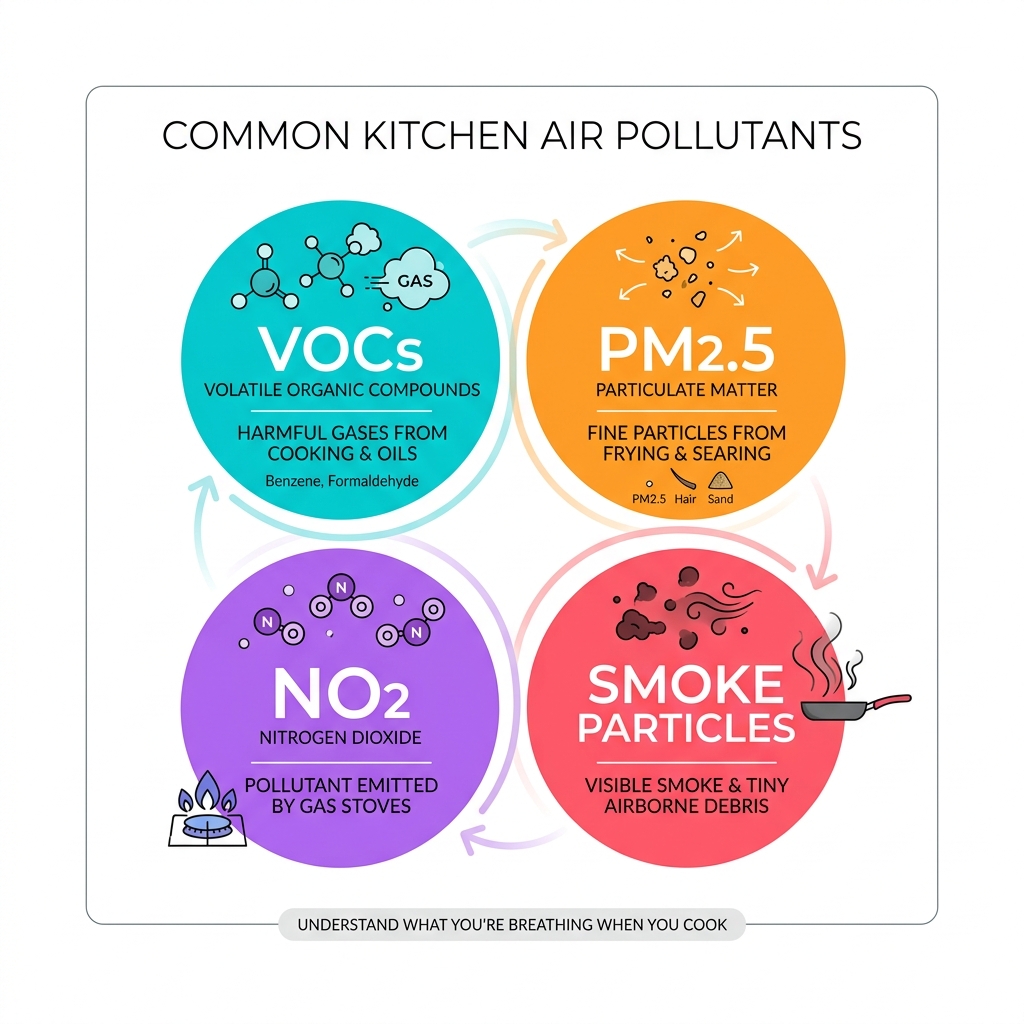
When you smell onions frying or notice a haze after searing a steak, that’s not just an aroma. You’re breathing in a mix of particulate matter (PM2.5), nitrogen dioxide, carbon monoxide, and volatile organic compounds (VOCs) like benzene and formaldehyde. Gas stoves are especially significant contributors to these pollutants. And these aren’t just unpleasant — they’re linked to real health effects, including dizziness, fatigue, and chest tightness with prolonged exposure.
A range hood helps. But it doesn’t catch everything. Ultrafine particles and gases linger long after the hood fan turns off, spreading into the rest of your home.
That’s exactly where a dedicated kitchen air purifier makes a difference.
Why You Need an Air Purifier for Kitchen Smells
We’ve all been there: the “Roman Empire” of kitchen mishaps. Maybe the toast stayed in a few seconds too long, or the scent of last night’s pan-seared salmon is still greeting you at breakfast. While these smells are annoying, the invisible pollutants accompanying them are the real concern.
In our research, we’ve found that kitchens are hotbeds for indoor pollutants. When we cook, especially with high-heat methods like frying or searing, we release a cocktail of chemicals. Gas stoves are a particular culprit, often emitting nitrogen dioxide and benzene even when they are functioning correctly. Without a high-quality air purifier for kitchen smells, these particles settle into your carpets, furniture, and—most importantly—your lungs.
HEPA Air Purifiers for Kitchens | Kitchen Smell Air Purifier – Molekule
The Health Risks of Cooking Fumes
It isn’t just about the “stink.” The pollutants generated in a kitchen can have immediate and long-term health impacts.
- Nitrogen Dioxide (NO2): Frequently released by gas appliances, NO2 can irritate the airways and aggravate respiratory diseases like asthma.
- Particulate Matter (PM2.5): These are tiny particles (less than 2.5 micrometers in diameter) that can travel deep into the lungs and even enter the bloodstream. Cooking oils and smoke are major sources.
- Volatile Organic Compounds (VOCs): These are gases emitted from certain solids or liquids. In the kitchen, they come from the food itself as it heats up, as well as cleaning products.
- Benzene and Formaldehyde: Research shows that gas stoves can emit these carcinogens, which may linger for hours after the flame is extinguished.
We often hear from home cooks who experience chest tightness or fatigue after a long session in the kitchen. This isn’t always just “cooking exhaustion”—it can be a direct reaction to poor air quality.
Why Standard Ventilation Isn’t Enough
You might think, “I have a range hood, I’m fine!” We wish that were the case. While range hoods are essential for removing steam and heavy grease, they often fall short in two areas:
- Capture Rate: Many residential hoods (especially the recirculating ones found in apartments) simply move the air through a basic mesh filter and spit it back into the room.
- Ultrafine Particles: Even high-end hoods struggle to capture 100% of the ultrafine particles and gases produced during cooking.
An air purifier acts as your “second line of defense.” While the hood handles the heavy lifting at the stove, the purifier scrubs the air in the rest of the room, catching the smoke and smells that escaped the fan’s reach.
Essential Features for Odor Elimination
If you’re looking for an air purifier for kitchen smells, you can’t just grab the first unit you see on a shelf. Kitchen air is unique—it’s “sticky” thanks to airborne grease and heavy on odors. To win the battle, you need a specific set of tools.
The Role of HEPA and Carbon in an Air Purifier for Kitchen Smells
The “Gold Standard” for any kitchen unit is a combination of True HEPA and Activated Carbon.
| Feature | What it Captures | Why it’s Crucial for Kitchens |
|---|---|---|
| True HEPA Filter | 99.97% of particles (0.3 microns) | Stops smoke, charred food bits, and airborne grease. |
| Activated Carbon | Gases, VOCs, and Odors | Uses adsorption to soak up the smell of onions, fish, and burnt oil. |
| Pre-filter | Large dust and hair | Protects the expensive HEPA filter from getting coated in kitchen “fuzz.” |
One expert insight we’ve gathered is that not all carbon filters are created equal. For heavy kitchen use, look for pelletized activated carbon rather than a thin carbon-impregnated fabric. The pellets have more surface area to trap stubborn smells. Some advanced models, like those from Blueair, even use proprietary technology like “SmokeBlock” filters which contain double the carbon for intense odor removal.
Understanding CADR and Kitchen Size
CADR stands for Clean Air Delivery Rate. It tells you exactly how much filtered air the unit can pump out. In a kitchen, where pollutants are generated rapidly, you need a high CADR to keep up.
A good rule of thumb is to choose an air purifier with a smoke CADR that is at least two-thirds of your kitchen’s square footage.
Performance data shows how much these ratings matter in the real world:
- The Levoit Core 300S (a popular choice) cleaned a 728 cubic feet test room of pollutants in just under 32 minutes.
- The Alen BreatheSmart 45i cleared the same room in 34 minutes using its HEPA and carbon filters.
- The Shark HP102 took 38 minutes to clear thick incense smoke from a similarly sized room.
If you have an open-concept kitchen and living area, you’ll want to aim even higher. Units like the Blue Pure 211i Max can clean up to 1,618 square feet in just 30 minutes, making it ideal for those large “great rooms” where the smell of bacon tends to migrate to the sofa.
smoke-and-odor-free-affordable-air-purifiers-for-cleaner-air/
Strategic Setup and Long-Term Maintenance
You’ve bought the perfect air purifier for kitchen smells—now, where do you put it? If you tuck it behind a refrigerator or inside a pantry, it won’t do much good.
Optimal Placement for an Air Purifier for Kitchen Smells
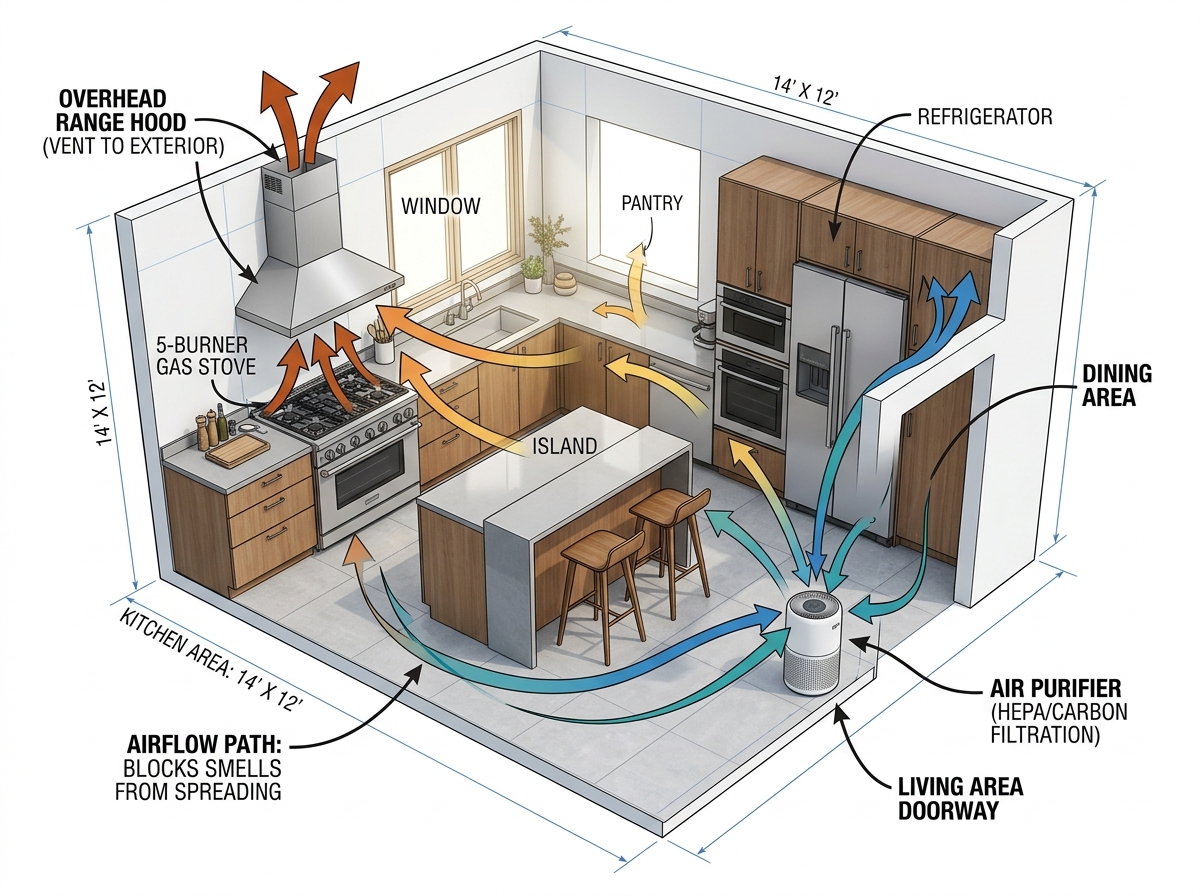
Placement is all about “blocking the path.” You want the air purifier to sit between the source of the smell (the stove) and the rest of your house.
- Keep Vents Unblocked: Ensure there are at least two inches of clearance from walls or cabinets.
- Countertop vs. Floor: Small units like the Shark HP102 are perfect for countertops. Larger “beasts” like the NuWave OxyPure 6 should sit on the floor where they can pull in larger volumes of air.
- Avoid the “Grease Zone”: While you want it close to the stove, don’t put it right next to the burners. Heavy grease mist can coat the exterior and the filters, causing them to fail prematurely. A distance of 4 to 8 feet is usually the “sweet spot.”
Managing Running Costs and Filter Life
Kitchen air purifiers work harder than bedroom units. Because they are constantly filtering out “sticky” grease and heavy smoke, the filters will get dirty faster.
- Filter Replacements: While some brands like Shark claim their “NeverChange” filters can last years, in a heavy-cooking environment, we recommend checking them every 6 months. A clogged filter doesn’t just stop cleaning; it makes the motor work harder, increasing your electricity bill.
- Electricity Usage: Most modern units are Energy Star certified. Running a unit like the Levoit Core 300S costs roughly $79 per year in electricity, while the Shark HP102 is slightly more efficient at around $61 per year.
- The DIY Route: If you’re on a budget, you can actually create effective temporary solutions. Check out our guide on clear-the-air-a-guide-to-diy-air-purifiers-for-smoke-3/ for how to manage air quality during home renovations or heavy smoke events.
Frequently Asked Questions about Kitchen Air Quality
Can an air purifier replace a kitchen range hood?
No. Think of the range hood as the “vacuum” that sucks up the big mess at the source, and the air purifier as the “mop” that cleans up the fine residue left behind. A range hood vents heat and moisture outside; an air purifier cannot do that. For the best results, use them together.
Should I run my purifier continuously or only while cooking?
We recommend running it continuously, especially if it has an Auto-Mode. Modern sensors are incredibly sensitive. We’ve seen units ramp up the fan speed the moment an oven door is opened, catching that “puff” of smoke before it hits your nose. Running it on a low “Eco” mode 24/7 ensures that general household VOCs and pet dander are also kept in check.
How do I know if my air purifier is working?
Most smart units feature an LED ring or a digital display. If you start frying onions and the light turns from blue (clean) to red (dirty), you know the sensors are doing their job. More importantly, you’ll notice that the “morning after” smell of a heavy dinner is completely gone.
Conclusion
Investing in a dedicated air purifier for kitchen smells is one of the best things you can do for your home’s health and your own peace of mind. By focusing on True HEPA filtration, a solid activated carbon layer, and smart placement, you can enjoy your favorite spicy dishes or fried favorites without the lingering “scent of last night” or the worry of harmful VOCs.
At Mount Pilchuck, we are passionate about creating healthy indoor environments. While a mechanical air purifier is a powerful tool, we also believe in the power of nature. Incorporating specific indoor plants—like the Snake Plant or Peace Lily—can provide a natural boost to your air circulation and help absorb minor toxins over time. A combination of smart technology and greenery is the ultimate recipe for a fresh, vibrant home.
