
Why You Should Know How to Measure Air Quality
To measure air quality, you need to understand a few key tools and numbers:
- Check the AQI (Air Quality Index) – a 0-500 scale that tells you how clean or polluted the air is
- Know the six AQI levels – from Good (0-50) to Hazardous (301+), each color-coded for quick reading
- Use free tools like AirNow.gov or the PurpleAir map for real-time local data
- Watch for key pollutants – especially PM2.5, ground-level ozone, and nitrogen dioxide
- Go deeper with sensors – affordable home devices can track indoor and outdoor air in real time
Most people don’t think about the air they breathe until something feels wrong. Stale rooms, smoky skies, itchy eyes, low energy — these are all signs that air quality might be affecting you right now.
The air in and around cities shifts constantly. Wildfire smoke, traffic exhaust, industrial emissions, and even cooking indoors can push pollutant levels into ranges that harm your lungs and your focus.
The good news? Measuring air quality has never been more accessible. From official government maps to affordable home sensors, you have more tools at your fingertips than ever before.
This guide breaks down exactly how air quality is measured, what the numbers mean, and how you can use that information to breathe easier — literally.
Understanding the Air Quality Index (AQI)
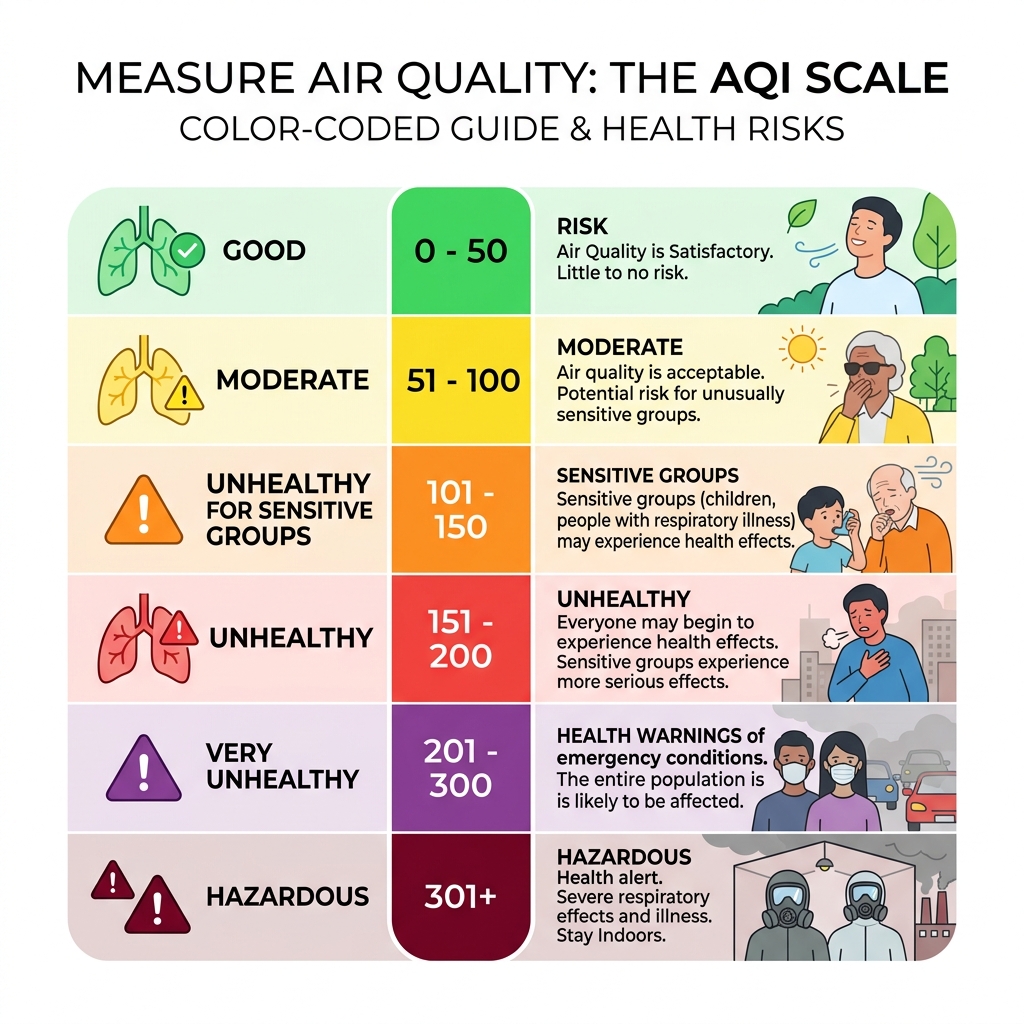
When we talk about how we measure air quality, the most important term to know is the Air Quality Index, or AQI. Think of the AQI as a yardstick that runs from 0 to 500. The higher the AQI value, the greater the level of air pollution and the greater the health concern.
The U.S. Environmental Protection Agency (EPA) establishes the AQI for five major air pollutants regulated by the Clean Air Act: ground-level ozone, particle pollution (PM2.5 and PM10), carbon monoxide, sulfur dioxide, and nitrogen dioxide. An AQI value of 100 generally corresponds to the national air quality standard for the pollutant, which is the level the EPA has set to protect public health.
To make it easy for us to understand at a glance, the AQI is divided into six color-coded categories. This system allows for quick visual assessment of health risks without needing to be a scientist.
| AQI Category | Numerical Value | Health Description |
|---|---|---|
| Good (Green) | 0 – 50 | Air quality is satisfactory, and air pollution poses little or no risk. |
| Moderate (Yellow) | 51 – 100 | Air quality is acceptable; however, there may be a risk for some people. |
| Unhealthy for Sensitive Groups (Orange) | 101 – 150 | Members of sensitive groups may experience health effects. |
| Unhealthy (Red) | 151 – 200 | Everyone may begin to experience health effects; sensitive groups more so. |
| Very Unhealthy (Purple) | 201 – 300 | Health alert: everyone may experience more serious health effects. |
| Hazardous (Maroon) | 301+ | Health warnings of emergency conditions; the entire population is likely to be affected. |
If you are looking for a deep dive into how to navigate these numbers on official platforms, we recommend checking out How To Use This Site | AirNow.gov.
Key Pollutants Used to Monitor Atmospheric Health
Air isn’t just “dirty” or “clean”—it’s a mixture of gases and particles. When scientists measure air quality, they are looking for specific culprits that have the biggest impact on our health and environment.
- Ground-level Ozone: Unlike the “good” ozone layer high in the atmosphere, ground-level ozone is a harmful air pollutant. It is created by chemical reactions between oxides of nitrogen (NOx) and volatile organic compounds (VOC) in the presence of sunlight.
- Nitrogen Dioxide (NO2) and Sulfur Dioxide (SO2): These gases primarily come from burning fossil fuels—think car exhaust and power plants.
- Carbon Monoxide (CO): An odorless, colorless gas that can be harmful when inhaled in large amounts, often released by vehicles or machinery that burn fossil fuels.
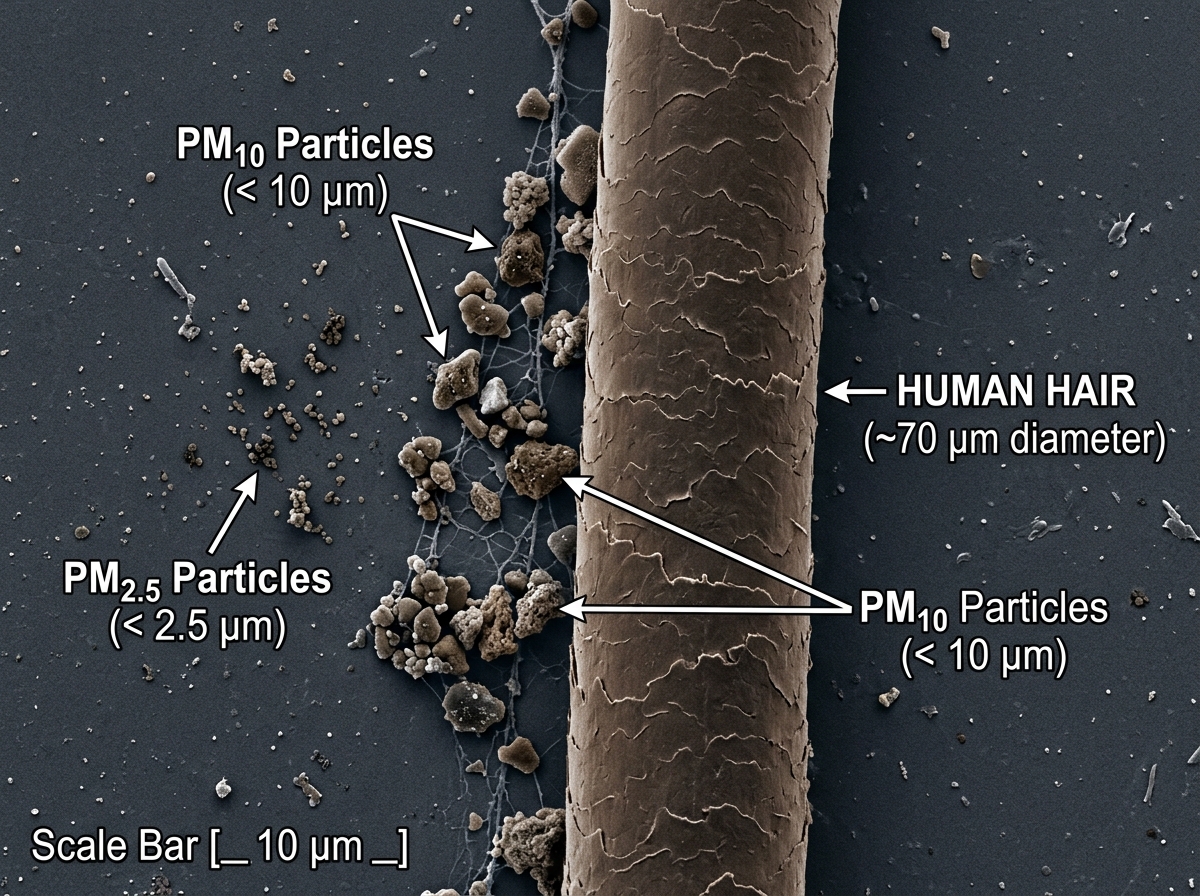
- Particulate Matter (PM10 and PM2.5): These are tiny pieces of solids or liquids in the air. PM10 includes dust and pollen, while PM2.5 is much smaller and more dangerous.
How PM2.5 helps measure air quality
Among all pollutants, PM2.5 is often the most discussed. These “fine” particles are 2.5 micrometers in diameter or smaller—about 30 times smaller than the width of a human hair. Because they are so tiny, they can travel deep into our respiratory tract and even enter the bloodstream.
PM2.5 is a primary byproduct of combustion. If you’ve ever smelled campfire smoke or lived through a wildfire season, you were breathing in PM2.5. Real-time sensors, like those provided by PurpleAir, are particularly effective at tracking these fine particles, providing a hyper-local view of smoke impacts that larger, more distant official stations might miss.
Tools and Technology to Measure Air Quality at Home and Beyond
In the past, to measure air quality, you had to rely on multi-million dollar government stations. Today, we have a “citizen science” revolution. We can now use a mix of professional-grade equipment and low-cost consumer sensors to get a full picture of the air we breathe.
Professional monitoring stations, like those managed by the EPA, are the “gold standard.” They are highly accurate, regularly calibrated, and used for regulatory purposes. However, they are often spaced miles apart.
Low-cost sensors have filled the gap. Devices like PurpleAir sensors measure PM2.5, temperature, and humidity. They are affordable enough for individuals, schools, and businesses to install. While a single low-cost sensor might not be as precise as a $50,000 EPA monitor, having thousands of them creates a “mesh” of data that shows exactly how pollution moves through a neighborhood.
If you’re spending more time indoors, measuring the air becomes even more personal. We’ve explored how air quality impacts your focus in our guide on indoor-air-quality-and-productivity-tips, and for those living in smaller spaces, our improving-air-quality-in-apartments-a-diy-guide offers practical steps to keep your home environment healthy.
Using interactive maps to measure air quality
One of the most powerful ways we can measure air quality today is through interactive maps. These tools aggregate data from various sources to provide a visual representation of pollution.
- AirNow.gov: This is the official U.S. source. It uses the “NowCast” AQI, which relates hourly pollutant readings to the 24-hour daily AQI. It’s excellent for seeing official forecasts and broader trends.
- Real-Time Interactive Map by PurpleAir: This map shows data from thousands of privately owned sensors. It is incredibly useful for seeing hyper-local conditions. For example, you might see that the air is “Good” three miles away at the airport station, but “Unhealthy” on your street because of a neighbor’s wood-burning stove.
- Fire and Smoke Map: During wildfire events, the EPA and the U.S. Forest Service provide a specialized map that integrates official monitors with crowdsourced PurpleAir data. This gives the most accurate picture of where smoke plumes are moving in real time.
Developer tools to measure air quality
For the tech-savvy among us, the data used to measure air quality is often open-source. The PurpleAir API, for instance, provides access to a massive dataset of air quality records dating back to 2016.
Developers use these APIs to build mobile apps, smart home integrations (like having your air purifier turn on automatically when outdoor levels rise), and historical archives. This transparency allows researchers to track long-term trends and helps communities advocate for better environmental policies based on hard data.
Global Trends and Environmental Monitoring
While we often focus on our own backyards, air quality is a global issue. According to the 2025 World Air Quality Report by IQAir, which analyzed PM2.5 pollution in over 9,400 cities, only 14% of cities met the World Health Organization (WHO) air pollution guidelines. This highlights a significant gap between current air quality and what is considered safe for long-term health.
Monitoring isn’t just happening in cities. Organizations like the U.S. National Park Service play a massive role in tracking atmospheric health in remote areas. Currently, 74 National Parks have in-park monitoring, while another 230 parks use nearby representative stations.
These programs look at more than just AQI; they track:
- Visibility: Using specialized cameras to see how haze affects iconic views.
- Bioindicators: Studying how air pollution affects wildlife and plants.
- Atmospheric Deposition: Measuring how pollutants like nitrogen and sulfur fall to the ground in rain or snow.
This “wilderness monitoring” helps us understand how pollution travels across continents and impacts even the most pristine environments. To bring some of that natural freshness into your own home, you can explore natural-ways-to-boost-indoor-air-quality.
Frequently Asked Questions about Air Quality
How accurate are low-cost air sensors compared to professional stations?
Low-cost sensors are generally very good at detecting trends (e.g., “the air is getting worse”), but they can sometimes over-read or under-read specific concentrations compared to professional-grade equipment. Factors like high humidity can sometimes “trick” laser-based sensors into thinking there is more dust in the air than there actually is. However, many maps (including AirNow’s fire map) apply a correction formula to these sensors to make them remarkably accurate for public health decisions.
What is the best way to check for wildfire smoke impacts?
The AirNow Fire and Smoke Map is your best resource. Because it combines official government monitors (which are highly accurate) with thousands of temporary and crowdsourced sensors (which are highly local), it provides the most comprehensive view of PM2.5 levels and smoke plumes during a fire event.
How can I protect my health when the AQI is unhealthy?
When the AQI reaches the “Unhealthy” (Red) category or higher:
- Reduce outdoor activity: Especially strenuous exercise.
- Close windows and doors: Keep the outdoor air out.
- Use air filtration: Run your HVAC system with a high-efficiency filter (MERV 13 or higher) or use a portable HEPA air purifier.
- Wear a mask: If you must go outside, an N95 or P100 respirator can filter out fine smoke particles; standard cloth or surgical masks do very little for PM2.5.
Conclusion
Learning how to measure air quality is one of the most proactive steps you can take for your long-term health. Whether you are checking a national map before a morning run or installing a small sensor in your living room, having this data empowers you to make better choices.
At Mount Pilchuck, we believe that the environment inside your home is just as vital as the one outside. While sensors tell you what is in the air, nature often provides the best solutions for keeping it moving. We advocate for the use of indoor plants to boost air circulation and natural health.
For more ways to master your home environment, check out the-diy-guide-to-improving-home-humidity-and-air-quality or learn about the benefits-of-humidity-control-for-breathing.
Breathe deep, stay informed, and remember that a little bit of knowledge goes a long way in clearing the air. Visit us at https://www.mountpilchuck.com/ for more expert advice on creating a healthier home.
