
Your Kitchen Air Is Dirtier Than You Think
The best air purifier for cooking smells combines a True HEPA filter with a substantial activated carbon filter — ideally pellet-based — and a CADR rating matched to your kitchen size.
Top picks at a glance:
| Model | Best For | Room Coverage |
|---|---|---|
| Shark HP102 | Countertop use, fast cleaning | Up to 219 sq. ft. |
| Alen BreatheSmart 45i | Stubborn odors, mid-size kitchens | Up to 301 sq. ft. |
| Winix 5500-2 | Odor neutralization, larger kitchens | Up to 360 sq. ft. |
| IQAir HealthPro Plus | Large/open-plan spaces | Up to 406 sq. ft. |
| Levoit Core 300S | Budget-friendly, small kitchens | Up to 219 sq. ft. |
There’s something genuinely comforting about the smell of a home-cooked meal. But anyone who’s ever scorched onions or deep-fried fish on a Tuesday night knows how fast that comfort turns into a lingering problem.
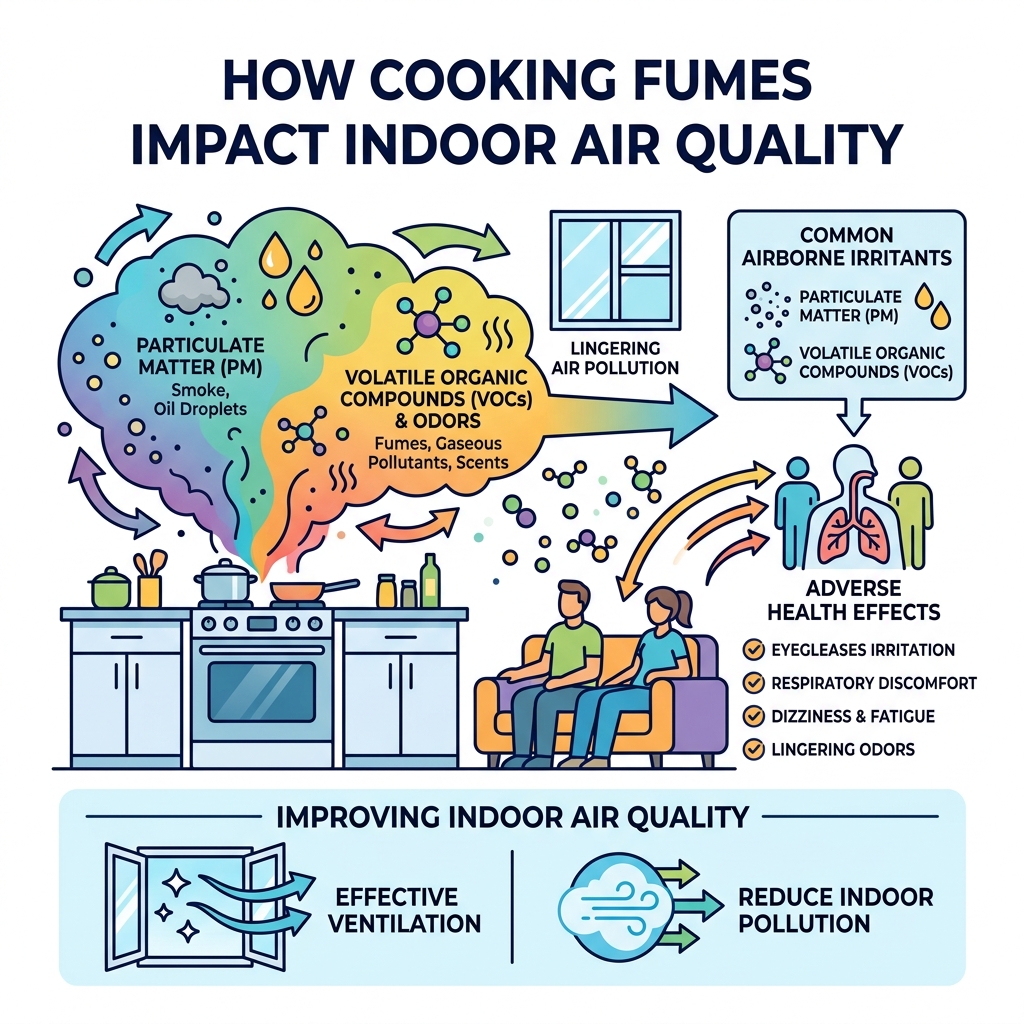
The smell isn’t just annoying. Cooking releases a cocktail of pollutants — smoke particles, volatile organic compounds (VOCs), nitrogen dioxide, and fine particulate matter — that can hang in your air long after the plates are cleared.
Studies show that long-term exposure to these kitchen pollutants can cause symptoms like dizziness, fatigue, chest tightness, and shortness of breath. And if you live in a smaller apartment or an open-plan space, those fumes don’t stay in the kitchen — they spread everywhere.
A good air purifier won’t just mask the smell. It will physically remove the particles and gases causing it.
This guide breaks down exactly what to look for, which models actually work, and how to get the most out of whichever unit you choose.
Essential Features of the Best Air Purifier for Cooking Smells
When we talk about the best air purifier for cooking smells, we aren’t just looking for a machine that blows air around. We need a specialized tool that can handle two very different types of pollution: solid particles (like smoke and grease) and gaseous odors (like the smell of garlic or burnt toast).
To do this effectively, a purifier must have a multi-stage filtration system. The gold standard starts with a True HEPA filter. This is responsible for trapping 99.97% of airborne particles down to 0.3 microns. In the kitchen, this means catching the microscopic droplets of oil and smoke that would otherwise settle on your curtains and upholstery.
However, HEPA filters are useless against smells. For that, you need Activated Carbon. But not all carbon filters are created equal. Many budget models use a thin “carbon-impregnated” fabric that looks like a dryer sheet. For real kitchen duty, we recommend looking for activated carbon pellets. These pellets provide a much larger surface area for a process called adsorption, where odor molecules are physically trapped inside the pores of the carbon. Some high-end units, like those featuring SmokeBlock technology, use double the amount of carbon to neutralize toxic gases and smog.
If you are looking for more ways to keep your home smelling fresh without heavy chemicals, you might find our guide on Smoke and Odor-Free: Affordable Air Purifiers for Cleaner Air helpful for finding budget-friendly filtration solutions.

Why CADR Matters for the Best Air Purifier for Cooking Smells
The Clean Air Delivery Rate (CADR) is a metric that tells you exactly how much filtered air a machine can produce in one minute. It is usually broken down into three categories: Smoke, Dust, and Pollen.
For the kitchen, the Smoke CFM (Cubic Feet per Minute) is your most important number. A higher CADR means the unit can cycle the air in your room more frequently. We generally recommend a unit that can provide at least 4.8 Air Changes per Hour (ACH). If you have a 300-square-foot kitchen, you want a CADR that is at least two-thirds of that square footage to ensure the “burnt popcorn” smell doesn’t linger into the next day.
Smart Sensors and Auto-Mode Functionality
Let’s be honest: when you’re wrestling with a boiling pot of pasta and a sizzling steak, the last thing you want to do is wash your hands just to turn up the air purifier. This is where Auto-Mode becomes a lifesaver.
The best air purifier for cooking smells will feature built-in laser air quality sensors. These sensors monitor the air in real-time for VOCs and particulate matter. As soon as you sear that meat and the smoke hits the air, the sensor detects the spike in pollution and automatically kicks the fan into high gear. Once the air is clean, it throttles back down to a quiet, energy-efficient level. Many of these smart units are also Energy Star certified, meaning they won’t cause a massive spike in your electricity bill even if they run 24/7.
Top-Rated Models to Neutralize Kitchen Odors
Through extensive testing and real-world kitchen use, several models have risen to the top. Here is how the heavy hitters stack up:
| Feature | Shark HP102 | Levoit Core 300S | Alen BreatheSmart 45i | Winix 5500-2 |
|---|---|---|---|---|
| CADR (Smoke) | 80 CFM | 126 CFM | 194 CFM | 232 CFM |
| Filter Type | HEPA + Carbon | True HEPA + Carbon | HEPA + OdorCell | HEPA + Pellet Carbon |
| Best For | Small Counters | Smart Features | Pungent Odors | Value/Performance |
| Auto Mode | Yes | Yes | Yes | Yes |
The Shark HP102 is a personal favorite for many because of its compact footprint. In performance tests, it cleaned a 728-cubic-foot room in just 38 minutes—beating out several larger competitors. Meanwhile, the Alen BreatheSmart series is widely regarded for its customizable filters, specifically the OdorCell, which is designed to destroy odors at a molecular level.
Choosing the Best Air Purifier for Cooking Smells in Large Spaces
If you have an open-concept home where the kitchen flows directly into the living room, a small countertop unit won’t cut it. You need a powerhouse like the Blue Pure 211i Max or the IQAir HealthPro Plus.
The Blue Pure 211i Max is designed for extra-large rooms, capable of cleaning up to 1,618 sq. ft. in just 30 minutes. It uses HEPASilent technology, which combines mechanical filtration with an electrostatic charge to capture particles faster and more quietly than traditional HEPA.
For those dealing with heavy, spice-filled cooking, the IQAir HealthPro Plus is often the “splurge” pick. It features a massive V5-Cell gas and odor filter that contains a blend of activated carbon and alumina. In testing, it has shown exceptional performance in removing even the most stubborn fried fish smells.
Budget-Friendly Options for Small Kitchens
You don’t need to spend $800 to get clean air. The Levoit Core 200S is an excellent entry-level choice for small kitchens or studio apartments. It is compact enough to sit on a shelf and includes smart app integration so you can schedule it to run during your peak cooking hours. For more tips on finding value-driven units, check out our guide on Affordable Air Purifiers for Cleaner Air-2.
Strategic Placement and Maintenance for Peak Performance
Placement is just as important as the machine itself. To get the most out of your best air purifier for cooking smells, you should place it as close to the source of the odor as possible—usually on a countertop near the stove or on a kitchen island.
However, there are a few rules to follow:
- Don’t Block the Vents: Ensure there are at least two to three inches of clearance around the intake vents.
- Avoid Direct Heat: Never place the unit directly next to the oven or a hot burner, as the plastic housing can melt and the heat can damage the filters.
- Height Matters: For small units, a countertop is best because smoke rises. For larger floor units, place them in a high-airflow area where they can pull in air from the center of the room.
Long-Term Maintenance and Filter Care
Kitchen air purifiers work harder than those in a bedroom. They are constantly dealing with airborne grease and oil, which can clog a filter faster than dust alone.
Most modern units now feature RealTrack technology or smart sensors that tell you exactly when to change the filter based on actual usage rather than a timer. We recommend checking your pre-filter (the outer mesh layer) once a month. If it’s covered in a layer of gray “kitchen fuzz,” vacuum it off or wash it if the manual allows. This simple step can extend the life of your expensive HEPA and carbon filters significantly.
If you’re interested in a more hands-on approach to air quality, you might enjoy our resource on A Guide to DIY Air Purifiers for Smoke, which discusses how to maintain clean air even when professional units aren’t available. Additionally, if you want to keep the air smelling sweet between deep cleans, try some of our Simple DIY Air Freshener Recipes.
Frequently Asked Questions about Kitchen Air Quality
Can an air purifier replace a kitchen range hood?
The short answer is: No. An air purifier and a range hood serve two different purposes. A range hood is designed to vent heat, steam, and large grease particles directly out of your home. An air purifier is designed to clean the air that the hood missed.
Think of them as a team. The hood does the heavy lifting during the cooking process, while the air purifier mops up the lingering odors and fine particles that escaped. If you don’t have a vented hood, an air purifier is even more essential, but you should still try to use a DIY setup or ventilation to help move the air.
Will these devices remove strong smells like curry or fried fish?
Yes, but the effectiveness depends entirely on the carbon filter. To tackle pungent spices like curry or the oily smell of fried fish, you need a unit with “pelletized” carbon. These pellets are much heavier and more porous than the thin carbon sheets found in cheaper models. Units like the Winix 5500-2 or the Austin Air HealthMate Jr. (which contains 6.5 lbs of carbon) are specifically designed for these “heavy odor” scenarios.
Should I run my purifier only while cooking?
While it’s tempting to only turn it on when the onions start sizzling, it is actually better to run your purifier continuously on a low setting. Kitchens are a constant source of background pollutants—not just from cooking, but from trash cans, cleaning chemicals, and even pet dander.
Running it 24/7 ensures that the air is already clean when you start your meal prep. If you are worried about noise or power, use the Auto-Mode feature. It will stay whisper-quiet until it senses a reason to speed up. For more information on maintaining a smoke-free environment, check out our Guide to DIY Air Purifiers for Smoke-3.
Conclusion
Finding the best air purifier for cooking smells is an investment in both your home’s comfort and your family’s health. By choosing a unit with a True HEPA filter and a robust activated carbon system, you can enjoy your favorite meals without the “fragrant” reminders lingering for days.
At Mount Pilchuck, we believe that clean air is the foundation of a healthy home. While air purifiers are a high-tech solution, don’t forget the power of nature! Integrating indoor plants—like the Snake Plant or Peace Lily—can further improve air circulation and naturally boost your indoor air wellness.
Ready to take the next step toward a fresher home? You can Improve your home air quality today by exploring our expert guides on health-boosting plants or trying out our DIY Air Freshener Recipes-2 to keep your kitchen smelling like a sanctuary rather than a fry-cook station.
