
Why Cat Friendly Trees and Plants Matter for Your Home
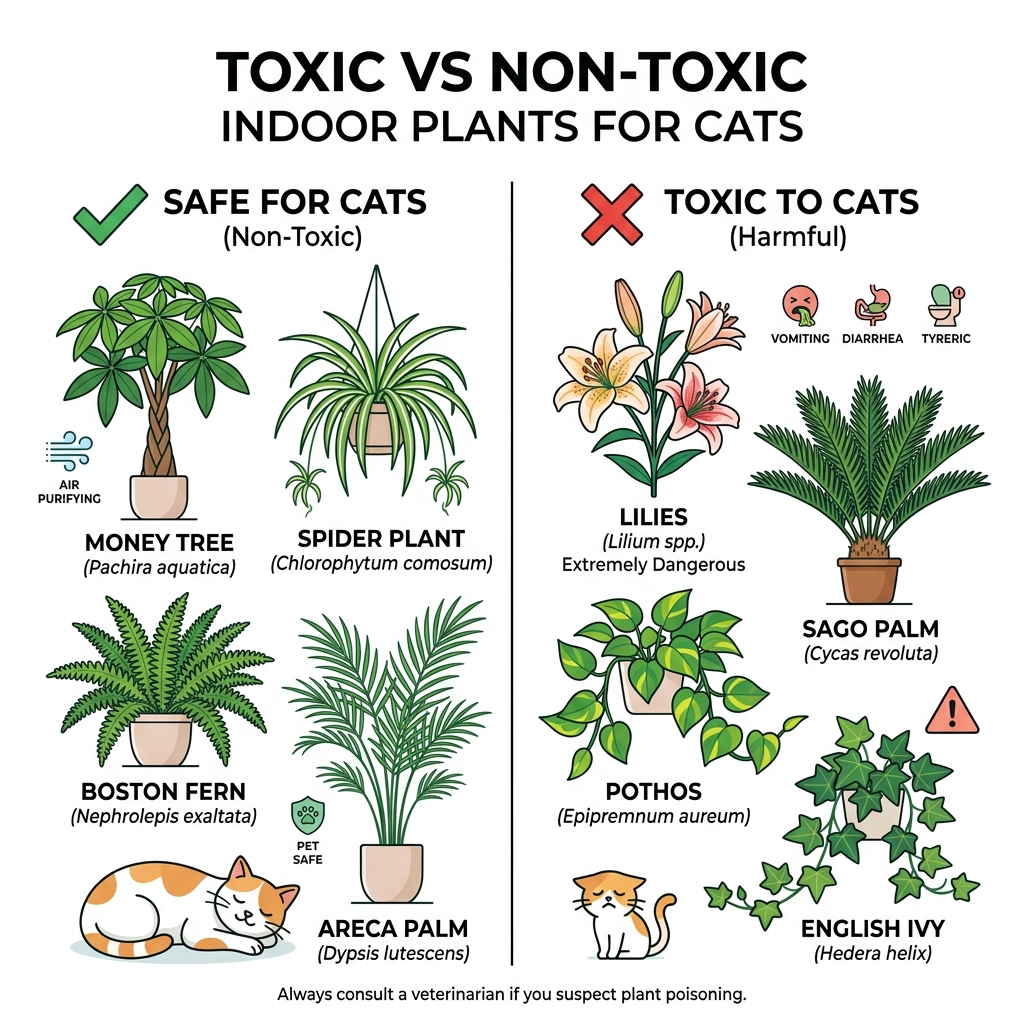
Cat friendly trees and plants are the safest way to bring greenery indoors without putting your feline at risk. Here are the top options to know:
Best cat-safe indoor trees and plants:
- Money Tree (Pachira aquatica) – non-toxic, low maintenance, great for air quality
- Areca Palm – non-toxic, air-purifying, thrives in indirect light
- Parlor Palm – non-toxic, low-light tolerant, elegant and compact
- Spider Plant – non-toxic, nearly indestructible, known air purifier
- Boston Fern – non-toxic, loves humidity, pet-safe hanging option
- Ponytail Palm – non-toxic, drought-tolerant, perfect for beginners
- Bamboo Palm – non-toxic, statement-making, filters indoor air
- Bromeliad – non-toxic, colorful, low maintenance
- Orchid – non-toxic, flowering, over 25,000 safe varieties exist
- Christmas Cactus – non-toxic, blooms seasonally, easy to care for
Many plant lovers don’t realize how many common houseplants are actually dangerous to cats. Lilies, Sago Palms, and Pothos are just a few popular choices that can cause serious harm — or worse.
The good news? You don’t have to choose between a beautiful home and a safe one for your cat. There are dozens of stunning, non-toxic trees and plants that look incredible and keep your feline out of danger.
Research shows that cats account for only 26% of plant poisoning cases compared to dogs — but that’s still a very real risk, especially since cats can absorb toxins simply by grooming after brushing against a plant.
Whether you want a dramatic floor tree, a low-light solution for a shady apartment, or an air-purifying plant that works double duty for your health and your cat’s safety — this guide has you covered.
Top Cat Friendly Trees and Plants for Indoor Jungles
Creating an indoor jungle doesn’t mean you have to turn your living room into a hazard zone for your whiskers-bearing roommates. We believe that a home filled with life should be safe for every member of the family, four-legged ones included. When selecting cat friendly trees and plants, the first step is always verification.
The Money Tree (Pachira aquatica) is a quintessential favorite for a reason. Often sold with a beautifully braided trunk, it acts as a lush, living good-luck charm. Beyond its aesthetic appeal, it is entirely non-toxic to cats and incredibly resilient. It thrives in bright, indirect light and only needs watering when the top couple of inches of soil are dry.
Another heavy hitter in safe greenery is the Areca Palm. Also known as the Butterfly Palm, its feathery fronds sway gently in the breeze, adding a tropical “staycation” vibe to any room. Most importantly, it is one of the many varieties featured on the ASPCA list of toxic plants as a safe, non-toxic option. For more inspiration on keeping your home green and safe, you can explore our guide on Indoor Plants Safe for Pets.
Air-Purifying Cat Friendly Trees and Plants
At Mount Pilchuck, we are passionate about the health-boosting benefits of greenery. Many cat friendly trees and plants do double duty by filtering toxins from the air, which improves the environment for both you and your pet.
- Spider Plant: These are practically legendary in the plant world. Not only are they nearly indestructible (perfect for those of us who forget a watering session now and then), but they are also powerhouse air purifiers. Be warned, though: some cats find the dangling “spiderettes” irresistible and may treat them like a hallucinogenic toy! While safe, excessive nibbling might lead to a mild tummy ache.
- Boston Fern: If you have a humid bathroom or a kitchen with some bright light, the Boston Fern is your best friend. It excels at removing indoor air pollutants like formaldehyde.
- Bamboo Palm: This is a fantastic choice if you want something that stands a bit taller. It filters benzene and trichloroethylene from the air, ensuring your “indoor jungle” is as healthy as it is beautiful.
For a deeper dive into which species offer the most “breathable” benefits, check out our list of the Best Leafy Plants for Air Purification.
Easy-Care Cat Friendly Trees and Plants for Beginners
If you’re new to “plant parenting,” or if you’ve historically struggled to keep even a silk plant alive, don’t worry. There are several cat friendly trees and plants that are remarkably forgiving.
The Ponytail Palm is a top recommendation for beginners. Despite its name, it’s actually a succulent, storing water in its bulbous trunk. This makes it extremely drought-tolerant—ideal for frequent travelers or forgetful waterers. Its long, curly leaves are non-toxic, though their grass-like texture might tempt a curious cat to take a bite.
The Cast Iron Plant (Aspidistra elatior) truly lives up to its name. It can survive in low light, poor soil, and irregular watering. It’s the ultimate “set it and forget it” plant that remains perfectly safe for your feline friends. You can find more low-maintenance gems in our article on Low-Maintenance Air Purifying Plants.
Large Statement Trees for Floor Placement
Sometimes, a small pot on a bookshelf just isn’t enough. You want a “statement” piece—something that fills a corner and brings the height of the outdoors inside.
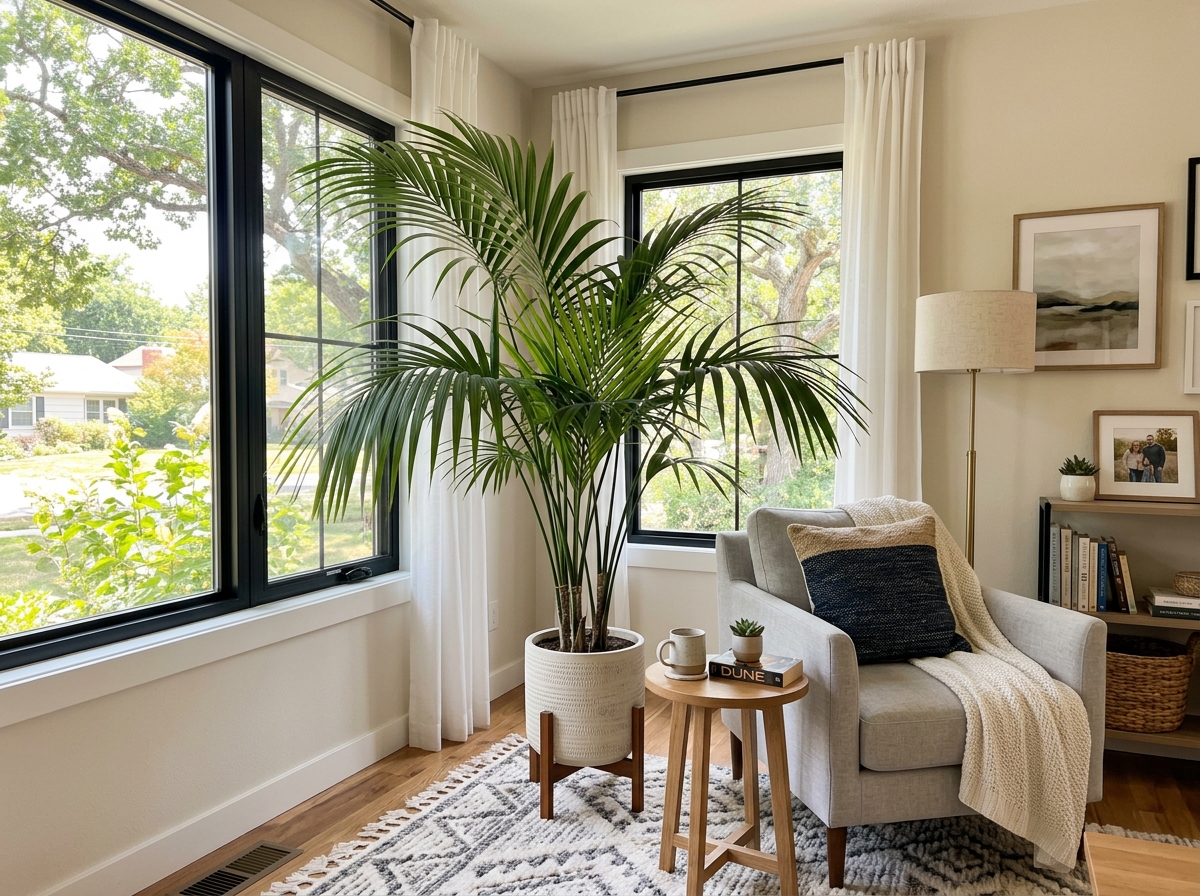
The Kentia Palm is the gold standard for indoor trees. It can grow quite tall but does so slowly, making it manageable for indoor spaces. It’s elegant, classic, and 100% cat-safe. Another dramatic option is the Banana Tree. While it needs a lot of light and humidity to thrive, its massive, paddle-shaped leaves create an instant focal point.
If you’re looking for something with a different texture, the Norfolk Island Pine is a lovely choice. It looks like a living Christmas tree and can reach heights of up to 10 feet indoors. While safe, keep an eye on your cat—the needles aren’t toxic, but if ingested in large quantities, they can cause a bit of digestive upset simply due to their physical structure.
| Tree Species | Mature Indoor Height | Light Requirement | Watering Frequency |
|---|---|---|---|
| Money Tree | 6-8 Feet | Bright Indirect | Weekly |
| Kentia Palm | 5-10 Feet | Low to Bright Indirect | When top soil is dry |
| Bamboo Palm | 4-8 Feet | Bright Indirect | Keep moist |
| Norfolk Island Pine | 6-10 Feet | Bright Direct/Indirect | Weekly |
| Banana Tree | 6-12 Feet | Bright Direct | Frequent (Loves humidity) |
Low-Light Solutions for Shady Homes
Not every home is blessed with giant, south-facing windows. If you live in a cozy apartment or a house with plenty of shade, you can still enjoy cat friendly trees and plants.
The Parlor Palm is the undisputed king of low-light palms. It has been a popular indoor choice since the Victorian era because it handles dim corners with grace. It stays relatively compact compared to other palms, making it perfect for smaller rooms.
Calatheas (often called Prayer Plants) are another stunning option. They are famous for their intricate, colorful leaf patterns and the way their leaves fold up at night as if in prayer. They prefer “medium” to “low” light, as direct sun can actually bleach their beautiful colors. For more tips on greening up the darker corners of your home, visit our guide on Indoor Plants for Low Light Rooms.
Flowering and Fruit-Bearing Safe Varieties
Who says cat-safe has to mean “just green”? You can absolutely have blooms in a feline-friendly household.
- Orchids: There are over 25,000 varieties of orchids, and the most common household types (like Phalaenopsis) are non-toxic to cats. They add a touch of sophisticated color without the worry.
- Christmas Cactus: These hardy plants bloom with vibrant pink or red flowers during the colder months. Unlike many other cacti, they don’t have sharp spines that could poke a curious nose.
- Bromeliads: These tropical wonders are incredibly easy to care for and provide a long-lasting “flower” (actually a bract) in stunning neons. Some varieties, like the Bromeliad Pineapple, even grow a tiny ornamental fruit!
If you suffer from seasonal sniffles, you might also want to check out the Top Houseplants for Allergies to ensure your flowering choices don’t make you sneeze.
Protecting Your Greenery and Your Feline
Even if a plant is non-toxic, that doesn’t mean you want your cat using it as a litter box or a personal salad bar. Protecting your cat friendly trees and plants is about strategy.
- Elevate Your Plants: Use hanging planters, wall-mounted shelves, or high plant stands. If your cat can’t reach it, they can’t munch on it.
- Provide a Distraction: Grow a dedicated patch of cat grass (usually oats or wheat). If they have their own “approved” greens to chew on, they are much less likely to bother your Money Tree.
- Physical Barriers: For large floor trees, placing large river stones or decorative pebbles over the soil can prevent cats from digging.
- Deterrents: Some plant parents find success using citrus peels in the pots or a pet-safe bitter spray on the leaves to discourage nibbling.
For those looking to take their plant game to the next level, you can even learn how to Turn Your Houseplants Into Air Purifiers: A DIY Guide to maximize the health benefits of your safe indoor garden.
Identifying Toxic Risks and Emergency Symptoms
Knowledge is the best defense. While we focus on the safe options, it is vital to know which common plants to avoid. The Sago Palm is one of the most dangerous; every part of this plant is highly toxic and can be fatal if even a small amount is ingested. The Fiddle Leaf Fig, while trendy, contains insoluble calcium oxalates that cause mouth irritation and drooling.
Perhaps most importantly, Lilies (especially True Lilies and Daylilies) are incredibly dangerous. Even licking the pollen off their fur after brushing against one can lead to kidney failure in cats.
Research on plant poisoning statistics indicates that while dogs are more likely to ingest plants, cats are often more severely affected by specific toxins. You can read more about how lilies harm your feline friend to understand the urgency of keeping these out of your home.
Symptoms to watch for if you suspect ingestion:
- Vomiting or diarrhea
- Excessive drooling
- Lethargy or weakness
- Loss of appetite
- Difficulty breathing
- Seizures
If you notice any of these signs, contact your veterinarian or a pet poison control center immediately.
Frequently Asked Questions about Cat-Safe Greenery
What are the symptoms of toxic plant ingestion in cats?
If your cat eats something they shouldn’t, common red flags include vomiting, drooling, and a sudden loss of appetite. Some toxins cause immediate oral irritation, leading to pawing at the mouth. More severe cases can involve lethargy, tremors, or difficulty breathing. Always keep the name of the plant handy for your vet!
Which indoor trees are safe for cats to climb?
While many palms and the Money Tree are non-toxic, they aren’t always sturdy enough to support a climbing cat. The Kentia Palm and Bamboo Palm are relatively sturdy, but the best “climbing tree” is usually a piece of cat furniture. To protect your plants, try to place climbing towers near windows so your cat has a better vantage point than the top of your Areca Palm.
How often should I water cat-friendly indoor trees?
Most indoor trees prefer to dry out slightly between waterings. A good rule of thumb is to check the soil once a week; if the top inch feels dry, it’s time for a drink. Overwatering is the #1 cause of plant death! During winter, when plants grow more slowly, you can usually reduce the frequency.
Conclusion
At Mount Pilchuck, we believe that a healthy home is a harmonious one. By choosing cat friendly trees and plants, you are creating a space that boosts your mood, purifies your air, and provides a safe, stimulating environment for your pets. From the luck-bringing Money Tree to the air-cleansing Spider Plant, there is a perfect green companion for every home.
We are dedicated to providing expert advice on health-boosting plants that improve air circulation and overall wellness. Don’t stop here—there is a whole world of safe, beautiful greenery waiting for you. Explore our full guide to indoor plants to continue your journey toward a lush, safe, and vibrant home today!
