
Why Colorful Low Light Houseplants Thrive in Dim Corners
It might seem counterintuitive that a plant with neon pink or bright chartreuse leaves could survive in a dark corner. Usually, we associate bright colors with high-energy sunlight. However, many colorful low light houseplants are biologically “programmed” for the shadows.
In their native tropical habitats, these plants live on the forest floor, shaded by a thick canopy of massive trees. To survive, they became experts at photosynthesis efficiency. They developed large leaves and unique pigments to soak up every available stray beam of light. When we bring them into our homes, a north-facing window or a spot several feet away from a light source mimics this dappled jungle floor perfectly.
Interestingly, these plants often face less environmental stress than their sun-loving cousins. Because they aren’t being hammered by direct UV rays, their transpiration rates—the process where plants “breathe” out water—are much lower. This means they are less prone to heat stress and don’t dry out as quickly as a cactus on a scorching windowsill.
Beyond their survival tactics, these plants are hard at work for your health. According to NASA research on air-purifying plants, species like the Peace Lily are among the top five for removing indoor air pollutants. At Mount Pilchuck, we emphasize that Indoor Plants for Low Light Rooms do more than just look pretty; they improve air circulation and reduce stress levels, making your home a literal “breathing” space.

Top Foliage-Focused Varieties for Shady Spaces
If you want a “wow” factor without needing a greenhouse, foliage-focused plants are your best bet. Unlike flowers, which may come and go, these leaves provide a constant pop of neon or deep burgundy all year round.
| Plant Name | Foliage Colors | Growth Habit | Humidity Need |
|---|---|---|---|
| Aglaonema Siam | Green with Red Edges | Upright/Clumping | Moderate |
| Peacock Plant | Green, Cream, Silver | Clumping | High |
| Neon Pothos | Solid Chartreuse | Trailing/Climbing | Low to Moderate |
| Philodendron Brasil | Green with Yellow Stripe | Trailing | Moderate |
| Calathea Roseopicta | Dark Green and Pink | Clumping | High |
The Aglaonema Siam (also known as the Chinese Evergreen) is a superstar in colorful low light houseplants. It features elegant, lance-shaped leaves splashed with bright lipstick-red. It’s incredibly hardy and can tolerate the “neglect” of a dim office cubicle.
Another stunning option is the Calathea makoyana, or Peacock Plant. For more info on Peacock Plant care, it’s important to know that its leaves look like they were hand-painted with delicate silver and green strokes, while the undersides are a deep, moody purple. Similarly, the Calathea Roseopicta offers “show-stopping” leaves with pink feathering that looks almost neon against dark green backgrounds. These are excellent Budget-Friendly Air Purifying Plants that bring high-end style to any room.
For a softer texture, consider the Velvet Leaf Philodendron (Philodendron micans). Its heart-shaped leaves have a shimmering, iridescent quality that shifts from deep bronze to forest green depending on how the light hits the velvet-like surface.
Neon Pothos and Heartleaf Favorites
When it comes to versatility, the Epipremnum aureum, specifically the Neon Pothos, is unbeatable. Its glowing chartreuse leaves look like they’ve been plugged into an electrical outlet. These are quintessential Low Maintenance Air Purifying Plants because they are nearly impossible to kill.
We love using Neon Pothos on high shelves where their vines can trail down like a neon waterfall. If you prefer upward growth, you can train them to climb moss poles or wall structures. Because they are so easy to propagate, you can simply snip a vine, pop it in water, and have a new plant ready in weeks. While the Neon variety stays solid gold-green, its cousin, the Golden Pothos, offers classic yellow variegation that stays vibrant even when sunlight is scarce.
Stromanthe Triostar: A Masterpiece of Colorful Low Light Houseplants
If there were a beauty pageant for houseplants, the Stromanthe Triostar would take the crown. A relative of the prayer plant family, it features long, pointed leaves splashed with cream, green, and a shocking rosy pink.
According to more info on Stromanthe “Tricolor”, this plant exhibits “nyctinastic movement.” This means the leaves fold up at night, revealing their vibrant pink undersides, and then spread back out in the morning to catch the day’s light. To keep those colors from fading, you’ll want to provide consistent humidity—think of it as a Easy Care Plant for Home Air Quality that thrives best in a bright bathroom or near a humidifier.
Flowering Plants That Bloom Without Direct Sun
While foliage is reliable, sometimes you want the thrill of a bloom. You don’t need a sun-drenched patio to enjoy flowers; several colorful low light houseplants produce stunning, long-lasting blossoms in shaded conditions.
- Phalaenopsis Orchids: Often called “Moth Orchids,” these are surprisingly chilled-out. They don’t want soil; they prefer bark or moss. Their blooms can last for months in a room with soft, indirect light.
- Peace Lily (Spathiphyllum): A classic for a reason. Its white spathes (which look like flowers but are actually modified leaves) pop beautifully against its dark green foliage. It’s also a top-tier air detoxifier.
- Red Anthurium: These plants look like they are made of glossy vinyl. The “flower” is a bright red, heart-shaped bract that can stay vibrant for eight weeks or more.
- Christmas Cactus: Originating from shady rainforests rather than deserts, these cacti produce cascades of neon pink or red flowers during the shorter days of winter.
For those living in smaller spaces, these are perfect Small Potted Plants for Apartments. To get the best results, place them near a window with a sheer curtain to filter the light, ensuring they get enough energy to bloom without getting scorched.

Essential Care for Maintaining Vibrant Hues
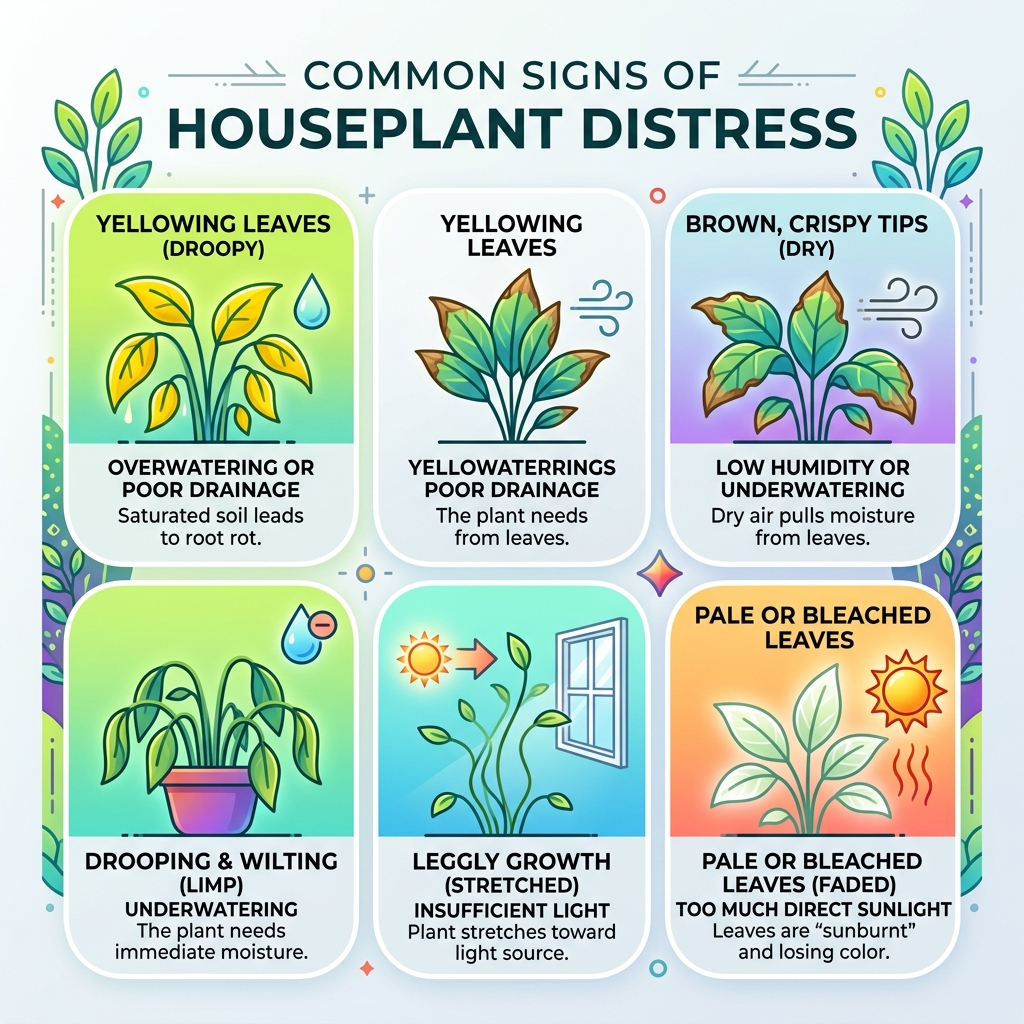
Maintaining the “neon” in your colorful low light houseplants requires a few specific tricks. Because these plants aren’t in high-energy environments, their metabolism is slower, meaning they are more sensitive to over-care than under-care.
1. The Right Soil and Drainage Never let your plants sit in “wet feet.” Use a well-draining potting mix—usually a blend of potting soil, perlite, and orchid bark. This is especially vital for Indoor Plants for Small Apartments where air circulation might be lower.
2. Water Quality Matters Many colorful plants, particularly Calatheas and Dracaenas, are sensitive to fluoride and chlorine found in tap water. Using distilled water or rainwater can prevent the dreaded “brown tips” on your beautiful leaves.
3. Humidity is Your Friend Low light often goes hand-in-hand with stagnant air. Use a pebble tray (a tray filled with stones and water placed under the pot) or a small humidifier to keep the air moist. This mimics the tropical humidity these plants crave.
4. Leaf Hygiene Dust is the enemy of photosynthesis. In low light, your plant needs every bit of surface area it can get. Gently wipe the leaves with a damp cloth once a month. This not only keeps them looking shiny and neon but also helps the plant “breathe” better.
Frequently Asked Questions about Colorful Low Light Houseplants
Why are the colors on my plant’s leaves fading?
If your neon plant is turning a dull, solid green, it’s usually a sign it needs just a tiny bit more light. While they tolerate low light, variegation (the white, pink, or yellow spots) is often the plant’s way of managing light. If it’s too dark, the plant produces more chlorophyll (green) to survive. Try moving it a foot closer to the window or rotating it every week so all sides get equal exposure.
Are these colorful plants safe for households with pets?
This is a great question for pet parents! Many colorful low light houseplants are perfectly safe, while others require caution.
- Safe: Most Calathea varieties (like the Peacock Plant and Roseopicta) and the Stromanthe Triostar are non-toxic to dogs and cats. These are excellent Budget-Friendly Air Purifying Plants 2 for animal lovers.
- Caution: Pothos, Philodendrons, and Anthuriums contain calcium oxalate crystals, which can cause irritation if chewed. Keep these on high shelves or in hanging baskets out of reach of curious paws.
How often should I fertilize plants in low light?
Since plants in low light grow more slowly, they don’t need much “food.” We recommend using a balanced, liquid fertilizer diluted to half-strength. Only fertilize during the active growing season (spring and summer). Skip the fertilizer entirely in the winter when the plant is dormant.
Conclusion
At Mount Pilchuck, we believe that every home deserves the life and energy that plants bring, regardless of how many windows you have. Choosing the right colorful low light houseplants allows you to create a health-boosting indoor environment that purifies your air and lifts your mood. From the neon glow of a Pothos to the sophisticated tricolor leaves of a Stromanthe, these plants prove that you don’t need direct sun to have a vibrant, stylish home.
Ready to transform your dim corners into a tropical oasis? Browse our full guide to indoor plants for more expert advice on sustainable gardening and health-boosting greenery. Happy planting!
