
Why the Best Indoor Plants for Cubicle Spaces Are Worth Your Attention
The best indoor plants for cubicle environments can make a real difference in how you feel and focus at work. Stagnant air, fluorescent lighting, and zero windows are rough on your body and mind. A well-chosen plant can help.
Quick answer — here are the top cubicle plants to buy:
| Plant | Best For | Light Needed | Difficulty |
|---|---|---|---|
| ZZ Plant | Low light, neglect tolerance | Low/fluorescent | Very easy |
| Pothos | Trailing decor, air quality | Low to medium | Very easy |
| Snake Plant | Upright form, small spaces | Low/fluorescent | Very easy |
| Peace Lily | Air purification, humidity | Low to medium | Easy |
| Boston Fern | Formaldehyde removal | Medium | Moderate |
| Spider Plant | Pet-safe offices | Low to medium | Very easy |
Studies confirm that adding greenery to your workspace can boost productivity by up to 15%. NASA research also shows that common office plants actively remove toxins like formaldehyde, benzene, and trichloroethylene from indoor air — the same toxins that off-gas from cubicle furniture, carpet, and ceiling tiles every day.
The good news: you don’t need a green thumb. Most of the plants on this list are nearly impossible to kill.

Top-Rated Best Indoor Plants for Cubicle Environments
When we talk about the best indoor plants for cubicle life, we aren’t just looking for “pretty” foliage. We are looking for survivors. A cubicle is a unique ecosystem—it often lacks natural sunlight, experiences wild temperature swings from the HVAC system, and might be forgotten entirely during a long holiday weekend.
Choosing the right plant means finding species that have adapted to the “forest floor” of the botanical world. These plants naturally thrive in the shadows of giant trees, which makes them perfectly suited for the shadows of your overhead cabinets. Scientific research on plants reducing stress suggests that even small interactions with indoor plants can lower blood pressure and increase feelings of calm, which is exactly what we need during a high-stakes Tuesday afternoon.
The Resilient ZZ Plant: A Cubicle Classic
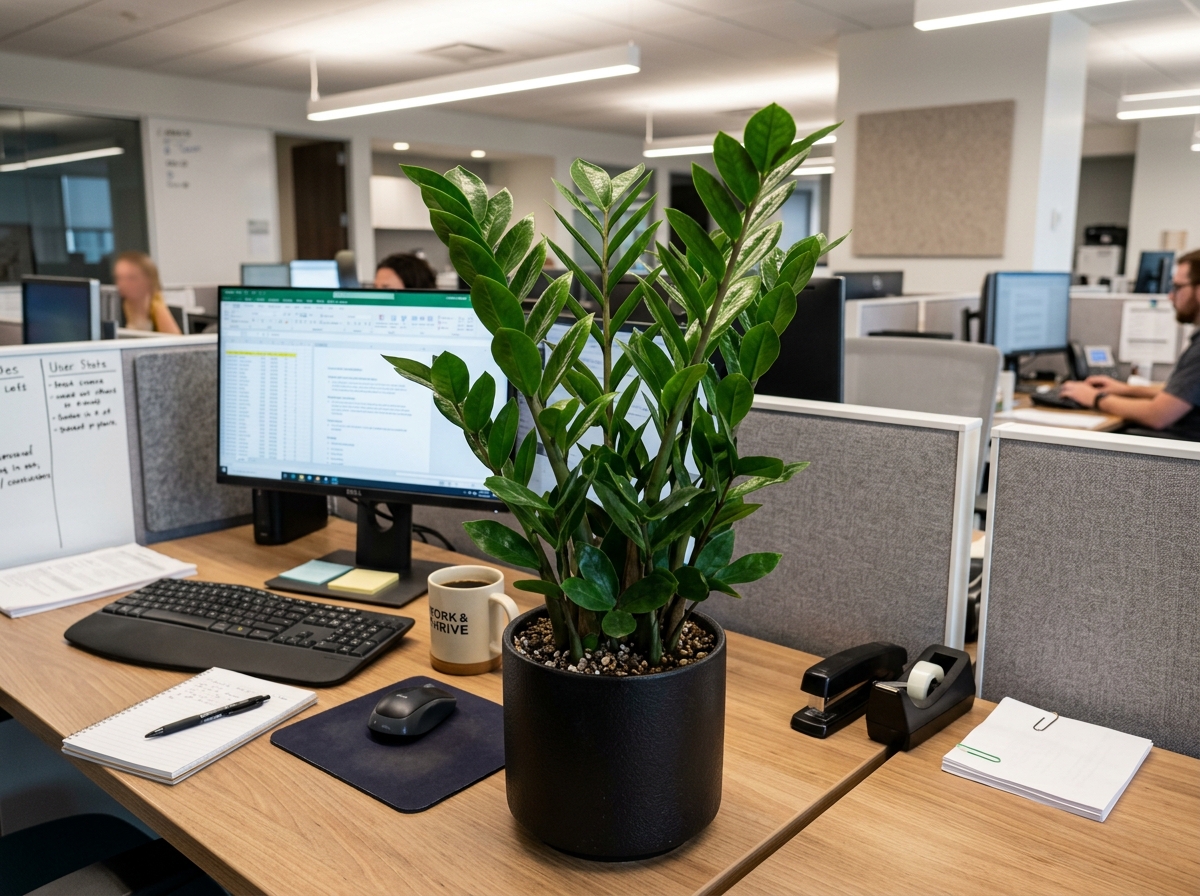
If you have a “black thumb” or a windowless office, the Zamioculcas zamiifolia, or ZZ Plant, is your new best friend. Many plant experts consider this the “fiddle-leaf fig of cubicles” because it looks incredibly high-end but requires almost zero effort.
The ZZ plant features thick, waxy, deep-green leaves that reflect what little light is available. Its secret weapon is its underground rhizomes—potato-like bulbs that store water for weeks. This means if you forget to water it because of a project deadline, the ZZ plant won’t hold a grudge. It grows slowly, so it won’t take over your desk, and it is famously tolerant of the harsh fluorescent lighting found in most corporate buildings.
Golden Pothos: The Best Indoor Plants for Cubicle Decor
Commonly known as “Devil’s Ivy” because it is nearly impossible to kill, the Golden Pothos (Epipremnum aureum) is the gold standard for cubicle decor. Its heart-shaped leaves can be solid green or variegated with yellow and white, adding a splash of color to a grey workspace.
The Pothos is a trailing vine, which makes it perfect for the top of a filing cabinet or a high shelf. You can let the vines drape down to create a “living curtain” that provides a bit of privacy from nosy coworkers. It is also incredibly easy to propagate; if a vine gets too long, just snip it off and put it in a glass of water. Within weeks, you’ll have a new plant to gift to the person in the next cubicle.
Snake Plant Varieties for Small Spaces
The Snake Plant (Sansevieria) is as tough as they come. Known for its stiff, sword-like leaves that grow vertically, it has a very small “footprint,” making it ideal for cramped desks where every square inch of space matters.
Snake plants are famous for their ability to produce oxygen at night, which is a rare trait among houseplants. For those with limited desk space, we recommend looking for dwarf cultivars like ‘Futura Superba’ or ‘Whitney.’ These varieties stay compact and won’t grow into your computer monitor. They only need water once or twice a month—in fact, overwatering is the only real way to hurt them.
Air-Purifying Powerhouses for Your Workspace
One of the biggest reasons we advocate for the best indoor plants for cubicle spaces is the “Sick Building Syndrome” factor. Modern offices are filled with synthetic materials. Particle board desks, nylon carpets, and upholstered partitions all release Volatile Organic Compounds (VOCs).
The famous NASA study on air-purifying plants proved that certain plants act as biological filters. They don’t just “breathe” CO2; they actually absorb toxins through their leaves and root systems.
| Plant | Primary Toxin Removed | Bonus Benefit |
|---|---|---|
| Boston Fern | Formaldehyde | Increases Humidity |
| Spider Plant | Carbon Monoxide | Pet-Safe |
| Peace Lily | Benzene / Ammonia | Beautiful Flowers |
| Snake Plant | Xylene / Toluene | Nighttime Oxygen |
Boston Fern: The Best Indoor Plants for Cubicle Air Quality
If your office feels dry and stuffy, the Boston Fern (Nephrolepis exaltata) is the #1 plant for removing formaldehyde. It acts as a natural humidifier, pumping moisture back into the air, which can help prevent dry skin and scratchy throats caused by office AC units.
However, be warned: the Boston Fern is a bit of a “diva” compared to the ZZ plant. It loves moisture and requires frequent misting or a self-watering pot to keep its soil consistently damp. It also tends to shed tiny leaflets, so you might need to do a quick daily sweep of your desk.
Spider Plant: A Pet-Safe Purifier
The Spider Plant (Chlorophytum comosum) is a classic for a reason. It is incredibly efficient at scrubbing carbon monoxide and xylene from the air. It’s also one of the safest options if your office is pet-friendly or if you have small children visiting the workspace, as it is completely non-toxic.
Spider plants produce “babies” or plantlets that hang down from the mother plant like little spiders on a web. These are fun to watch grow and even easier to pot up as gifts for your work bestie. They prefer indirect light but will tolerate the artificial glow of your office just fine.
Low-Maintenance and Small-Space Solutions
When you’re working in a 6×6 square, you have to get creative with placement. You don’t have to sacrifice your stapler or your second monitor to make room for a plant.
Modern office accessories have made vertical gardening easier than ever. Cubicle hangers are designed to slip over the top of standard 2-inch to 3.25-inch thick partitions, allowing you to hang a planter right on the wall. Magnetic pots can stick to metal filing cabinets, and small floating shelves can turn an unused corner into a green oasis.
Lucky Bamboo for Windowless Desks
Lucky Bamboo (Dracaena sanderiana) isn’t actually bamboo, but it is one of the best indoor plants for cubicle setups because it can grow entirely in water. No soil means no mess on your keyboard and no risk of soil-borne gnats.
In Feng Shui, Lucky Bamboo is said to bring good fortune and wealth—something we could all use more of at work! It thrives in low light and only requires you to top off the water every week or two. You can even find them trained into fun shapes like spirals or hearts.
Air Plants and Succulents for Minimalist Decor
If you have zero floor or desk space, consider Air Plants (Tillandsia). These fascinating plants don’t need soil at all. They absorb moisture and nutrients through their leaves. You can rest them on a piece of driftwood, tuck them into a decorative glass terrarium, or even glue them to a magnet.
For those lucky enough to have a desk near a window or under very bright LED task lights, succulents like Jade or Haworthia are excellent choices. The Jade plant, often called the “Money Tree,” is believed to attract prosperity. Just remember that succulents need much more light than a ZZ plant, so they aren’t the best choice for the dark corners of the office.
Essential Care Tips for Office Greenery
Keeping a plant alive in a cubicle is different from keeping one alive in a sunny living room. Here are our expert tips for maintaining a healthy “cubicle jungle”:
- Master the Lighting: Most cubicle plants rely on overhead fluorescent lights. While not as good as the sun, these lights provide enough energy for low-light species. Aim for at least 8 hours of light a day. If your office is truly dark, a small 1,500-lumen LED desk lamp can act as a grow light.
- Watch the Water: The #1 killer of office plants is overwatering. Because office air is often stagnant and light is low, plants “drink” much slower than they would at home. Always feel the soil; if the top inch is still wet, put the watering can away.
- Drainage is Non-Negotiable: Never put a plant in a pot without a hole in the bottom. If you love a decorative ceramic pot that has no drainage, keep the plant in its plastic “nursery liner” and set that inside the pretty pot. This prevents “wet feet,” which leads to root rot.
- Dust the Leaves: Offices are dusty places. Dust on leaves blocks the plant’s ability to photosynthesize. Once every two weeks, wipe the leaves down with a damp cloth. This also helps you spot any pests before they become a problem.
- Avoid the Vent: Check where your office’s HVAC vents are located. Blasts of ice-cold air in the summer or scorching heat in the winter will stress your plant and cause leaf drop.
- Fertilize Sparingly: Office plants grow slowly, so they don’t need much “food.” Using a gentle, organic liquid fertilizer once every six months is usually plenty to keep them happy.
Frequently Asked Questions about Cubicle Plants
Which plants are safe for offices where pets visit?
If your office allows “Bring Your Dog to Work” days, you need to be careful. Many common plants like the ZZ plant, Snake plant, and Peace Lily are toxic if ingested by animals. The best indoor plants for cubicle spaces that are 100% pet-safe include:
- Spider Plants
- Boston Ferns
- Parlor Palms
- Areca Palms Always check the ASPCA guidelines if you are unsure about a specific species.
Can plants survive on fluorescent light alone?
Yes! Many plants, particularly those native to tropical rainforest floors, have evolved to survive in very low light. The ZZ plant, Snake plant, and Pothos can live for years using nothing but standard office fluorescent lighting. The key is to ensure the lights are on for a full workday (at least 8 hours) and that the plant is not tucked away in a completely dark corner under a shelf.
How do I prevent my office plant from dying over the weekend?
Most of the plants we’ve recommended—especially the ZZ and Snake plants—can easily survive 2–3 weeks without water. If you have a moisture-loving plant like a Peace Lily or Boston Fern, consider using a self-watering container or a “watering globe.” These devices slowly release moisture into the soil while you’re away. Also, try to keep your plant away from windows or heaters that might cause the soil to dry out faster while the office is empty.
Conclusion
At Mount Pilchuck, we believe that every workspace should be a healthy one. Adding the best indoor plants for cubicle spaces isn’t just about aesthetics; it’s about creating an environment that supports your well-being. From the air-scrubbing power of the Boston Fern to the “unkillable” nature of the ZZ plant, there is a green companion for every type of worker.
A little bit of greenery can transform a sterile desk into a place of focus and calm. If you’re ready to breathe easier and work smarter, it’s time to bring a little nature into your 9-to-5.
For more expert advice on indoor air circulation and health-boosting greenery, explore our other guides and start building your perfect indoor oasis today.
