
Why Your Indoor Air Might Be Making You Sick (And How Plants Can Help)
The best low light houseplants to purify air are Snake Plant, Peace Lily, Chinese Evergreen, Golden Pothos, Spider Plant, and Dracaena — all proven in NASA research to remove common indoor toxins.
| Plant | Key Pollutants Removed | Light Needed |
|---|---|---|
| Snake Plant | Benzene, formaldehyde, xylene | Very low |
| Peace Lily | Trichloroethylene, ammonia | Low to medium |
| Chinese Evergreen | Benzene, formaldehyde | Very low |
| Golden Pothos | Formaldehyde, xylene | Low |
| Spider Plant | Formaldehyde, carbon monoxide | Low to medium |
| Dracaena | Benzene, trichloroethylene | Low to medium |
Most people spend up to 90% of their time indoors. And the air inside your home or office? It can be significantly more polluted than outside air.
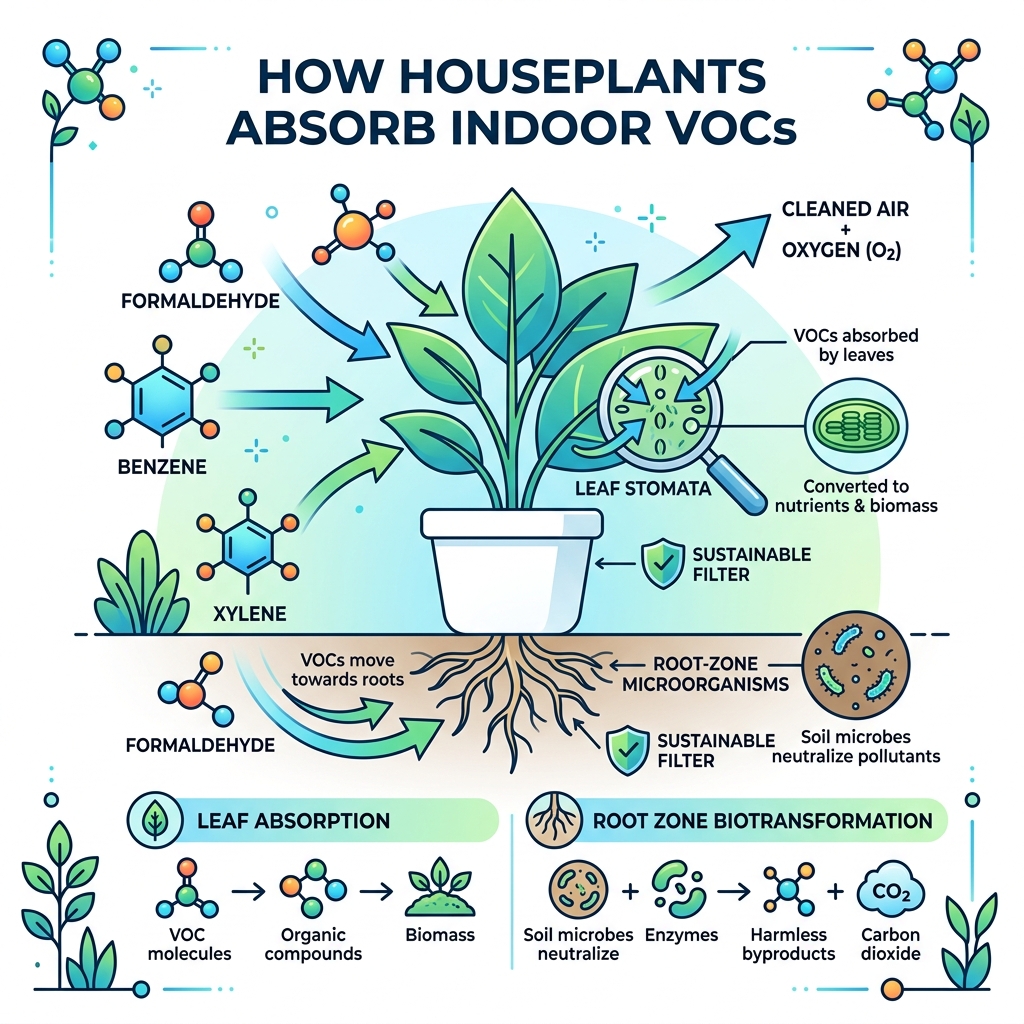
Common household products — from furniture to cleaning sprays to carpets — release invisible chemicals called Volatile Organic Compounds (VOCs). These include formaldehyde, benzene, and xylene. Over time, breathing them in a poorly ventilated space can cause headaches, fatigue, and what scientists call Sick Building Syndrome.
NASA researchers discovered something remarkable: ordinary houseplants can absorb these toxins through their leaves and roots. Some plants are so efficient at this that NASA considered using them as part of biological life support systems on future space stations.
The best part? The most effective options don’t need much light at all.
Top NASA-Approved Best Low Light Houseplants to Purify Air
When we talk about the best low light houseplants to purify air, we aren’t just guessing based on how pretty they look on a bookshelf. We are looking at decades of hard science. In 1989, NASA conducted the Clean Air Study to find ways to clean the air in space stations. They found that common houseplants are so efficient at absorbing contaminants that they could literally be a “biological life support system.”
These plants don’t just sit there looking green; they are active biological filters. They pull toxins into their leaves, where the chemicals are broken down, and even use their root-zone microorganisms to neutralize pollutants in the soil. If you want to see the heavy hitters, you can check out this complete list of plants that were part of the NASA Clean Air Study results.
One of the most famous researchers in this field, Dr. Bill Wolverton, has long advocated for using indoor plants as a natural way to combat “sick building syndrome.” He suggests that these common varieties are our best defense against the “off-gassing” of modern synthetic materials.

Snake Plant (Dracaena trifasciata): The Nighttime Oxygen Producer
The Snake Plant, also known as Mother-in-Law’s Tongue (due to its sharp, edgy leaves—we promise we didn’t name it!), is arguably the king of low-light air purifiers. According to the Dracaena trifasciata botanical profile, this plant is native to tropical West Africa and is built to survive almost anything.
What makes it unique is its “Crassulacean Acid Metabolism” (CAM) photosynthesis process. Unlike most plants that release oxygen during the day, the Snake Plant opens its stomata only at night to prevent water loss. This means it is actively converting CO2 into oxygen while you sleep, making it one of the top-air-purifying-plants-for-bedrooms/.
In terms of toxin removal, the Snake Plant is a powerhouse. It effectively filters:
- Formaldehyde: Found in plywood and particleboard.
- Benzene: Found in paints and synthetic fibers.
- Xylene and Toluene: Found in printing inks and leather.
For those worried about maintenance, these are incredibly low-maintenance-air-purifying-plants/. They are drought-tolerant and only need watering once every few weeks. In fact, overwatering is the only real way to hurt them. If you’re ready to start your journey, check out these Snake Plant care and planting tips to ensure yours thrives for years.
Peace Lily (Spathiphyllum): Best Low Light Houseplants to Purify Air in Humid Spaces
If you have a bathroom or a kitchen with a small window, the Peace Lily is your best friend. These plants are renowned for their elegant white blooms, which are actually specialized leaf bracts that grow around the flowers.
The Peace Lily is one of the few plants that can remove Ammonia (found in many glass cleaners) and Trichloroethylene (found in varnishes and adhesives). It is also excellent at absorbing mold spores from the air, which is why we often recommend it for indoor-plants-for-low-light-rooms/ that tend to be a bit more humid.
Care-wise, the Peace Lily is very communicative. If it’s thirsty, the leaves will droop dramatically, then perk right back up after a quick drink. It prefers indirect light; direct sun will actually scorch its delicate leaves. Just keep in mind that while it’s a champion air cleaner, it does contain calcium oxalate crystals, making it toxic if nibbled by pets or curious toddlers.
Chinese Evergreen (Aglaonema): The Ultimate Best Low Light Houseplants to Purify Air for Beginners
If you feel like you have a “black thumb,” the Chinese Evergreen is for you. This plant is so shade-tolerant that it can thrive in corners where other plants would simply give up. According to Aglaonema genus details, these plants have been cultivated in Asia for centuries as symbols of good fortune.
They are particularly good at filtering out formaldehyde and benzene. As the plant grows and the foliage becomes denser, its ability to remove toxins actually increases. We love them because they come in various stunning patterns, from deep emerald to silvery-green, and even pink-toned varieties like ‘Lady Valentine.’
They are the definition of low-maintenance-air-purifying-plants/. They prefer well-draining soil and can handle inconsistent watering schedules. Plus, they grow slowly, so you won’t have to worry about them taking over your living room overnight.
How Houseplants Compare to HEPA Air Purifiers
We often get asked: “Can a plant really replace a machine?” The answer is that they do different jobs. A high-quality HEPA (High-Efficiency Particulate Air) filter is designed to trap 99.97% of physical particles like dust, pollen, and pet dander. Plants, on the other hand, are biological sponges for gases and chemicals (VOCs).
| Feature | Houseplants | HEPA Air Purifiers |
|---|---|---|
| Toxin Removal | Absorbs VOCs (Benzene, Formaldehyde) | Traps physical particles (Dust, Dander) |
| Energy Use | Zero (Uses light) | Requires electricity |
| Maintenance | Watering and occasional dusting | Filter replacements every 6-12 months |
| Aesthetics | Adds life and beauty to a room | Often bulky and plastic |
| Humidity | Naturally regulates humidity | Can dry out the air |
| Noise | Silent | Can have loud fan noise |
As noted in a scientific review of VOC removal efficiencies, while plants are incredibly effective in controlled laboratory settings, their real-world impact depends on the number of plants you have. However, they offer psychological benefits that a machine never could—reducing stress and increasing productivity.
For a fascinating look at how plants can transform a living space, we highly recommend this Video: How to grow your own fresh air. It features a gentleman who used specific plants to significantly improve the air quality in a large office building in Delhi.
Essential Care Tips for Low-Light Air Purifiers
To keep your best low light houseplants to purify air working at peak efficiency, you need to treat them like the living filters they are. If a plant’s leaves are covered in dust, it can’t “breathe” or absorb toxins effectively.
Here are our top tips for maintaining your indoor jungle:
- Dust the Leaves: Every few weeks, take a damp microfiber cloth and gently wipe the leaves. This ensures the stomata (the plant’s pores) are clear to absorb pollutants.
- Well-Draining Soil: Most low-light plants, especially Snake Plants and Aglaonemas, hate “wet feet.” Use a potting mix with perlite or bark to ensure water flows through easily. This is the best way to prevent root rot.
- The “Knuckle Test”: Before watering, stick your finger an inch into the soil. If it feels dry, it’s time for water. If it’s damp, wait a few more days.
- Stable Temperatures: Most plants-that-filter-toxins-from-the-air/ are tropical. They don’t like cold drafts from windows or the direct heat from a radiator. Aim for a steady 65°F to 80°F.
- Rotate Your Pots: Plants naturally grow toward the light. Every time you water, give the pot a quarter-turn so the plant grows evenly rather than leaning to one side.
By following these simple steps, you’ll ensure you have the best-leafy-plants-for-air-purification/ working for you 24/7.
Safety First: Pet-Friendly Options and Toxicity Warnings
While we love the air-purifying benefits of these plants, we have to talk about our furry friends. Some of the most effective air cleaners contain compounds that can be harmful if ingested by cats or dogs.
- Snake Plants and Peace Lilies: These contain saponins or calcium oxalate crystals. If a pet chews on them, it can cause drooling, vomiting, and oral irritation. You can read more in the ASPCA Snake Plant toxicity guide or this Poison Control info for Mother-in-Law’s Tongue.
- Spider Plants: These are the gold standard for pet owners. They are non-toxic, easy to grow, and excellent at removing formaldehyde and carbon monoxide.
- Golden Pothos: While beautiful and effective, it is toxic to pets. If you have a cat that likes to climb, keep this one in a hanging basket.
If you struggle with seasonal sniffles, you might also want to check out our guide on the top-houseplants-for-allergies/. Some plants can actually help trap dust and increase humidity, which soothes irritated sinuses.
Frequently Asked Questions about Air-Purifying Plants
How many plants are needed per room for clean air?
NASA’s original recommendation was 15 to 18 medium-sized plants for an 1,800-square-foot house. That breaks down to about one plant for every 100 square feet. However, even a single Spider Plant in a 200-square-foot room has been shown to noticeably reduce formaldehyde levels. The more foliage density you have, the better the filtration!
Can these plants survive in windowless offices?
Yes, but they need “help.” No plant can survive in total, 24/7 darkness. However, most low-light plants can thrive under standard office fluorescent or LED lighting if the lights are on for 8 to 12 hours a day. If your office is truly dark, we recommend a small 10W full-spectrum grow light to keep the photosynthesis process moving.
Do plants really improve air quality in real-world homes?
This is a hot topic! While a single plant won’t replace a high-end ventilation system, they are a vital part of a “combined approach.” By using budget-friendly-air-purifying-plants/, opening your windows for 10 minutes a day, and avoiding harsh chemical cleaners, you can create a significantly healthier indoor environment. Plants also naturally regulate humidity, which can prevent the spread of airborne viruses that thrive in dry air.
Conclusion
At Mount Pilchuck, we believe that your home should be your sanctuary. Improving your indoor air quality doesn’t have to involve expensive machinery or complicated renovations. By simply introducing the best low light houseplants to purify air, you are taking a proactive step toward better respiratory health and a more serene living space.
Whether you choose the indestructible Snake Plant, the elegant Peace Lily, or the beginner-friendly Chinese Evergreen, you’re bringing a piece of NASA-level technology into your home—packaged in a beautiful, leafy exterior.
Ready to start your indoor garden? Explore our Indoor Plants Guide for more expert advice on choosing the perfect greenery for your unique space. Let’s grow some fresh air together!
