
The Best Galvanized Steel Planters for Weather-Resistant Gardening
Galvanized steel planters are some of the most durable, weather-resistant containers you can buy for growing plants indoors or outdoors. Whether you want a raised vegetable bed on your patio or a sleek metal pot to bring greenery inside, galvanized steel holds up where wood rots and plastic cracks.
Here are the top reasons gardeners choose galvanized steel planters:
- Rust resistance – A zinc coating protects the steel from corrosion, even in wet conditions
- Long lifespan – High-quality options are built from 1.5mm steel with structural warranties up to 5 years, outlasting cedar wood raised beds that typically last around 10 years at best
- Eco-friendly – Around 88% of the steel used in these planters comes from recycled scrap
- Versatile sizes – Available from small 7-inch deep pots for herbs to large raised beds 12-18 inches tall and up to 8 feet long
- Heat reflection – The metallic surface reflects sunlight, helping keep soil and roots cooler in summer
- Low maintenance – No painting, staining, or sealing required
For urban dwellers dealing with stagnant indoor air, pairing galvanized steel planters with the right air-purifying plants is a simple, affordable way to improve your living environment.

Why Choose Galvanized Steel Planters for Your Garden?
When we look at the history of gardening, materials like wood and terracotta have long been the standard. However, galvanized steel planters have surged in popularity for a very modern reason: they solve the “replacement cycle” problem. Most gardeners are tired of watching their expensive cedar beds rot after a decade or seeing plastic pots become brittle and crack under the sun’s UV rays.
The secret to their success lies in the galvanization process. This involves coating steel with a layer of zinc, which acts as a sacrificial barrier. Even if the surface is scratched, the zinc corrodes before the steel does, effectively preventing rust and structural failure. This makes them exceptionally weather-resistant, capable of withstanding heavy rain, snow, and intense heat.
| Feature | Galvanized Steel | Cedar Wood | Plastic/Resin |
|---|---|---|---|
| Average Lifespan | 20+ Years | 10-15 Years | 5-10 Years |
| Rust/Rot Resistance | High (Zinc Coated) | Moderate (Rot Resistant) | High (Non-corrosive) |
| Eco-Friendliness | 88% Recycled Content | Renewable but limited | Low (Petroleum-based) |
| Maintenance | Minimal (Annual Rinse) | High (Sealing/Staining) | Minimal |
| Temperature Control | Reflects Heat | Insulates | Absorbs Heat |
Beyond durability, these planters offer surprising benefits for plant health. Unlike dark-colored plastic or heavy stone, the metallic surface of galvanized steel reflects sunlight. This helps regulate soil temperature, keeping the roots of your plants cooler during peak summer months. Furthermore, steel is a non-porous material, meaning it won’t leach chemicals into your soil like some treated woods or low-grade plastics might.
Longevity of Galvanized Steel Planters
When we talk about “heavy-duty,” we mean it. High-end galvanized steel planters are often constructed from 1.5mm thick steel. To put that in perspective, many budget-friendly modular kits feature side panels around 0.4mm thick with reinforced corner pieces up to 0.6mm. While the thinner models are excellent for standard garden use, the thicker gauges are professional-grade and often come with structural warranties extending up to 5 years.
Because the zinc coating is chemically bonded to the steel, it doesn’t “flake off” like paint. Over time, the bright silver will transition into a beautiful, muted matte gray patina. This isn’t a sign of wear; it’s actually a protective layer of zinc carbonate that further shields the metal from the elements.
Environmental Impact and Sustainability
We are always looking for ways to make gardening more sustainable. One of the most impressive statistics in the industry is that 88% of the steel used in products like these planters is made from recycled scrap. In fact, more steel is recycled annually than paper, plastic, aluminum, and glass combined.
By choosing galvanized steel planters, you are directly helping to reduce landfill waste and the need for new mining. Because these containers last so much longer than wood or plastic alternatives, you also reduce your long-term consumption of resources. When the planter eventually reaches the end of its very long life, it is 100% recyclable, closing the loop on the manufacturing process.
Selecting the Right Size and Shape for Your Space
Finding the right fit for your garden depends entirely on what you intend to grow and how much space you have. Galvanized steel planters come in an incredible array of shapes—from classic round wash tubs and oval troughs to modern rectangular raised beds and even triangular corner units.
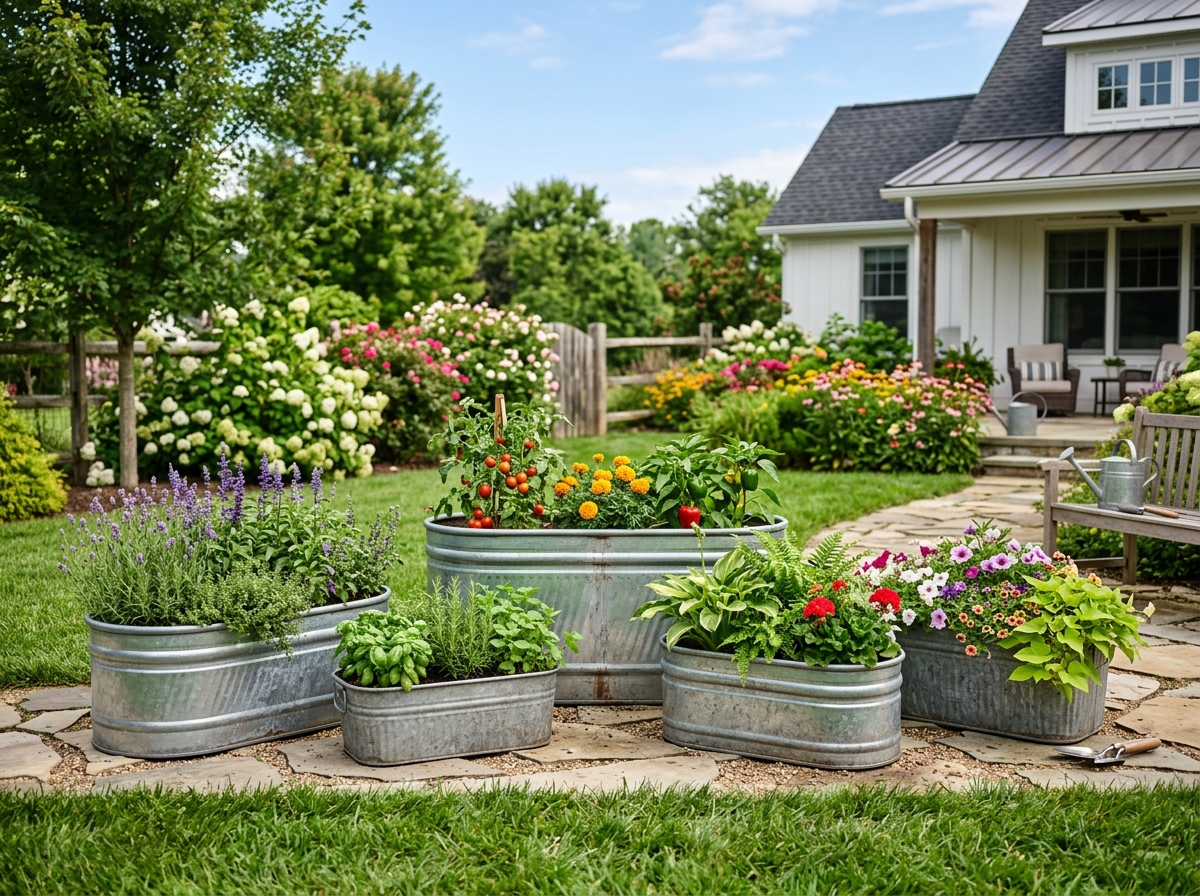
Standard raised garden beds typically measure between 12 to 18 inches tall. This height is ideal for most gardeners because it provides enough soil depth for diverse crops while remaining at a comfortable height for tending. Widths usually range from 3 to 4 feet, ensuring you can reach the center of the bed from either side without having to step inside and compact the soil.
Popular Styles of Galvanized Steel Planters
The “industrial chic” look is a major draw for these planters, but the styles vary significantly:
- Trough Style: Often called “stock tanks,” these are deep, oval containers originally designed for livestock. They are perfect for large-scale floral displays or deep-rooted vegetables.
- Modular Raised Beds: These come in kits with corrugated panels and safety edging. They allow you to customize the length and width to fit your specific yard dimensions.
- Vintage/Traditional: Some planters feature decorative elements like Tudor roses or Georgian-style decorative balls, offering a heritage look that fits perfectly in an English country garden.
- Small Potted Versions: For those looking for indoor plants for small apartments, smaller galvanized buckets and window boxes provide a clean, modern aesthetic that fits on shelves or windowsills.
Choosing Dimensions for Specific Plants
Root depth is the most critical factor when selecting your planter size. Most plant roots grow within the top six inches of soil, but some “heavy hitters” need more room to roam.
- Shallow-Rooted Plants: For greens like lettuce, spinach, or most herbs, a container at least 7 inches deep is recommended. These are perfect small potted plants for apartments where space is at a premium.
- Deep-Rooted Vegetables: If you’re dreaming of home-grown tomatoes, beans, or peppers, you’ll need a depth of 10 inches or more.
- Air-Purifying Giants: When selecting budget-friendly air-purifying plants, consider the eventual size of the plant. A large snake plant or peace lily will thrive in a 22-gallon galvanized tub, which provides roughly 3 cubic feet of plantable space.
How to Prepare and Maintain Your Galvanized Steel Planters
Preparation is the difference between a thriving garden and a waterlogged mess. While galvanized steel planters are tough, they require a bit of setup to ensure your plants are happy.
The most important step is ensuring proper drainage. While some decorative pots come pre-drilled, many industrial-style troughs do not. If your planter is solid on the bottom, you will need to use a drill to create drainage holes every 6 to 8 inches. This prevents water from pooling at the bottom, which can lead to root rot and eventually damage the zinc coating from the inside out.
Proper Drainage and Soil Preparation
Once you have your holes drilled, we recommend lining the bottom of the planter. For large raised beds, a layer of landscape fabric or even a few inches of small stones or wood chips can help with water flow. If you are using a modular kit with side panels and corner pieces, ensure all bolts are tightened and any included cross braces are installed. These braces are essential for preventing the sides from bowing outward under the weight of wet soil.
For the soil itself, avoid using straight garden soil, which can be too heavy and compact. Instead, use a high-quality potting mix or a blend of topsoil, compost, and coarse sand. This ensures the low-maintenance air-purifying plants you’ve chosen have plenty of nutrients and oxygen at the root level.
Long-term Care to Prevent Rust
Maintaining galvanized steel planters is remarkably easy, but a little effort goes a long way.
- Unpack Immediately: If you order your planters online, unpack them as soon as they arrive. Trapped moisture between nested planters can cause irregular staining or “white rust.”
- Annual Cleaning: Once a year, remove any loose dirt with clean water and a soft cloth. Avoid using pressure washers or abrasive sponges, as these can thin the protective zinc layer.
- Monitor the Patina: Allow the metal to age naturally. The matte gray finish is a sign of a healthy, protected planter.
- Avoid Harsh Chemicals: Do not use acidic cleaners or harsh bleach solutions on the metal. For those growing easy-care plants for home air quality, a simple rinse is all that’s needed to keep the industrial aesthetic looking sharp.
Best Plants for Galvanized Containers and Indoor Health
One of the most common questions we hear is: “Are galvanized steel planters safe for edibles?” The answer is a resounding yes. The amount of zinc that might leach into the soil is negligible and, in many cases, zinc is actually a necessary micronutrient for plant growth. For those who are extra cautious, lining the interior with food-grade plastic or landscape fabric provides an extra barrier.
When planting, we love using the “Thriller, Filler, Spiller” method:
- Thriller: A tall, eye-catching plant in the center (like a Dracaena or a tall tomato vine).
- Filler: Mounded plants that fill the space around the center (like herbs or budget-friendly air-purifying plants 2).
- Spiller: Plants that trail over the silver edges (like ivy or sweet potato vine).
Remember to match your plants to their sun exposure needs. Galvanized metal reflects light, which can actually give “full sun” plants a little extra boost, but make sure you monitor soil moisture, as the increased light can lead to faster evaporation.
Frequently Asked Questions about Galvanized Steel Planters
Are galvanized steel planters safe for growing vegetables?
Yes, they are perfectly safe. Galvanized steel is essentially steel coated in zinc. Zinc is a naturally occurring mineral and a required micronutrient for both plants and humans. Unless your soil is extremely acidic (which would be bad for the plants anyway), the zinc remains stable. For added peace of mind, you can use a BPA-free liner.
Do galvanized planters get too hot in the sun?
Surprisingly, they often stay cooler than plastic or ceramic. Because the metal is reflective, it bounces solar radiation away from the soil rather than absorbing it. However, in extremely hot climates, the metal edges can become warm to the touch. Maintaining proper soil moisture helps act as a thermal mass to keep the roots protected.
How do I stop my galvanized planter from rusting?
The best way to prevent rust is to ensure the zinc coating remains intact. Avoid using abrasive tools or harsh chemicals. Ensuring you have proper drainage is also key; standing water inside the planter for years on end can eventually wear down the protective layer.
Conclusion
At Mount Pilchuck, we believe that your home should be a sanctuary of clean air and vibrant life. Galvanized steel planters offer the perfect marriage of form and function—providing a durable, eco-friendly home for your greenery while adding a touch of vintage charm or industrial sleekness to your decor.
By choosing high-quality metal containers, you’re investing in a gardening system that will last for decades, helping you nurture health-boosting plants that improve air circulation and overall well-being. Whether you are starting a small herb garden on a balcony or a massive vegetable plot in the backyard, galvanized steel is the weather-resistant choice that won’t let you down.
Discover more about indoor plants for your home and start breathing easier today!
