
Your Indoor Air Is More Polluted Than You Think
The 9 houseplants that remove toxins from your indoor air are: Spider Plant, Peace Lily, Snake Plant, Boston Fern, Aloe Vera, Golden Pothos, English Ivy, Rubber Plant, and Bamboo Palm.
| Plant | Key Toxins Removed |
|---|---|
| Spider Plant | Formaldehyde, carbon monoxide |
| Peace Lily | Benzene, ammonia, formaldehyde |
| Snake Plant | Benzene, formaldehyde, xylene |
| Boston Fern | Formaldehyde (#1 ranked) |
| Aloe Vera | Formaldehyde, benzene |
| Golden Pothos | Benzene, xylene, formaldehyde |
| English Ivy | Airborne mold, benzene |
| Rubber Plant | Formaldehyde |
| Bamboo Palm | Toluene, xylene |
Most people assume the air inside their home is cleaner than outside. It’s usually the opposite.
According to the EPA, indoor air pollutants can reach levels 2 to 5 times higher than outdoor air. And since most of us spend over 90% of our time indoors, that’s a real problem.
The sources are everywhere — cleaning products, furniture, paint, even scented candles. These release invisible chemicals called volatile organic compounds (VOCs), like formaldehyde, benzene, and trichloroethylene. Over time, breathing them in can cause headaches, fatigue, and respiratory issues — a cluster of symptoms sometimes called “sick building syndrome.”
The good news? A handful of common houseplants can help.
NASA research identified specific plants that absorb these chemicals through their leaves, roots, and surrounding soil microorganisms. You don’t need a greenhouse — just the right plants in the right spots.

The Science of Phytoremediation
While the word “phytoremediation” sounds like something out of a high school biology textbook, the concept is actually quite beautiful. It refers to the use of living plants to clean up soil, air, and water contaminated with hazardous pollutants. At Mount Pilchuck, we love the idea that nature has already provided the technology we need to stay healthy.
The most famous validation of this comes from NASA’s 1989 Clean Air Study. Back in the late 80s, NASA was looking for ways to detoxify the air in sealed environments like space stations. They discovered that common houseplants are essentially “nature’s life support system.” Led by Dr. Bill Wolverton, the study found that plants don’t just sit there looking pretty; they are active biofilters.
Plants absorb air through tiny pores in their leaves called stomata. During this process, they take in gases like carbon dioxide and VOCs. But the magic doesn’t stop at the leaves. The roots and the microorganisms living in the soil also play a massive role in breaking down toxic chemicals. In fact, Dr. Wolverton later expanded his research to show that the soil-root zone is one of the most effective parts of the plant for removing high concentrations of pollutants.
If you want to see this science in action, we highly recommend checking out this TED Talk on how to grow fresh air. It features a researcher who transformed a polluted office building in Delhi into a “living machine” using specific plants. For those of us living in energy-efficient, tightly sealed modern homes, these plants-that-filter-toxins-from-the-air are essential for preventing “sick building syndrome.”
9 houseplants that remove toxins from your indoor air
Choosing the right greenery can feel overwhelming, but we’ve narrowed it down to the heavy hitters. These nine plants are backed by science and are relatively easy to keep alive (even if you don’t have a “green thumb”).
1. Spider Plant (Chlorophytum comosum)
The Spider Plant is a classic for a reason. It is incredibly resilient and ranks among NASA’s top three plants for removing formaldehyde. It’s also a champion at clearing out carbon monoxide, making it a great choice for kitchens with gas stoves.
- Best for: Formaldehyde, carbon monoxide, xylene.
- Pro Tip: It produces “babies” or plantlets that you can easily snip off and root in water to grow even more air purifiers for free!
2. Peace Lily (Spathiphyllum)
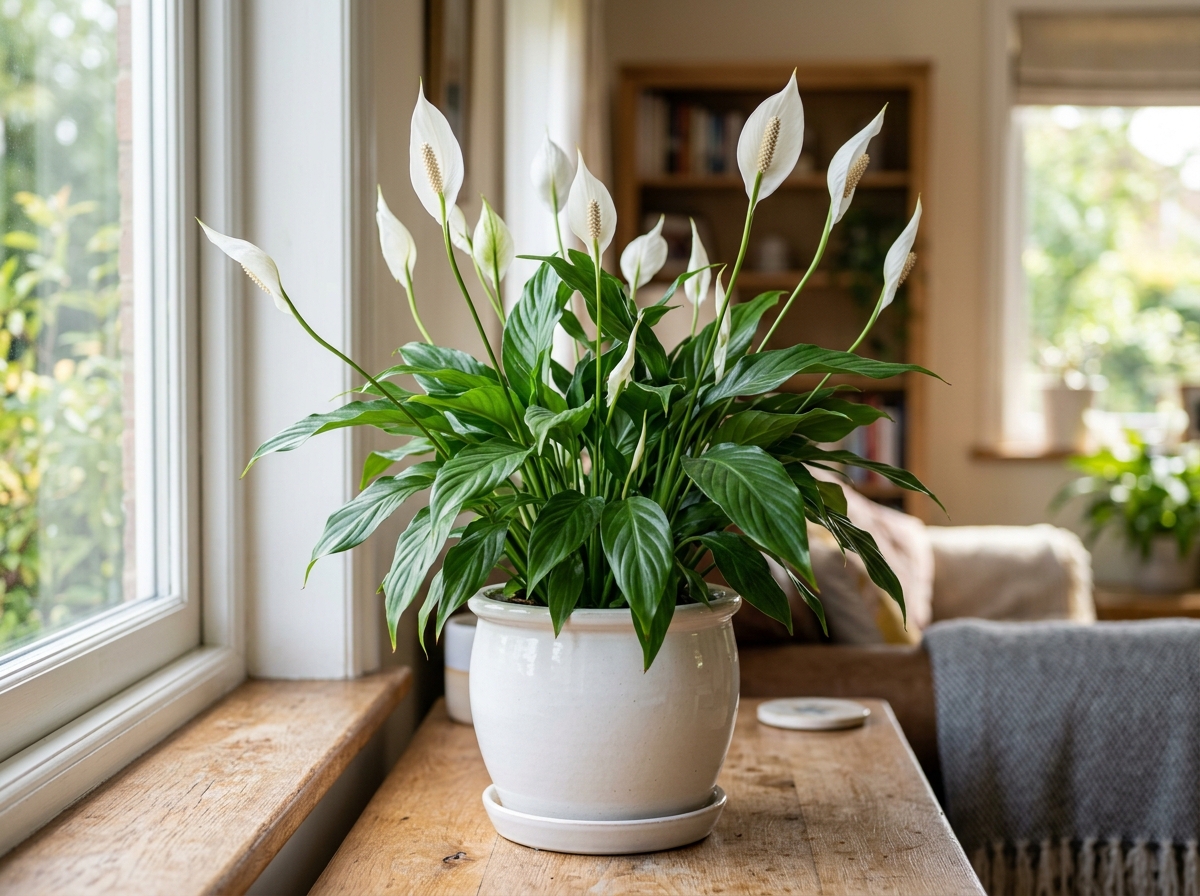
The Peace Lily is more than just a beautiful flower; it’s a powerhouse. Research shows it can improve indoor air quality by as much as 60%. It excels at removing complex chemicals found in cleaning products and nail polish removers.
- Best for: Benzene, trichloroethylene, ammonia, and acetone.
- Care: It likes low to medium light and will literally “droop” to tell you when it’s thirsty.
3. Snake Plant (Sansevieria trifasciata)
Often nicknamed “Mother-in-Law’s Tongue” because it’s tough and hard to kill, the Snake Plant is unique. Unlike most plants that release CO2 at night, the Snake Plant converts CO2 into oxygen during the evening. This makes it the ultimate bedroom companion.
- Best for: Benzene, formaldehyde, trichloroethylene, and xylene.
- Care: It thrives on neglect. Water it once every few weeks and it will be happy.
4. Boston Fern (Nephrolepis exaltata)
If you’re worried about formaldehyde (often found in furniture glue and carpets), the Boston Fern is your #1 ally. In Dr. Wolverton’s testing of 50 different plants, the Boston Fern ranked highest for removing this specific toxin.
- Best for: Formaldehyde and xylene.
- Bonus: It acts as a natural humidifier, which is great for your skin during dry winter months.
5. Aloe Vera (Aloe barbadensis miller)
You probably know Aloe for its ability to soothe sunburns, but it’s also a silent air cleaner. It monitors the air for you; if high levels of toxins are present, the leaves may develop brown spots.
- Best for: Formaldehyde and benzene.
- Care: It loves a sunny window and very little water.
6. Golden Pothos (Epipremnum aureum)
Also known as “Devil’s Ivy” because it is nearly impossible to kill, this trailing vine is perfect for beginners. It stays green even in low-light conditions and is highly effective at neutralizing common household toxins.
- Best for: Benzene, xylene, and formaldehyde.
- Insight: Some modern biotech studies have even looked into genetically modifying Pothos to make it 30 times more effective at cleaning the air!
7. English Ivy (Hedera helix)
Research has shown that English Ivy is particularly good at reducing airborne mold and even airborne fecal matter (yes, really!). It’s a great choice for bathrooms or homes with pets.
- Best for: Benzene, formaldehyde, and airborne allergens.
- Care: It prefers cooler temperatures and moist soil.
8. Rubber Plant (Ficus elastica)
With its thick, waxy leaves, the Rubber Plant is a statement piece that works hard. It is specifically adept at removing formaldehyde from the air, which is common in many household cleaners and manufactured wood products.
- Best for: Formaldehyde.
- Care: It likes bright, indirect light and its leaves should be wiped down occasionally to keep the pores clear.
9. Bamboo Palm (Chamaedorea seifrizii)
If you want a tropical feel, the Bamboo Palm is a great choice. It was rated highly by NASA for its ability to filter out benzene and trichloroethylene. It also transpires a lot of moisture into the air, helping with humidity.
- Best for: Benzene, trichloroethylene, toluene, and xylene.
- Care: Keep the soil moist but not soggy, and place it in a spot with indirect sunlight.
Understanding the health-benefits-of-plant-air-filters goes beyond just toxin removal—these plants also boost our mood and productivity!
How to arrange 9 houseplants that remove toxins from your indoor air
To see real results, you can’t just put one tiny succulent in a massive living room and expect it to do all the heavy lifting. The “dose” matters.
- Plant Density: NASA and Dr. Wolverton recommend having at least one of these plants for every 100 square feet of living space. In a standard 200-square-foot bedroom, two medium-sized plants (like a Snake Plant and a Peace Lily) should do the trick.
- Light Levels: Match the plant to the room. Put your Aloe Vera and Bamboo Palm in sunnier spots, while saving the Peace Lily, Snake Plant, and Pothos for those dimmer corners.
- Grouping: Grouping plants together doesn’t just look better; it creates a small “microclimate” that increases local humidity, which helps the plants breathe and filter toxins more efficiently.
- Bedroom Placement: Since the Snake Plant and Gerbera Daisy (another great option) produce oxygen at night, keep them close to your headboard.
For more tips on placement, check out our guide on the best-leafy-plants-for-air-purification.
Pet safety for 9 houseplants that remove toxins from your indoor air
While we love our plants, we love our furry friends too. It’s important to note that some of the most effective air-purifying plants can be toxic if ingested by cats or dogs.
- The “Safe” List: Spider Plants and Boston Ferns are generally considered non-toxic to pets according to the ASPCA. These are your best bets if you have a curious cat who likes to nibble on leaves.
- The “Caution” List: Peace Lilies, English Ivy, Pothos, and Snake Plants are toxic if eaten. They can cause mouth irritation, drooling, and vomiting.
- Safety Strategies: If you love a plant that isn’t pet-safe, try hanging it in a basket or placing it on a high shelf where your pets can’t reach. If you are particularly worried about allergies, you might want to look into the top-houseplants-for-allergies that don’t produce heavy pollen.
Maximizing Air Purification Benefits
To keep your “green team” working at peak efficiency, they need a little bit of maintenance. A dusty plant is a sad plant—and an ineffective one.
- Dust the Leaves: The pores on the leaves (stomata) are how the plant “breathes” in toxins. If they are covered in dust, the plant can’t do its job. Every few weeks, take a damp cloth and gently wipe the leaves of your Rubber Plants, Snake Plants, and Peace Lilies.
- Maintain the Soil: The microorganisms in the soil do a lot of the work. Avoid using heavy chemical fertilizers that might kill off these beneficial microbes. Organic compost or liquid seaweed fertilizers are much better for indoor air health.
- Watering Schedules: Overwatering is the #1 killer of houseplants. When roots rot, the plant stops filtering air and can actually start releasing mold spores into your home. Always check the top inch of soil before watering.
- Rotation: Every few weeks, give your plants a quarter turn. This ensures all sides get equal light, leading to a fuller, healthier plant with more surface area for toxin absorption.
If you’re a busy person, we recommend starting with low-maintenance-air-purifying-plants like the Snake Plant or Pothos, which can handle a missed watering or two without losing their air-cleaning powers.
Frequently Asked Questions about Air-Purifying Plants
Can houseplants replace mechanical air purifiers?
In most cases, no. Houseplants are excellent at removing gaseous toxins (VOCs) like benzene and formaldehyde over time. However, they are not very effective at removing physical particles like dust, pollen, or smoke. For the best air quality, we recommend a “hybrid” approach: use a HEPA air purifier for dust and allergens, and use houseplants to handle the chemical toxins and boost humidity.
Which plant is best for removing formaldehyde?
The Boston Fern is widely considered the champion of formaldehyde removal. It outperformed 50 other species in NASA-related testing. If you’ve recently bought new furniture, installed new carpets, or painted your walls, getting a few Boston Ferns is a smart move.
Do plants produce enough oxygen for a bedroom at night?
While a single plant won’t produce enough oxygen to significantly change the levels in a large room, plants like the Snake Plant and Aloe Vera are beneficial because they are among the few that release oxygen during the night. This can create a slightly fresher environment right where you sleep, which many people find improves their sleep quality.
Conclusion
At Mount Pilchuck, we believe that a healthy home starts with the air you breathe. While we can’t always control the pollution outside, we have a lot of power over our indoor environments. By strategically placing the 9 houseplants that remove toxins from your indoor air, you can reduce your exposure to harmful VOCs, boost your mood, and bring a touch of the natural world into your daily life.
Whether you start with a single, un-killable Snake Plant or build a full indoor jungle, your lungs will thank you. Ready to transform your living space into a fresh-air sanctuary? Start your indoor garden today and breathe easy knowing nature is on your side.
