
What Is the Black Gold Plant (And Which One Do You Have)?
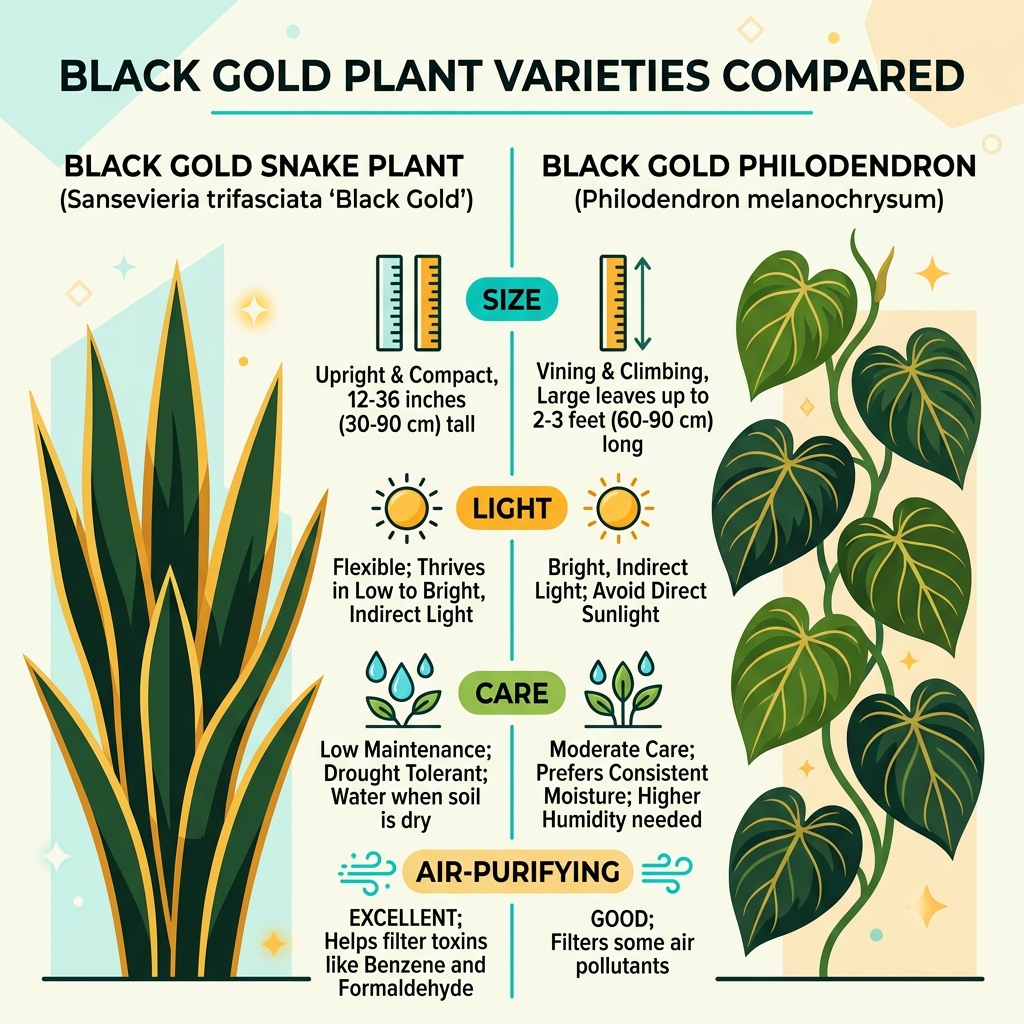
The term black gold plant actually refers to two very different — but equally stunning — houseplants. Here’s a quick breakdown:
The two main Black Gold plants:
- Sansevieria trifasciata ‘Black Gold’ (Black Gold Snake Plant) — tall, sword-shaped leaves with dark green centers and bright golden-yellow edges; native to West Africa; extremely low-maintenance
- Philodendron melanochrysum (Black Gold Philodendron) — a tropical climbing vine with large, velvety dark leaves and gold veining; native to Colombian rainforests; needs more humidity and care
Both plants are prized for their dramatic, dark foliage with golden accents. But they have very different care needs, growth habits, and ideal home environments.
If you’re dealing with stale indoor air and want a plant that actually does something beyond looking good, the Snake Plant variety is hard to beat. It filters toxins like benzene and formaldehyde from indoor air — even while you sleep.
The Philodendron melanochrysum, on the other hand, is the choice for plant enthusiasts who want a bold, tropical statement piece with leaves that can grow up to 30 inches long.
Not sure which one you have — or which one is right for your space? This guide covers both, from identification to care to troubleshooting.
Identifying the Two Main Black Gold Plant Varieties
When you hear the name black gold plant, you might be picturing a sturdy, upright “Mother-in-Law’s Tongue” or a lush, velvety vine. Because the name is used for multiple species, we want to make sure you know exactly what is sitting on your windowsill.
Sansevieria trifasciata ‘Black Gold’
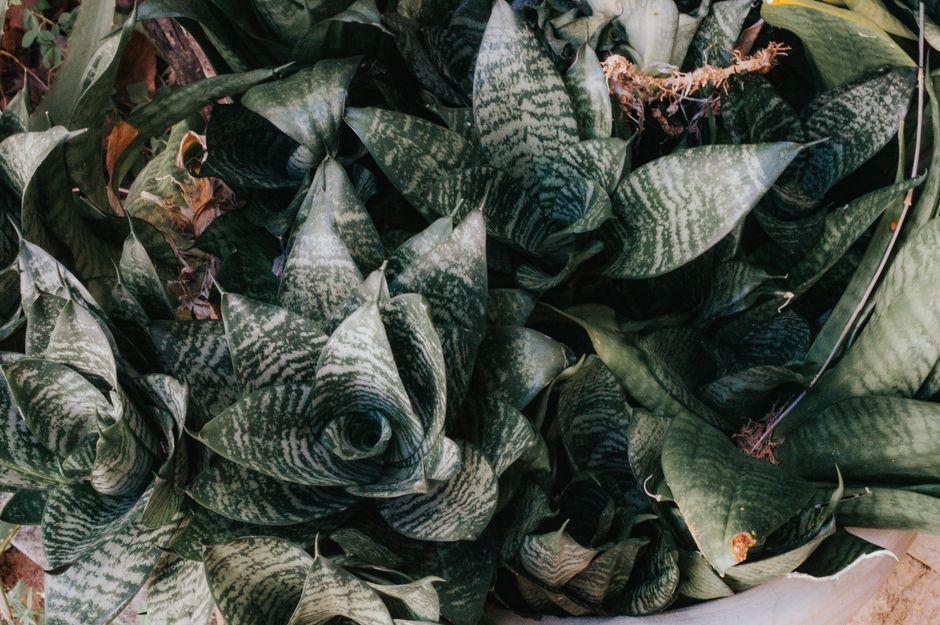
The Sansevieria trifasciata ‘Black Gold’ is a cultivar of the classic Snake Plant. It is famous for its architectural silhouette. The leaves are thick, fibrous, and sword-shaped, growing in a tight fan-like cluster.
What sets the ‘Black Gold’ apart from other varieties like the ‘Laurentii’ is the intensity of its color. While ‘Laurentii’ has more grey-green horizontal banding, the ‘Black Gold’ features a much darker, almost black-green center framed by a sharp, vivid yellow border. It’s a compact but tall variety, often reaching 18 to 30 inches indoors, though it can grow up to 6 feet in its native African habitat.
Philodendron melanochrysum
If your black gold plant is a climber with leaves that feel like expensive velvet, you have a Philodendron melanochrysum | Black Gold Philodendron | plant lust . This “Black Gold Philodendron” is an aroid, a member of the Araceae family (making it a cousin to the Monstera).
In its juvenile stage, the leaves are small and heart-shaped. However, as it matures and begins to climb, the leaves transform into massive, 2-foot-long pendulous blades. The color is a deep, dark green that looks nearly black in low light, highlighted by shimmering golden-yellow veins.
Comparison Table: Which Black Gold is Which?
| Feature | Black Gold Snake Plant | Black Gold Philodendron |
|---|---|---|
| Growth Habit | Upright, clump-forming | Climbing vine (needs support) |
| Leaf Texture | Smooth, waxy, and rigid | Velvety, soft, and flexible |
| Light Needs | Low to bright indirect | Bright indirect (essential) |
| Humidity | Tolerates dry air | Needs high humidity (60%+) |
| Difficulty | Beginner-friendly | Intermediate to Advanced |
Essential Care for the Black Gold Snake Plant
The Snake Plant version of the black gold plant is legendary for being nearly “unkillable.” This makes it perfect for those of us who occasionally forget our green friends exist for a week or two.
Light Requirements
One of the reasons we love this plant is its versatility. It thrives in medium to bright indirect light, but it is also one of the-best-plants-for-basement-low-light-that-wont-ghost-you/. While it can tolerate low light, keep in mind that its growth will slow down significantly, and the golden edges might lose some of their vibrancy. Avoid placing it in direct, harsh afternoon sun, as this can scorch the leaves and leave permanent brown marks.
Watering and Soil
The number one rule for a healthy black gold plant of the Sansevieria variety is: do not overwater. These plants are succulents at heart. They store water in their thick leaves to survive droughts in West Africa.
We recommend the “soak and dry” method. Water the plant thoroughly until water runs out of the drainage holes, then wait until the soil is completely dry before watering again. This usually means watering every 2 to 3 weeks in the summer and as little as once a month in the winter.
For soil, use a well-draining succulent or cactus mix. A good DIY recipe is one part potting soil, one part perlite or coarse sand, and one part peat. This ensures that the roots never sit in soggy mud, which is the fastest way to kill a Snake Plant.
Temperature and Humidity
The Shonnard’s Nursery Plant Finder Tool notes that these plants prefer temperatures between 65°F and 85°F. They are hardy in USDA zones 10-11, but indoors, they are happy in standard room temperatures. They don’t mind dry indoor air, making them ideal for offices or homes with central heating.
Air-Purifying Benefits of the Black Gold Plant
At Mount Pilchuck, we are passionate about plants that improve your health. The Black Gold Snake Plant is a heavy hitter in this department. According to the famous NASA Clean Air Study, Sansevieria species are excellent at removing indoor toxins, including:
- Benzene (found in detergents and plastics)
- Formaldehyde (found in carpets and furniture glue)
- Trichloroethylene (found in household cleaners)
- Xylene and Toluene
Unlike most plants that take in oxygen at night, the Snake Plant continues to produce oxygen and remove carbon dioxide after the sun goes down. This makes it a perfect companion for your bedroom to help improve sleep quality through better air circulation.
Mastering the Black Gold Philodendron
If you’ve opted for the luxurious black gold plant of the Philodendron variety, you’re in for a visual treat. However, this plant requires a bit more “concierge service” than the Snake Plant.
Mimicking the Rainforest
The Philodendron melanochrysum is an epiphyte. In the wild, it starts on the forest floor and climbs up trees to reach the light. To get those massive, 30-inch leaves you see in magazines, you must provide it with a climbing support, like a moss pole or a trellis.
Light and Humidity
This black gold plant needs bright, filtered light. Think of the dappled sunlight of a jungle canopy. Too much direct sun will burn the delicate velvet, while too little light will result in small, leggy leaves.
Humidity is the secret sauce for this Philodendron. It prefers a humidity level between 60% and 80%. If your home is dry, we suggest using a humidifier or placing the plant in a well-lit bathroom. Without enough moisture in the air, the new leaves may get stuck while unfurling, leading to deformities.
Watering and Feeding
Unlike the Snake Plant, the Philodendron likes to stay consistently moist but never waterlogged. Water when the top inch of soil feels dry. During the growing season (spring and summer), use a balanced liquid fertilizer diluted to half-strength once a month. This provides the nutrients needed for those large, coppery-gold leaves to develop. Much like the bird-of-paradise-care-a-guide-for-the-indoor-royalty/, this plant appreciates a regular feeding schedule to maintain its “royal” appearance.
Troubleshooting and Propagation Guide
Even the hardiest black gold plant can run into trouble. Most issues are related to water or light, and luckily, they are usually easy to fix if caught early.
Common Problems and Fixes
- Wrinkled Leaves + Dry Soil: This is a clear sign of thirst. Your plant is using up its internal water stores. Give it a thorough soak.
- Mushy Leaves + Wet Soil: This is the dreaded root rot. If the base of the leaves feels soft or smells bad, you are overwatering. Stop watering immediately, check the roots for rot (black, slimy roots), and repot into fresh, dry soil.
- Yellowing Leaves: This can be tricky. It’s often a sign of overwatering, but it can also mean a nutrient deficiency or that the plant is root-bound.
- Brown, Crispy Tips: Usually caused by low humidity (especially in Philodendrons) or using tap water with too many minerals. Try using filtered water or increasing humidity.
If you’re looking to expand your collection, learning how-to-grow-a-stunning-golden-cascade-plant-without-breaking-a-sweat/ can give you the confidence to propagate your Black Gold varieties as well.
How to Propagate Your Black Gold Plant
Propagation is a great way to get “free” plants for other rooms or to give as gifts.
For the Black Gold Snake Plant:
- Division: This is the easiest method. When the pot gets crowded, you’ll see “pups” (baby plants) emerging from the soil. Simply remove the plant from the pot and use a clean knife to cut the thick underground root (rhizome) that connects the pup to the parent.
- Leaf Cuttings: Cut a healthy leaf into 3-inch sections. Crucially, remember which end was “down.” Let the cuttings callous over for two days, then stick the bottom end into moist sand or potting mix. Note: Variegated Snake Plants propagated by leaf cuttings often lose their gold edges and return to solid green!
For the Black Gold Philodendron:
- Stem Cuttings: Find a node (the bump where a leaf meets the stem). Cut just below the node.
- Water Propagation: Place the cutting in a jar of water, ensuring the node is submerged. Change the water every few days. Once roots are 2 inches long, move it to soil.
Is the Black Gold plant safe for pets?
This is a vital question for any pet owner. Both the Sansevieria and the Philodendron versions of the black gold plant contain calcium oxalate crystals.
According to our guide on indoor-plants-safe-for-pets/, these crystals cause immediate irritation to the mouth, tongue, and throat if chewed. While they are usually not fatal, they can cause drooling, vomiting, and gastric distress. If you have curious cats or dogs, we recommend placing these plants on high shelves or in rooms that are off-limits to pets. For more options, check out the-best-cat-friendly-trees-and-plants-for-a-safe-home/.
Why are my plant leaves turning yellow?
Yellowing is the plant’s way of saying “I’m stressed.”
- Overwatering: The most common culprit. The roots are suffocating and can’t send nutrients to the leaves.
- Poor Drainage: Even if you don’t water often, if the pot doesn’t have holes, the water pools at the bottom.
- Old Age: Occasionally, the oldest leaves at the bottom of the plant will turn yellow and die off naturally. This is nothing to worry about!
Conclusion
Whether you choose the rugged, air-purifying black gold plant (Sansevieria) or the lush, velvety black gold plant (Philodendron), you are adding a touch of luxury to your home. At Mount Pilchuck, we believe that bringing the outdoors in is the best way to improve your indoor air quality and create a calming sanctuary.
The Black Gold Snake Plant is a champion of low-maintenance greenery, perfect for busy professionals and dark corners. Meanwhile, the Black Gold Philodendron is a showstopper that rewards a little extra care with breathtaking tropical foliage.
Ready to grow your indoor jungle? Explore more indoor plants for your home and discover the best varieties for your specific living environment. Happy planting!
