
The Quick Answer: Is the Cat Palm Plant Safe for Dogs?
The cat palm plant safe for dogs is confirmed non-toxic by the ASPCA — making it one of the best tropical houseplants you can own if you share your home with a dog.
Here’s what you need to know at a glance:
| Feature | Cat Palm (Chamaedorea cataractarum) |
|---|---|
| Toxic to dogs? | No — ASPCA listed as non-toxic |
| Toxic to cats? | No — safe for both pets |
| Risk of over-ingestion? | Mild digestive upset possible |
| Emergency symptoms to watch? | Vomiting, diarrhea, lethargy |
| Safe for homes with pets? | Yes |
So if you’re a dog owner looking to add some greenery indoors — and maybe improve the air quality in your living space — the cat palm is a genuinely safe choice.
But there’s an important catch. Not all palms are created equal. Some plants that look nearly identical to the cat palm are extremely dangerous to dogs. The sago palm, for example, is involved in cases that are fatal up to 50% of the time.
Knowing which plant you actually have matters — a lot.
This guide covers everything: confirmed safety data, what happens if your dog eats too much, how to tell safe palms from toxic ones, and how to care for this plant in a pet-friendly home.
Is the Cat Palm Plant Safe for Dogs?
When we bring nature into our homes, our first priority is the safety of our furry family members. We can breathe a sigh of relief knowing that the cat palm plant safe for dogs is a reality. Scientifically known as Chamaedorea cataractarum, the Cat Palm (or Cascade Palm) is officially recognized by the ASPCA as non-toxic to dogs, cats, and even horses.
This plant belongs to the Chamaedorea genus, a group of palms famous for their indoor resilience and pet-friendly nature. Unlike many common houseplants that contain insoluble calcium oxalates or toxic alkaloids, the Cat Palm lacks these harmful compounds. However, “non-toxic” doesn’t mean “edible.” While the plant won’t poison your dog’s system, the high fiber content in the fronds can cause mechanical irritation in the digestive tract.
If your dog decides the Cat Palm looks like a giant green snack, they aren’t ingesting a toxin, but they are eating a lot of roughage that their stomach isn’t designed to process in bulk. For more ideas on how to green up your space without worry, check out our guide on Indoor Plants Safe for Pets.
Symptoms of Over-Ingestion
Even though the cat palm plant safe for dogs doesn’t contain poison, “too much of a good thing” applies here. If a curious pup treats your indoor jungle like an all-you-can-eat buffet, you might notice some physical reactions. These aren’t signs of poisoning, but rather signs of a very upset stomach.
Common symptoms of over-ingestion include:
- Vomiting: The most common reaction as the body tries to expel the undigested plant fibers.
- Diarrhea: Large amounts of plant matter can fast-track through the digestive system.
- Drooling: Often a sign of nausea or slight mouth irritation from chewing the textured leaves.
- Lethargy: Your dog might feel “blah” while their body works through the digestive upset.
- Abdominal Pain: You might notice your dog stretching awkwardly or acting protective of their belly.
- Mild Dermatitis: In rare cases, the physical brushing against the fronds can cause very mild skin redness in sensitive dogs.
Is the cat palm plant safe for dogs and cats alike?
The name “Cat Palm” often leads people to wonder if it’s exclusively for felines. In reality, the name comes from its scientific name cataractarum (referring to its love for waterfalls), not its affinity for cats. However, it is indeed just as safe for cats as it is for dogs.
Cats are notorious for “nibbling” on long, thin leaves that mimic the movement of grass. Because the Cat Palm has soft, feathery fronds, it is a prime target for bored cats. Fortunately, a few bites won’t send your kitty to the emergency room. While we always recommend discouraging your pets from eating your decor, the Cat Palm is a staple for a truly pet-safe household.
Cat Palm vs. Sago Palm: Knowing the Difference
This is the most critical part of our guide. While the cat palm plant safe for dogs is a wonderful addition to your home, its “evil twin,” the Sago Palm, is one of the most dangerous plants a pet owner can encounter.
The Sago Palm (Cycas revoluta) isn’t actually a true palm; it’s a cycad. It contains a deadly toxin called cycasin. Ingestion of Sago Palm is fatal in up to 50% of pet cases, often leading to total liver failure within days.
| Feature | Cat Palm (Chamaedorea cataractarum) | Sago Palm (Cycas revoluta) |
|---|---|---|
| Toxicity | Non-toxic | Highly Toxic (Fatal) |
| Frond Texture | Soft, flexible, feathery | Stiff, prickly, plastic-like |
| Trunk | No central trunk; bushy clumps | Thick, woody, “pineapple” trunk |
| Leaf Shape | Long, graceful arching leaves | Spiky, needle-like tips |
| Danger Level | Low (Digestive upset only) | Extreme (Liver failure, seizures) |
If you suspect your dog has eaten any part of a Sago Palm—especially the seeds, which are the most toxic part—seek emergency veterinary care immediately. You can find more about the dangers in the Sago Palm toxicity research provided by animal experts.
Why the Cat Palm Plant Safe for Dogs is a Top Choice
Beyond safety, why do we love the Cat Palm? At Mount Pilchuck, we focus on health-boosting plants, and the Cat Palm is a superstar in this category.
According to the NASA Clean Air Study, palms are exceptional at removing indoor air pollutants. The Cat Palm specifically helps filter out formaldehyde, a common toxin found in carpets and furniture. It also acts as a natural humidity booster, releasing moisture into the air through transpiration. This is great for your skin, your respiratory health, and even your dog’s paws during dry winter months.
With its lush, tropical aesthetics and non-threatening foliage, it brings the “jungle vibe” into your home without the “jungle dangers.”
Caring for Your Pet-Friendly Cat Palm
To keep your cat palm plant safe for dogs healthy and vibrant, you need to mimic its native Mexican riverbank habitat. These plants aren’t “set it and forget it” types, but they are rewarding when cared for properly.
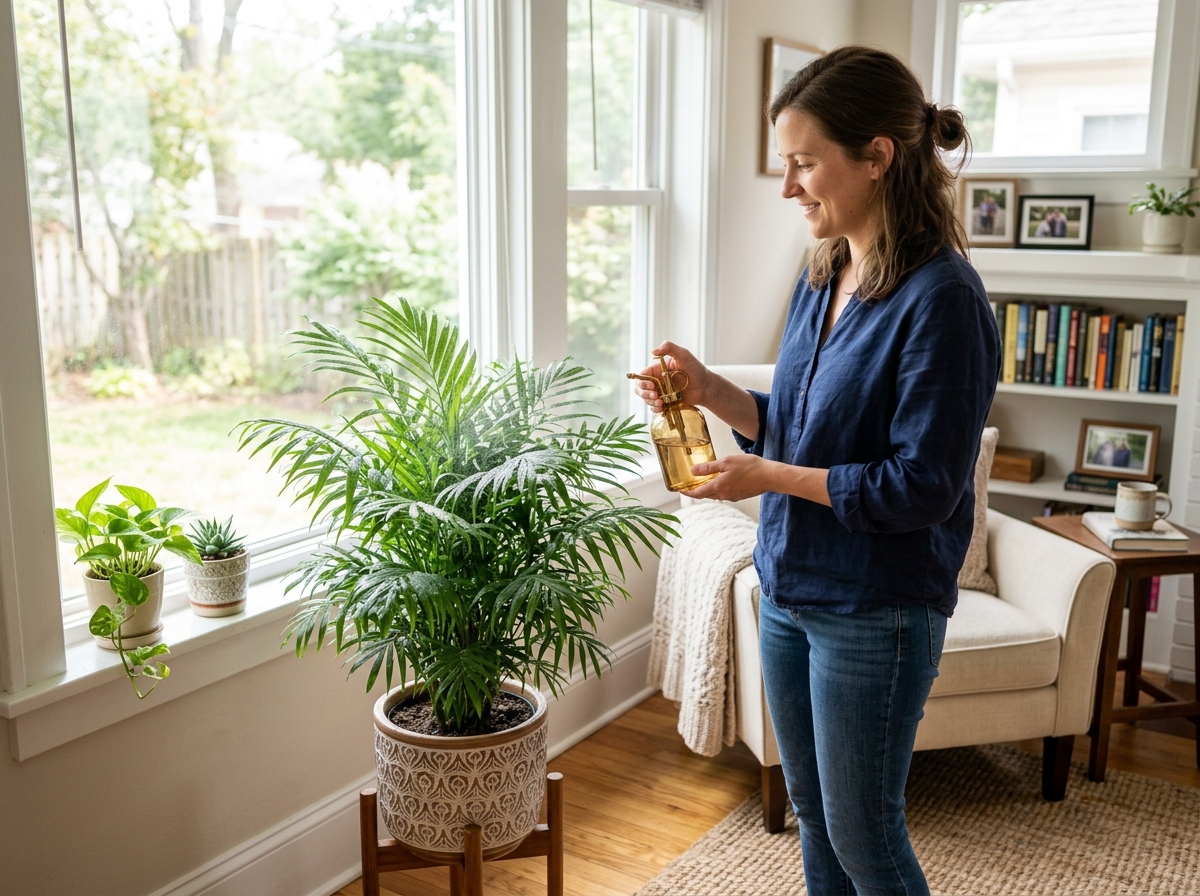
- Light: They crave bright, indirect light. Direct afternoon sun will scorch those beautiful green leaves, turning them yellow or brown.
- Watering: Keep the soil consistently moist but never soggy. A good rule of thumb is to water when the top inch of soil feels dry. Ensure your pot has plenty of drainage holes to prevent root rot.
- Temperature: They thrive in temperatures between 70-80°F. They can handle a brief dip to 45°F at night, but they definitely prefer the warmth.
- Humidity: This is key! Cat Palms love humidity. Use a humidifier or place the pot on a tray of pebbles filled with water (a humidity tray) to keep the air moist.
- Fertilizer: Use organic, pet-safe fertilizers during the growing season (spring and summer) to avoid any chemical risks to your pets.
Safe Placement and Deterrents
Even though the plant is safe, you probably don’t want your dog using it as a chew toy. To protect both the plant and your pet’s stomach, consider these design tips:
- Elevate the Plant: Use high shelving or sturdy plant stands to keep the fronds out of reach of smaller dogs.
- Decorative Planters: Use heavy, wide-based ceramic pots that are difficult for a playful dog to knock over.
- Natural Deterrents: If your dog is a persistent chewer, a light misting of “bitter apple” spray on the lower fronds can discourage them.
- Positive Reinforcement: Train your dog with the “leave it” command when they show too much interest in the greenery.
Other Pet-Safe Palms to Consider
If you love the look of the cat palm plant safe for dogs, you might want to expand your indoor forest. There are several other “true palms” that are just as safe and stylish.
- Parlor Palm (Chamaedorea elegans): A smaller, slower-growing relative of the Cat Palm. It’s incredibly hardy and perfect for low-light corners. You can see the ASPCA guide to Parlor Palms for more safety details.
- Areca Palm: Known for its butterfly-shaped fronds, this is another top-tier air purifier.
- Bamboo Palm: Great for adding height and a “zen” feel to a room.
- Ponytail Palm: While not a true palm (it’s actually a succulent), it is non-toxic and has a fun, whimsical look that dogs usually ignore.
Other non-palm options that pair beautifully with your Cat Palm include the Spider Plant and the lush Boston Fern, both of which are safe for curious noses.
Frequently Asked Questions about Cat Palms
What should I do if my dog eats a large amount of Cat Palm?
First, don’t panic! The cat palm plant safe for dogs is non-toxic. However, if they’ve eaten a significant portion of the plant, they will likely experience some vomiting or diarrhea.
- Monitor: Keep an eye on their behavior. Are they still drinking water? Are they acting like themselves otherwise?
- Hydration: Ensure they have plenty of fresh water to prevent dehydration if they are vomiting.
- Vet Check: If the vomiting persists for more than 24 hours, or if they stop eating entirely, call your vet. They may need a bland diet (like boiled chicken and rice) for a few days to let their stomach settle.
Does the Cat Palm provide air purification benefits?
Absolutely. We champion the Cat Palm because it’s a powerhouse for air circulation and quality. It absorbs common household toxins like benzene and formaldehyde through its leaves and roots, neutralizing them. In exchange, it releases fresh oxygen and moisture, creating a cleaner, more breathable environment for both humans and hounds.
Where can I buy a healthy Cat Palm online?
When shopping online, look for reputable nurseries that offer a “health guarantee.” Because Cat Palms can be sensitive to shipping (they don’t like being in a dark, dry box for too long), choose a seller that uses expedited shipping and provides clear care instructions upon arrival. Healthy plants should have deep green leaves with no signs of pests like spider mites or mealybugs.
Conclusion
At Mount Pilchuck, we believe that a healthy home is one filled with life—both the kind that barks and the kind that grows. Finding a cat palm plant safe for dogs allows you to enjoy the best of both worlds. You get the tropical elegance and air-purifying power of a lush palm, and your dog gets to stay safe in their favorite indoor environment.
By choosing non-toxic plants like the Chamaedorea cataractarum and staying vigilant about dangerous lookalikes like the Sago Palm, you’re creating a sanctuary that promotes wellness for the whole family. If you’re ready to start your journey into pet-friendly gardening, browse our collection of indoor plants for more expert advice on health-boosting greenery.
