
Why Indoor Air Quality Matters More Than You Think
Air purifying plants are one of the simplest, most affordable ways to clean the air inside your home. If you want a quick answer, here are the best options for beginners:
- Snake Plant – tolerates low light, removes benzene and formaldehyde
- Spider Plant – pet-safe, removes carbon monoxide and VOCs
- Peace Lily – removes ammonia and mold spores, thrives in shade
- Pothos – nearly indestructible, filters formaldehyde and benzene
- Boston Fern – great for humidity, removes formaldehyde
- Areca Palm – pet-friendly, adds moisture to dry air
- Aloe Vera – removes benzene, doubles as a first-aid plant
- Dracaena – targets trichloroethylene and formaldehyde
- English Ivy – reduces airborne mold and allergens
- Gerbera Daisy – can reduce airborne formaldehyde by 50% within 24 hours
Most people don’t realize how polluted the air inside their home actually is. According to the Environmental Protection Agency, indoor air pollution ranks among the top five public health threats — and indoor air can be up to five times more polluted than the air outside.
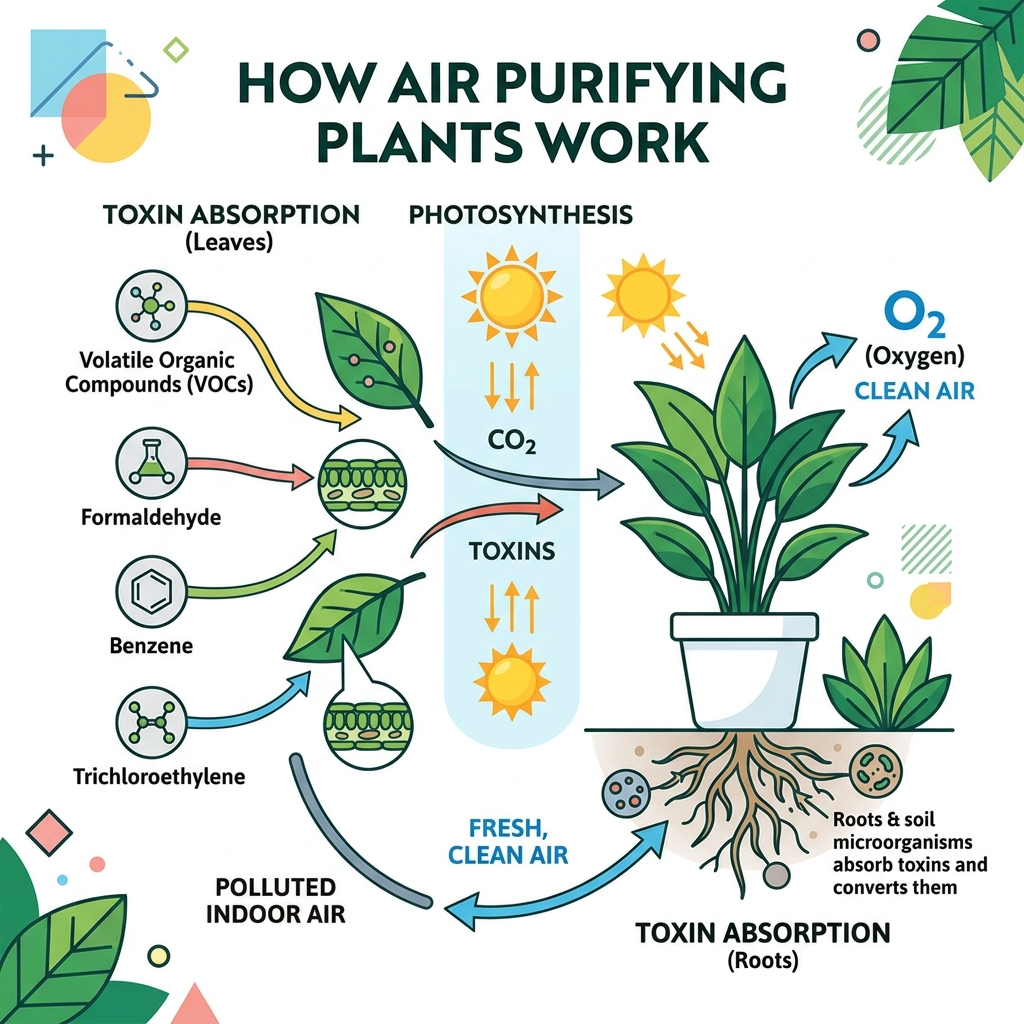
The sources are everywhere. Furniture, cleaning products, paint, and carpets all release chemicals called volatile organic compounds (VOCs) — including formaldehyde, benzene, and trichloroethylene. Breathing these in day after day takes a real toll.
In 1989, NASA researchers set out to find a low-cost solution for cleaning air in sealed environments like space stations. What they discovered applies just as well to your living room: common houseplants can absorb harmful airborne toxins through their leaves and roots.
The good news? You don’t need a green thumb to get started. Many of the most effective air-purifying plants are also the easiest to keep alive.
Top NASA-Approved Air Purifying Plants for Your Home
When we talk about air purifying plants, we aren’t just repeating old wives’ tales. We are looking at hard science. NASA’s 1989 Clean Air Study was a landmark piece of research that changed how we view our leafy roommates. The study focused on finding natural ways to purify the air in small, unventilated spaces—like the International Space Station.
The researchers found that certain species are incredibly efficient at scrubbing the air of “The Big Three” toxins: benzene (found in plastics and synthetic fibers), formaldehyde (found in wood glues and upholstery), and trichloroethylene (found in paints and varnishes). By incorporating Plants That Filter Toxins From the Air, we can significantly reduce the risk of “Sick Building Syndrome,” a condition where occupants experience health issues tied to the time spent in a specific building.
Snake Plant (Dracaena trifasciata)
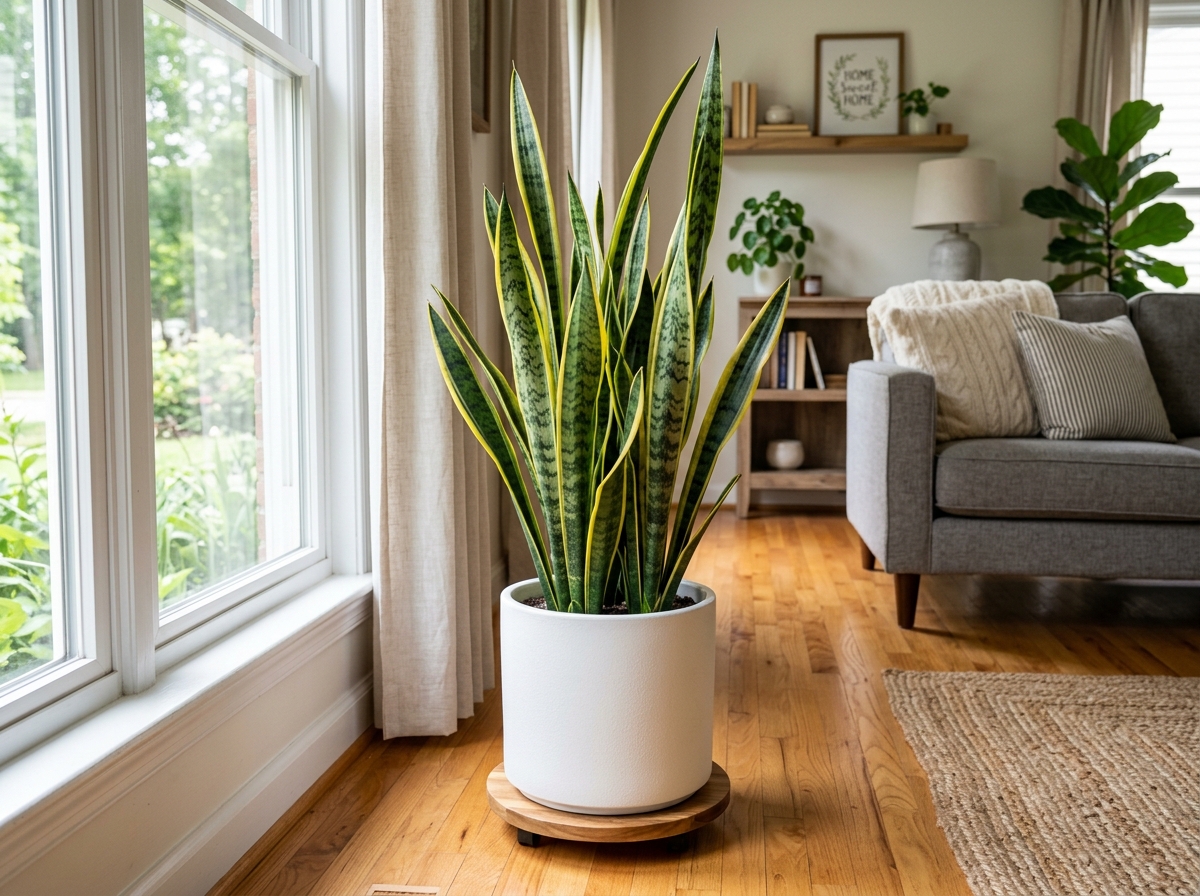
If there were a “Survivor” show for houseplants, the Snake Plant would win every season. You might know it by its more colorful nickname, “Mother-in-Law’s Tongue,” due to its sharp, pointed leaves. This plant is a favorite here at Mount Pilchuck because it is nearly impossible to kill. It thrives on neglect and can handle low-light corners where other plants would simply give up.
What makes the Snake Plant truly special is its unique breathing habit. Most plants take in CO2 and release oxygen during the day while the sun is out. However, the Snake Plant uses Crassulacean Acid Metabolism (CAM) photosynthesis. This means it opens its stomata at night to convert CO2 into oxygen. Because of this, it is one of our Top Air Purifying Plants for Bedrooms, helping you breathe easier while you sleep.
Beyond oxygen, it is a powerhouse at removing benzene and formaldehyde. According to research, placing a Snake Plant in an office setting can reduce CO2 concentrations by anywhere from 10.47% to 19.29%. If you want to dive into the technical details, you can Read the scientific profile for snake plant to see why it was recently reclassified into the Dracaena genus.
Peace Lily (Spathiphyllum)
The Peace Lily is as functional as it is beautiful. With its dark, glossy leaves and elegant white spathes (which look like flowers but are actually specialized leaves), it adds a touch of serenity to any room. We love it because it’s a high-performance filter, specifically targeting ammonia—a common ingredient in many household cleaners—as well as xylene and toluene.
Peace Lilies have high transpiration rates, meaning they pull water from the roots and release it through the leaves, which helps increase the humidity in a room. This makes them excellent Indoor Plants That Improve Breathing by keeping your nasal passages from drying out.
Be warned: the Peace Lily is a bit of a “drama queen.” If it’s thirsty, it will droop dramatically to let you know. Once you give it a drink, it perks right back up within a few hours. For the best results, keep it in indirect sunlight and mist the leaves occasionally to mimic its native tropical environment. You can find more specific guidance on How to grow peace lilies through the Royal Horticultural Society’s expert resources.
Spider Plant (Chlorophytum comosum)
For the absolute beginner, the Spider Plant is a dream. It is tough, grows quickly, and produces “babies” (spiderettes) that you can easily snip off and grow in new pots. In terms of air purification, it is a heavy hitter. NASA found that Spider Plants can eliminate up to 95% of harmful chemicals, including carbon monoxide and formaldehyde, within just 24 hours.
One of the biggest selling points for the Spider Plant is that it is entirely non-toxic. It is one of the best Indoor Plants Safe for Pets, so you don’t have to worry if your cat decides to bat at its long, dangling leaves. It prefers bright, indirect light but is quite forgiving if you forget to water it for a week.
Essential Care for Low-Maintenance Air Purifying Plants
Bringing air purifying plants into your home is only half the battle; keeping them healthy is what ensures they keep cleaning your air. Most beginners over-water their plants, which leads to the dreaded root rot. We always recommend using pots with drainage holes and a well-draining soil mix (usually containing perlite or sand).
Here is a quick comparison of the care needs for three popular beginner choices:
| Plant | Light Requirement | Watering Frequency | Best Feature |
|---|---|---|---|
| Pothos | Low to Bright Indirect | When top 2 inches of soil are dry | Hard to kill, trailing vines |
| Dracaena | Bright Indirect | Every 1-2 weeks (dry between) | Removes trichloroethylene |
| Boston Fern | Indirect / Filtered | Keep soil consistently moist | High humidity/removes mold |
To keep your plants working at peak efficiency, don’t forget to dust the leaves! Dust buildup can block the pores (stomata) of the plant, making it harder for them to absorb toxins and sunlight. A quick wipe with a damp cloth once a month does wonders. For more detailed tips, check out our guide on Easy Care Plants for Home Air Quality.
Why Use Air Purifying Plants in Small Spaces?
If you live in a studio or a small apartment, you might think you don’t have room for a “jungle.” However, small spaces often have the worst air quality because there is less room for air to circulate. This is where Indoor Plants for Small Apartments come in handy.
Vining plants like Pothos or Heartleaf Philodendron are perfect for small spaces because they can be grown vertically. You can place them on top of a bookshelf or in a hanging basket, letting the leaves trail down. This saves floor space while maximizing the leaf surface area available to scrub the air. If you’re feeling crafty, you can even look into Improving Air Quality in Compact Spaces: DIY Projects to create your own living wall or vertical garden.
Choosing Pet-Friendly Air Purifying Plants
As much as we love our greenery, we love our furry friends more. It’s important to remember that many popular air purifying plants contain saponins or calcium oxalate crystals, which can be toxic if ingested by cats or dogs.
According to ASPCA guidelines, the Snake Plant and Peace Lily are toxic to pets, causing gastrointestinal upset or irritation. If you have curious pets, stick to these safe alternatives:
- Areca Palm: A beautiful, tall palm that is safe for both cats and dogs.
- Boston Fern: Great for hanging baskets and completely non-toxic.
- Bamboo Palm: Another safe palm variety that excels at filtering formaldehyde.
If you struggle with seasonal sniffles, some of these are also the Top Houseplants for Allergies because they help trap dust and increase humidity without producing irritating pollen.
Maximizing Health Benefits Beyond Toxin Removal
At Mount Pilchuck, we believe the benefits of plants go far beyond just chemistry. There is a psychological component to living with greenery that is just as important as the air you breathe.
When we surround ourselves with plants, our cortisol levels—the hormone responsible for stress—tend to drop. Studies have shown that having plants in an office or workspace can boost productivity and creativity. This is likely because humans have an innate connection to nature, often called “biophilia.”
It’s a sobering fact that three million people die prematurely each year from diseases caused by household air pollution. While plants aren’t a total replacement for medical care or high-end air filters, they are a vital part of a “pro-health” lifestyle. The Mental Wellness Benefits of Indoor Plants include improved mood, reduced anxiety, and a sense of accomplishment that comes from nurturing a living thing. For those working from home, we recommend reading our Indoor Air Quality and Productivity Tips to see how a few well-placed plants can change your entire workday.
Enhancing Indoor Air Quality: A Holistic Approach
While we are huge fans of air purifying plants, we also want to be realistic. A single small plant in a massive room isn’t going to fix everything. To truly improve your environment, you need a holistic strategy.
Recent reviews, such as the one on Potted plants and VOC removal efficiencies, suggest that while plants are effective in controlled lab settings, you might need a high density of plants to replicate those results in a drafty home. However, plants offer something mechanical filters can’t: humidity regulation and carbon dioxide reduction.
We suggest combining your plants with Natural Ways to Boost Indoor Air Quality, such as:
- Ventilation: Open your windows for at least 10 minutes a day to let fresh air circulate.
- Non-Toxic Cleaning: Switch to natural cleaners to reduce the amount of VOCs you introduce to the air.
- Beeswax Candles: Unlike paraffin candles, beeswax releases negative ions that can help clean the air.
- Regular Vacuuming: Use a vacuum with a HEPA filter to catch dust and pet dander that plants can’t “eat.”
Frequently Asked Questions about Air Purifying Plants
How many plants do I need per room?
A general rule of thumb derived from NASA’s research is to have at least one good-sized plant (in a 6 to 8-inch pot) for every 100 square feet of living space. If you have high ceilings or a lot of new furniture (which off-gasses more toxins), you might want to increase that density. The more leaf surface area you have, the more “scrubbing power” your indoor jungle possesses!
Which plants are toxic to cats and dogs?
We cannot stress this enough: check the ASPCA list before buying. The ASPCA Mother-in-Law’s Tongue entry notes that Snake Plants can cause nausea and vomiting in pets. Peace Lilies and Heartleaf Philodendrons are also irritants. If you love these plants but have pets, use hanging baskets or high shelves to keep them out of reach.
Do these plants work in low-light offices?
Yes! Many of the best air purifiers evolved on the forest floor, meaning they are adapted to low light. The ZZ Plant (Zamioculcas zamiifolia) and Pothos are legendary for their ability to survive under fluorescent office lights with zero natural sun. They are the ultimate low-maintenance companions. You can find more suggestions in our guide for Indoor Plants for Office Spaces.
Conclusion
Creating a healthier home doesn’t have to be expensive or complicated. By starting with a few beginner-friendly air purifying plants, you are taking a proactive step toward better respiratory health and mental well-being. Whether it’s the resilient Snake Plant or the cheerful Spider Plant, each leaf is working hard to make your home a safer place to breathe.
At Mount Pilchuck, we are dedicated to providing expert botanical advice to help you build your own sustainable home wellness sanctuary. Ready to start your green journey? Browse our full collection of indoor plants and find the perfect leafy partner for your space today!
