
Your Houseplants Might Be Behind Your Sneezing Fits
Indoor plant allergy symptoms are more common than most people realize — and they’re easy to mistake for a seasonal cold or outdoor hay fever.
Common indoor plant allergy symptoms include:
- Sneezing and runny nose
- Nasal congestion and post-nasal drip
- Itchy, red, or watery eyes
- Itchy throat or ears
- Skin rashes, hives, or contact dermatitis
- Fatigue
- Coughing or asthma flare-ups
Most people think of houseplants as a health win. And often, they are. Plants can lift your mood, reduce stress, and even filter certain toxins from the air.
But here’s the thing: some plants are quietly making your sinuses miserable.
Pollen, mold spores hiding in damp soil, dust settling on broad leaves, and irritating plant sap can all trigger real allergic reactions — without you ever stepping outside. Indoor airflow keeps pollen suspended longer than you’d expect, meaning even a small flowering plant can cause persistent symptoms.
If you’ve noticed your nose runs more at home than anywhere else, your plants might deserve a closer look.
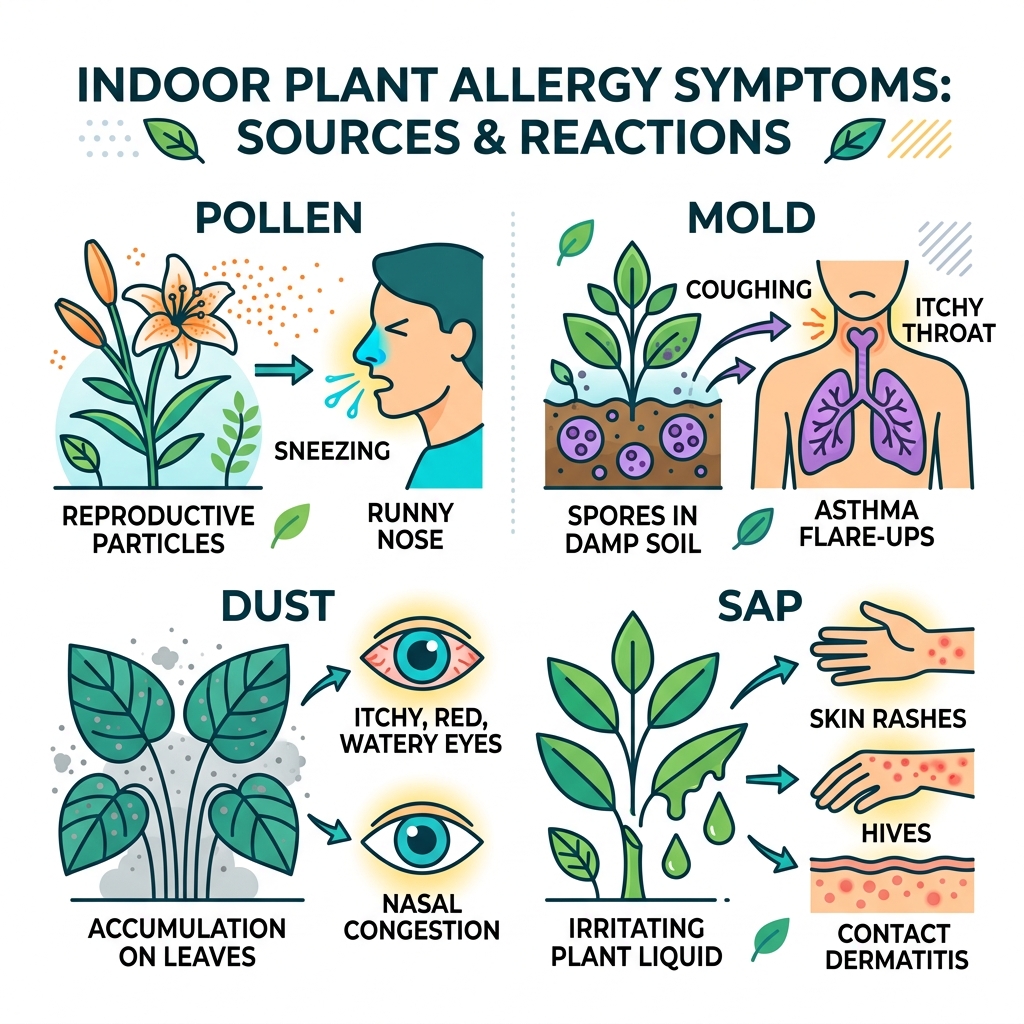
Recognizing Common indoor plant allergy symptoms
When we talk about indoor plant allergy symptoms, it’s easy to write them off as a simple “dust allergy” or blame the neighbor’s freshly mowed lawn. However, if your symptoms persist through the winter or flare up every time you mist your monsteras, your indoor garden might be the culprit.

Allergic Rhinitis and Respiratory Distress
The most frequent reaction we see is allergic rhinitis, often called hay fever. This happens when your immune system overreacts to airborne particles like pollen or mold spores. You might experience a “staccato” sneeze — those annoying three or four sneezes in a row — followed by a runny nose or thick nasal congestion.
Over time, this congestion leads to post-nasal drip, which can irritate your throat and cause a dry, hacking cough. If you find yourself feeling unusually tired, it might be “allergy fatigue,” a result of your immune system working overtime and poor sleep caused by blocked airways. For those of us with pre-existing conditions, these allergens can act as significant asthma triggers, leading to chest tightness or wheezing.
Skin Reactions and Contact Dermatitis
Not all reactions are inhaled. Sometimes, simply brushing against a leaf or getting a bit of sap on your finger during pruning can lead to contact skin reactions and hives. Allergic contact dermatitis often looks like a red, itchy rash or even small blisters. This is particularly common with plants like English Ivy or the Weeping Fig.
If you notice that your skin gets itchy or red only after you’ve been “tending the jungle,” it’s a clear sign of a localized allergic reaction. Interestingly, some plants don’t just cause allergies through their own biology; they act as “dust magnets.” To learn more about how to manage this, check out more info about indoor plants that reduce dust.
The Hidden Triggers: Why Your Greenery Causes a Reaction
It isn’t always the plant itself that causes the sneeze; sometimes it’s the ecosystem the plant carries with it. To manage indoor plant allergy symptoms, we have to understand the specific triggers at play.
Pollen and Spore Production
Flowering plants are obvious pollen producers, but they aren’t the only ones. Many people are surprised to learn that non-flowering plants like ferns use spores to reproduce. These fern spores as respiratory agitators can be just as irritating as traditional pollen, especially in enclosed spaces with limited airflow.
Mold in Potting Soil
This is the “silent” allergy trigger. Mold thrives in damp, dark environments. If we overwater our plants or use soil that doesn’t drain well, we are essentially creating a mold farm in our living room. These spores become airborne every time we move the pot or water the plant.
Dust and VOCs
Large, textured leaves are perfect landing pads for household dust. When we walk by or a fan blows, that dust (and the dust mites living in it) gets kicked back into the air. Furthermore, some fragrant plants release Volatile Organic Compounds (VOCs). While we might enjoy the scent, these compounds can irritate sensitive respiratory tracts, mimicking an allergic reaction.
Plant Sap and Latex
Many popular plants, like the Poinsettia or the Weeping Fig, contain a milky sap that includes latex compounds. If you have a known latex allergy, touching this sap can cause everything from mild itching to severe anaphylaxis in rare cases.
| Trigger | Source | Common Symptoms |
|---|---|---|
| Pollen | Flowering plants, male palms | Sneezing, runny nose, itchy eyes |
| Mold | Overwatered soil, decaying leaves | Congestion, asthma flare-ups |
| Dust | Broad leaves (Monstera, Fiddle Leaf) | Dry cough, itchy throat |
| Sap/Latex | Weeping Fig, Poinsettia, Ivy | Rashes, hives, skin redness |
If dust is your primary enemy, you might want to look into more info about air purifiers for dust allergies to keep your air clean while keeping your plants.
The Best and Worst Plants for Allergy Sufferers
Selecting the right greenery is the first step in a sneeze-free home. Not all plants are created equal when it comes to their “allergy footprint.”
The “Hall of Shame”: Plants to Avoid
If you struggle with indoor plant allergy symptoms, you might want to reconsider these popular picks:
- Weeping Fig (Ficus benjamina): A major offender. Its sap contains latex, and its leaves are notorious for trapping dust.
- African Violets: Those beautiful fuzzy leaves are essentially “dust blankets.” They are very difficult to clean without damaging the plant.
- Male Palms: Unlike female palms, male varieties produce massive amounts of wind-borne pollen.
- English Ivy: Known to cause severe contact dermatitis in sensitive individuals.
The Hypoallergenic Heroes
Fortunately, there are plenty of hypoallergenic alternatives that actually help improve your environment:
- Snake Plant: These are fantastic because they have smooth, waxy leaves that are easy to wipe down. Plus, they produce oxygen at night!
- Spider Plant: Excellent at absorbing mold and other airborne toxins.
- Bamboo Palm: A great choice for those who want a tropical look without the pollen risk of a male palm.
- ZZ Plant: Low maintenance and very low on the allergen scale.
Identifying indoor plant allergy symptoms from Flowering Species
Flowering plants are often the primary suspects for indoor plant allergy symptoms. Orchids, while stunning, can sometimes harbor mold in their specialized bark-based potting mixes. Peace Lilies are famous for their air-purifying abilities, but they produce pollen and can cause skin irritation if the leaves are crushed.
We also need to be wary of seasonal favorites. For instance, there are significant Poinsettia and latex allergy risks due to the milky sap found in their stems. If you love the look of flowers but hate the sneezing, look for “insect-pollinated” flowers rather than “wind-pollinated” ones; their pollen is usually heavier and less likely to end up in your nose.
Maintenance Tips to Minimize Allergens and Improve Air Quality
You don’t necessarily have to evict your favorite green friends. Often, a change in your care routine can dramatically reduce indoor plant allergy symptoms.
Watering and Soil Management
The goal is to stop mold before it starts.
- Avoid Overwatering: Always check the top inch of soil; if it’s still damp, put the watering can down.
- Peat-Free and Sterile Mixes: Using high-quality, sterile potting soil reduces the initial mold count in your home.
- Drainage is Key: Ensure every pot has a hole at the bottom. Standing water in a saucer is a breeding ground for allergens.
- Gravel Toppers: Covering the soil with a layer of decorative gravel or pebbles can help trap mold spores in the soil and prevent them from becoming airborne.
Humidity and Air Filtration
Maintaining the right environment is a balancing act. We recommend keeping indoor humidity levels below 50%. Anything higher encourages mold growth in the soil and dust mite populations on the leaves. Using a dehumidifier in the “plant room” can be a game-changer.
Furthermore, we can’t overstate the value of technology. High-quality air purifiers for allergy relief can capture pollen and spores before they reach your sinuses.
Managing indoor plant allergy symptoms Through Better Care
- Leaf Hygiene: Use a damp cloth to gently wipe down broad leaves once a week. This removes dust before it can be stirred into the air.
- Pruning: Regularly remove dead or decaying leaves, as these are primary sites for mold colonization.
- Personal Protection: Wear gloves when repotting or pruning to avoid sap-to-skin contact. Always wash your hands thoroughly after handling your plants.
- Strategic Placement: Keep your most “active” plants (like ferns or flowering species) away from your bed or your primary workspace to limit your exposure time.
Frequently Asked Questions about Houseplant Allergies
When should I consult a doctor for indoor plant allergies?
If you’ve tried cleaning your plants and using air purifiers but your symptoms still feel like a never-ending cold, it’s time to see an allergist. Persistent asthma, chronic rhinitis (a permanently stuffy nose), or recurring hives are signs that your body is in a state of constant inflammation.
A professional can perform skin prick testing to identify exactly which plant proteins are causing the issue. For example, there is specific medical guidance on weeping fig reactions that highlights how these symptoms can sometimes escalate into serious respiratory distress if left unmanaged. Don’t ignore what your body is telling you!
Do indoor plants improve or worsen air quality for allergy sufferers?
It’s a double-edged sword. On one hand, many plants are excellent at VOC removal and oxygen production. On the other hand, the risks of mold spores and creating dust mite habitats can outweigh the benefits for someone with severe sensitivities.
The key is balance. If you choose “clean” plants like the Snake Plant and maintain them well, they will improve your air quality. If you have thirty overwatered ferns in a room with no ventilation, they will almost certainly worsen it.
Can non-flowering plants still cause sneezing and congestion?
Absolutely. As we mentioned earlier, ferns release spores that act as irritants. Additionally, any plant with large leaves can collect dust. Soil fungus (mold) is also independent of whether a plant flowers or not. If you are sneezing around a non-flowering plant, check the soil for a white fuzzy film and check the leaves for a layer of gray dust.
Conclusion
At Mount Pilchuck, we believe that everyone should be able to enjoy the psychological and aesthetic benefits of an indoor garden. Balancing aesthetics and health doesn’t mean you have to live in a sterile, plant-free box. It just means being a bit more intentional about your choices.
By recognizing indoor plant allergy symptoms early and opting for hypoallergenic varieties, you can create a sanctuary that heals rather than hinders. Use our expert advice on health-boosting plants to curate a collection that suits your biology. If a specific plant is making you miserable, don’t be afraid to rehome it—your health is worth more than any fiddle leaf fig!
Ready to find your next green companion? Explore our guide to indoor plants for more tips on creating a healthy, vibrant home.
