
Why Pothos Plant Health Benefits Make It a Must-Have Indoors
Pothos plant health benefits go far beyond just adding greenery to a room. This fast-growing vine quietly works to clean your air, lift your mood, and make your home a healthier place to live — all with very little effort on your part.
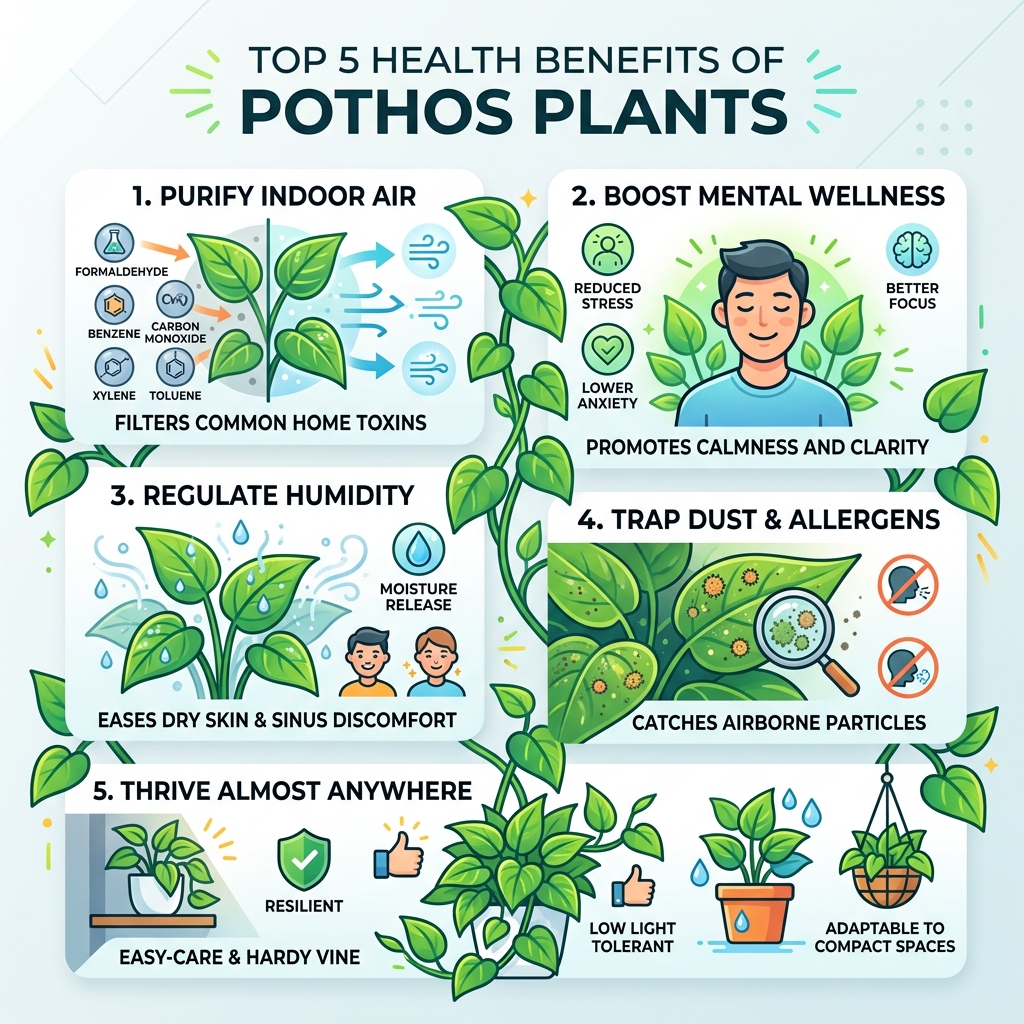
Here’s a quick look at what pothos plants can do for you:
- Purify indoor air — removes formaldehyde, benzene, carbon monoxide, xylene, and toluene
- Boost mental wellness — linked to reduced stress, lower anxiety, and better focus
- Regulate humidity — releases moisture through transpiration, easing dry skin and sinus discomfort
- Trap dust and allergens — waxy leaves catch airborne particles, helping allergy sufferers
- Thrive almost anywhere — tolerates low light, irregular watering, and small spaces
If you spend most of your time indoors, the air around you is likely carrying invisible pollutants. Furniture, paint, cleaning products, and even carpet off-gas harmful chemicals into the air you breathe every day. Pothos — scientifically known as Epipremnum aureum — is one of the few houseplants backed by NASA research for actively filtering these toxins out of indoor air.
It’s also nearly impossible to kill. That’s not an exaggeration — it’s earned the nickname Devil’s Ivy precisely because it keeps growing even under neglect.
Whether you’re dealing with stagnant apartment air, low energy at your home desk, or just want a natural way to feel better indoors, pothos is one of the simplest upgrades you can make.
The Science of Pothos Plant Health Benefits: Air Purification
To understand why we are so obsessed with this trailing vine, we have to look at the science. Back in the late 1980s, NASA conducted its famous Clean Air Study to find ways to clean the air in space stations. They discovered that certain plants are biological powerhouses capable of scrubbing the air of Volatile Organic Compounds (VOCs).
The Golden Pothos emerged as a star performer. It doesn’t just “sit there” looking pretty; it actively inhales toxins that are common in modern homes. These include formaldehyde (found in carpets and plywood), benzene (found in plastics and synthetic fibers), and carbon monoxide (often from gas stoves or attached garages). It even tackles xylene and toluene, which are frequently emitted by paints and adhesives.
If you are interested in how this works, you can check out the official NASA research on indoor air pollution removal or explore our guide on plants that filter toxins from the air.

Removing Toxins with Pothos Plant Health Benefits
The process the plant uses is called phytoremediation. Essentially, the pothos “eats” the pollution. Its large, heart-shaped leaves have specialized tissues and tiny pores (stomata) that absorb these gases. Once inside, the plant breaks down the toxins into nutrients or moves them to the root zone, where soil microbes finish the job.
Research has shown that pothos can remove up to 87% of certain toxins in its immediate vicinity within just 24 hours. In one specific study, the Golden Pothos was found to be 1.5 times more effective at breaking down formaldehyde than the Peace Lily. This makes it an essential tool if you want to turn your houseplants into air purifiers.
Improving Respiratory Health and Allergy Relief
If you suffer from seasonal allergies or find yourself sneezing more often indoors, the pothos plant health benefits extend to physical particulate removal. Pothos leaves act like natural “dust magnets.” Because the leaves have a slightly waxy coating, they are incredibly efficient at trapping airborne dust, pollen, and other particulates before they reach your lungs.
By reducing the amount of floating debris in your home, these plants can provide significant allergy relief. Just remember to wipe the leaves with a damp cloth every few weeks. This keeps the “filter” clean so the plant can continue to reduce dust effectively.
Boosting Mental Wellness and Indoor Humidity
Beyond the chemistry of the air, pothos changes the physical environment of a room through a process called transpiration. Think of it as the plant “sweating” in a very productive way. As the plant breathes, it releases water vapor into the air.
This acts as a natural, silent humidifier. In the winter or in air-conditioned offices where the air is notoriously dry, a healthy pothos can increase the humidity in a 200-square-foot room by as much as 20 percent. This extra moisture is a godsend for your skin, helping to prevent that “tight,” dry feeling, and it keeps your sinus passages lubricated, which can improve your breathing and reduce the likelihood of a dry cough.
| Feature | Without Pothos | With Multiple Pothos Plants |
|---|---|---|
| Relative Humidity | 30% (Dry) | 45% – 50% (Comfortable) |
| Skin Feel | Dry/Itchy | Hydrated |
| Sinus Comfort | Irritated | Soothed |
| Dust Levels | High | Noticeably Lower |
Reducing Stress and Anxiety with Pothos Plant Health Benefits
We’ve all felt that sense of relief when walking into a lush garden. Bringing that feeling indoors has measurable psychological perks. Studies, including scientific research on the psychological benefits of indoor plants, show that interacting with indoor plants like pothos can lower blood pressure and reduce cortisol levels (the stress hormone).
The simple act of caring for a plant—watering it, watching a new leaf unfurl, or even just having it in your peripheral vision—provides a “micro-break” for your brain. This therapeutic gardening effect is one of the most cited mental wellness benefits of indoor plants. It helps combat mental fatigue and creates a sense of peace in a hectic world.
Enhancing Focus in Home Offices
If your “office” is a corner of your bedroom or a small cubicle, you need a pothos. Because it reduces visual stress and softens the harsh lines of computer screens and furniture, it helps you stay focused for longer periods. In many cultures, it is nicknamed the “Money Tree” (not to be confused with Pachira aquatica) because it is believed to boost productivity and attract success.
Whether you’re looking for the best cubicle plants or just want to spruce up your office space, the pothos is a top-tier choice for keeping your mind sharp and your workspace vibrant.
Why Pothos is the Ultimate Low-Maintenance Companion
One of the biggest pothos plant health benefits is actually the lack of stress it causes the owner. Some plants (we’re looking at you, Fiddle Leaf Fig) seem to die if you even look at them wrong. Pothos is the opposite.
It is incredibly resilient. It can survive for two to three weeks without water, making it perfect for busy professionals or those of us who are a bit forgetful. It thrives in bright, indirect light but is also one of the few low-maintenance plants that can handle the dim conditions of a hallway or a basement room.
Easy Propagation for a Greener Home
Want more health benefits without spending more money? Pothos is the gift that keeps on giving. You can easily create new plants from a single parent vine. Just snip a 4-6 inch section of the stem (making sure there is at least one “node” or little brown bump where a leaf meets the stem) and pop it in a jar of water.
In a few weeks, you’ll see roots. This is a great DIY home project and a budget-friendly way to fill every room of your house with air-purifying greenery.
Versatile Styling for Small Spaces
Pothos is a decorator’s dream. Because it’s a vine, you can train it to do almost anything. You can let it trail gracefully from a hanging basket, which is perfect for small apartments where floor space is at a premium. Alternatively, you can give it a moss pole or a wall trellis to climb, creating a stunning “living wall” that maximizes its air-filtering surface area.
Safety Considerations and Feng Shui Principles
While we love the pothos, we have to be responsible plant parents. Pothos plants contain calcium oxalate crystals. If a leaf is chewed or swallowed, these crystals can cause irritation, swelling, and discomfort in the mouth and throat.
For this reason, it is important to keep pothos out of reach of curious cats, dogs, and toddlers. The good news? Because pothos loves to trail, it is very easy to place it on a high shelf or in a hanging planter where it can look beautiful and stay safe away from pets.
Feng Shui and Positive Energy
In Feng Shui, the pothos is highly regarded for its ability to cleanse “dead energy” from corners and stagnant areas of the home. It represents the wood element, which symbolizes growth, flexibility, and new beginnings.
Practitioners often recommend placing a pothos in the southeast corner of a room to attract prosperity and positive energy. Its vibrant, heart-shaped leaves are seen as a symbol of luck and resilience. If you want to turn your home into a literal oxygen bar with good vibes to boot, the pothos is your best friend.
Frequently Asked Questions about Pothos
How many pothos plants do I need for air purification?
While one plant is better than none, NASA’s original research suggested having roughly one plant for every 100 square feet of indoor space. For a standard living room, two or three healthy pothos plants will provide a noticeable improvement in air quality and humidity.
Is pothos toxic to cats and dogs?
Yes, pothos is toxic if ingested. It won’t usually be fatal, but it causes significant oral irritation and drooling. Always use hanging baskets or high shelves if you have nibbling pets.
Can pothos grow in rooms with no windows?
Pothos can survive in very low light, including windowless offices with fluorescent lighting. However, it won’t grow as fast, and variegated varieties (like the Marble Queen) might lose their white patterns and turn solid green to maximize their ability to absorb what little light is available.
Conclusion
At Mount Pilchuck, we believe that your home should be a sanctuary that supports your health, not a source of hidden toxins. The pothos plant health benefits we’ve discussed—from scrubbing the air of formaldehyde to boosting your mental clarity—make it one of the most effective tools in your wellness toolkit.
It is rare to find something that asks for so little but gives so much in return. By simply adding a few of these resilient vines to your shelves or desks, you are investing in better indoor air circulation and a calmer, more focused life.
Ready to transform your space? Discover more about health-boosting indoor plants and start your journey toward a greener, healthier home today.
